
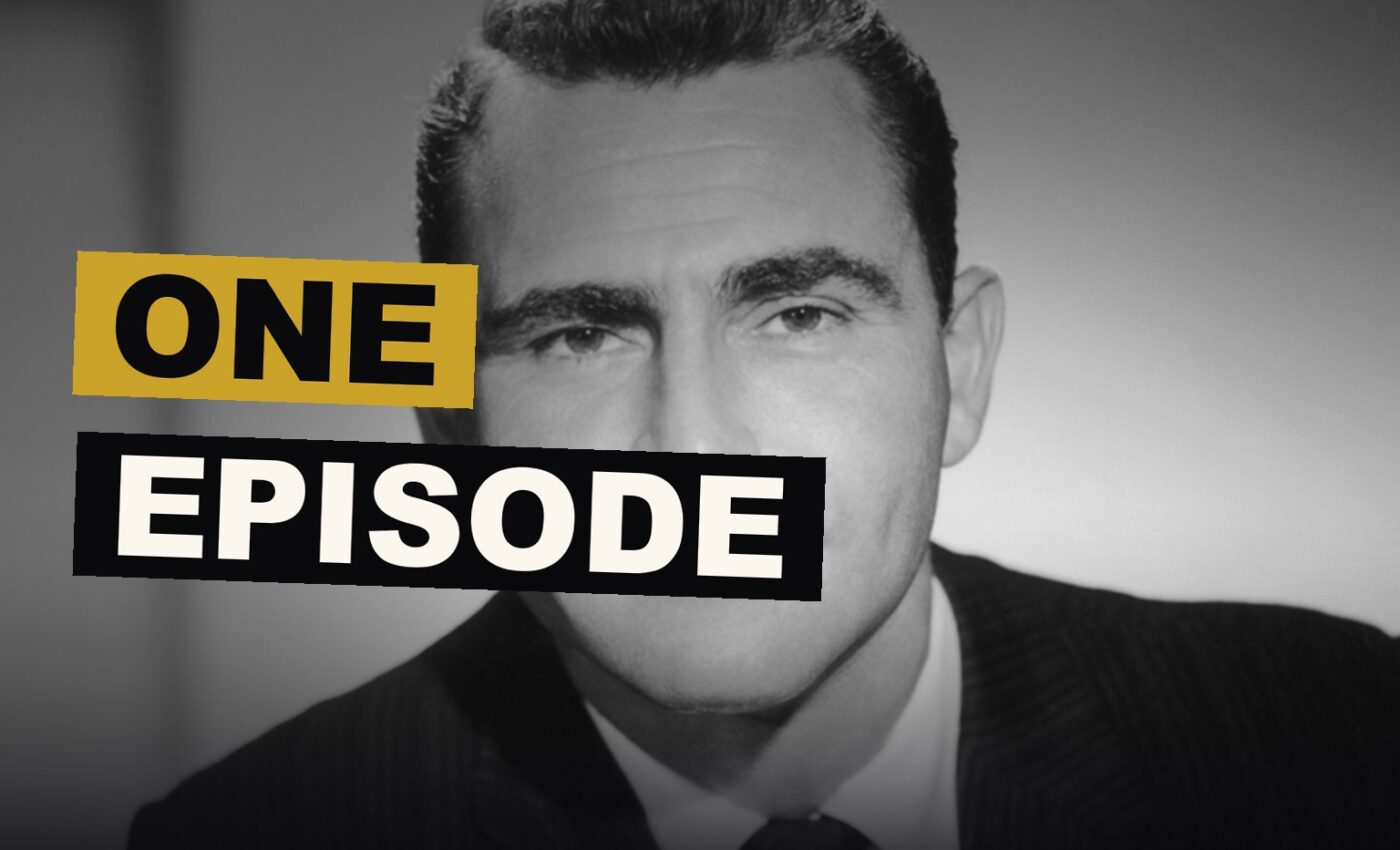
Ray Bradbury wrote only one episode that ever aired on “The Twilight Zone,” despite being one of the most famous science fiction writers of his time. Rod Serling wanted more from him. It did not work out that way.
Early Scripts That Did Not Air
Serling reached out to Bradbury early, before “The Twilight Zone” premiered on CBS in October 1959. Other writers close to Bradbury, including Richard Matheson and Charles Beaumont, went on to write some of the show’s most well known episodes. Bradbury’s own path was harder.
His first script, “Here There Be Tygers,” was passed on by Serling. His second attempt, an adaptation of his own short story “A Miracle of Rare Device,” got further along and even had a director attached. That fell apart too.
One Script Makes It To Screen
Bradbury finally got an episode on air during the third season of “The Twilight Zone”: “I Sing The Body Electric,” the story of a robot grandmother caring for the three children of a widower.
Serling explained why turning Bradbury’s work into an episode was so hard, according to “The Twilight Zone Companion.” He said the way Bradbury wrote on the page did not carry into speech, that it belonged in the reader’s head rather than in a character’s mouth, and that lines written the way Bradbury wrote them did not sound like anything a person would say.
Additionally, some of Bradbury’s earlier scripts called for special effects too costly to produce.
A Strained Relationship
Bradbury’s mark was on “The Twilight Zone” even when his own scripts were not. That bothered him. In an interview with LA Weekly, republished by Literary Hub, Bradbury said Serling acted without knowing his own mind, and that he had taken from Bradbury’s work without meaning to.
Bradbury recalled a moment when Serling called to apologize after realizing the first episode closely resembled a story from Bradbury’s “The Martian Chronicles.”
Bradbury’s Take On Serling
Bradbury let that incident pass, and his episode eventually aired. But he was not happy with the result, and he suspected other cases of Serling writing episodes too close to work by him or other authors.
In that same LA Weekly interview, Bradbury offered a charitable interpretation of Serling’s actions, saying it was not done on purpose:
“He wrote too much too soon, you see, and forgot what he was digesting.”
The Deeper Break
The larger issue may have been Bradbury’s belief that Serling was not treating science fiction seriously enough. According to the biography “Ray Bradbury Unbound,” Bradbury wrote that Serling was a “Johnny-Come-Lately, who will come and go and be forgotten in the field.”
What The Record Shows
Three things stand out from the record:
- Bradbury offered several scripts before one finally aired.
- Serling himself said Bradbury’s prose was hard to put into drama form.
- Bradbury believed Serling borrowed from his work without meaning to.
Their working connection never fully recovered. What remains is a single episode, a few pointed quotes, and a rare glimpse into two giants of the genre who never quite agreed.
Source: tvline.com
Get the Notebook.
The day's best stories and every fresh verdict, in plain English, in your inbox by seven. One email a day, no more.