
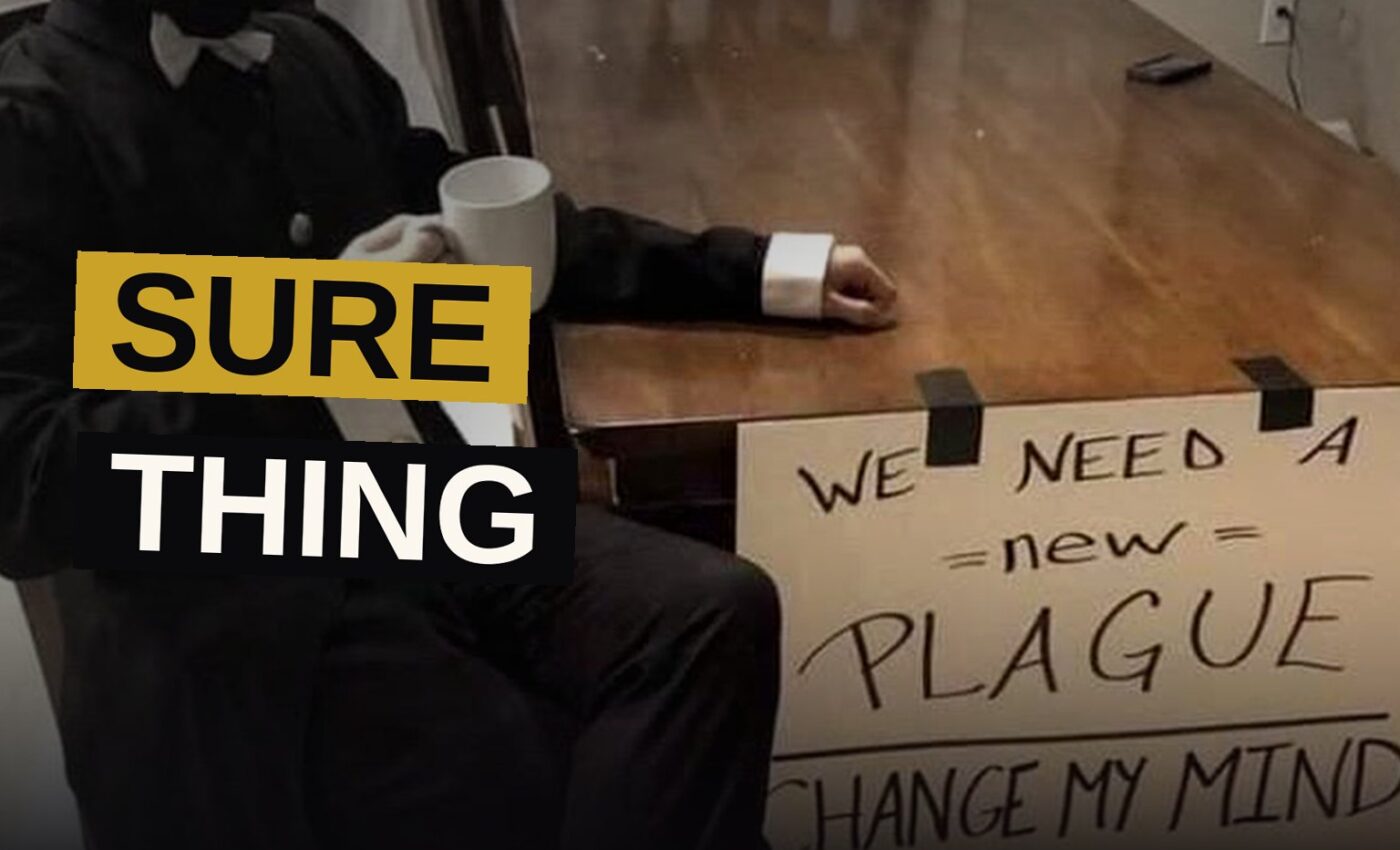
The internet is full of proof that human beings are terrible at predicting what happens next. Even a prestigious title or decades of experience does not guarantee accuracy. Research shows that long-term predictions are often no better than a random coin flip. A 20-year study led by researcher Philip Tetlock tracked over 82,000 forecasts from nearly 300 experts. The results showed that these professionals were consistently overconfident. Events they claimed were a “sure thing” failed to happen 25% of the time, while events they labeled “impossible” actually occurred 15% of the time. Having advanced degrees, specialized training, or access to private information barely improved their success rate.
Tetlock’s 20-Year Study
Tetlock’s work ran for two decades. He followed nearly 300 experts and collected over 82,000 forecasts. The experts were confident, but their confidence did not match reality. A quarter of their “sure things” never happened. A 15% share of their “impossible” events came true anyway.
The study did not stop at measuring failure. Tetlock found a group of people who did far better. Through an initiative called The Good Judgment Project, he discovered everyday individuals who beat out top intelligence analysts, political pundits, and industry experts. He dubbed them “superforecasters.”
The Superforecasters
These superforecasters were not fortune tellers. They had no top-secret clearance and no supercomputers. They were teachers, retired plumbers, filmmakers, and accountants who simply knew how to think. Tetlock studied their habits and realized that good judgment is not a rare genetic gift. It is a mindset and a set of learnable skills.
Superforecasters often gather information from many different, opposing sources. They build a complete picture before making a call. The failure of judgment usually happens because of the overconfidence bias. It is the mental glitch that leads us to express absolute certainty right before we turn out to be completely wrong. Superforecasters manage to avoid this trap by staying humble. Most people default to an unwarranted sense of their own accuracy.
The Dunning-Kruger Effect
At the heart of this tendency is the Dunning-Kruger effect. This is a cognitive bias where people with limited knowledge on a subject hold the highest levels of confidence. When someone fails to grasp how complex a situation really is, it becomes easy to believe they have all the answers.
The less we know, the simpler the future looks.
“It’s not a question of stupidity. Our ignorance is an everyday companion that we will all carry for the rest of our lives. And ignorance can be a bit of a trickster, darting around the corner, so we never actually get to see what it looks like,” said David Dunning, a social psychologist at the University of Michigan.
The Online Blind Spot
You can see this exact same dynamic playing out in how we evaluate information online every single day. Most of us walk around believing that while everyone else is easily fooled, we are somehow immune to being tricked.
A study by the Behavioral Insights Team (BIT) highlighted this exact blind spot. In a randomized trial with over 2,000 participants in the UK, 59% felt completely confident in their ability to spot false information online. However, only 36% believed that others could do as good a job. We naturally assume we are the sharpest minds in the room while everyone else is getting misled.
“Our latest research has added to the growing evidence that social media users are overconfident in their ability to spot false information — but paradoxically this might actually be making people more susceptible to it,” says Eva Kolker, head of consumer and business markets at BIT.
Confidence That Is Unearned
The problem is that this confidence is often totally unearned. Past research shows that people who are the most overconfident in their abilities are actually the most vulnerable to believing and spreading misinformation. Their confidence simply does not match their actual skill.
This explains why so many historical figures, experts, and everyday internet posters make predictions that age terribly. When people get blinded by their own confidence, they stop asking questions and ignore obvious warning signs.
- Events labeled a “sure thing” failed to happen 25% of the time
- Events labeled “impossible” occurred 15% of the time
- 59% of UK participants felt confident spotting false information
- Only 36% believed others could do as good a job
Why We Keep Predicting
Even though our predictions often miss the mark, we just cannot stop making them. It is built directly into human nature.
We try to guess everything — who will take home a Super Bowl ring or an Oscar, or how many inches of snow will pile up this winter. And honestly, trying to peer into the future makes total sense. Calling stock market trends or spotting the next big tech breakthrough can make you rich. Even everyday guesses, like reading how a friend will react to bad news, help us navigate daily life.
“There’s something very human and very useful about it. Thinking about what’s going to be coming down the line allows you to make appropriate preparations today,” says Rob Kurzban, assistant professor of psychology at the University of Pennsylvania.
The Comfort of Control
Beyond basic planning, experts point out that humans simply hate surprises. Cooking up predictions gives us a comforting sense of control over an unpredictable world.
That comfort comes at a cost. The same confidence that feels good in the moment is the thing that leaves us wrong later. The experts in Tetlock’s study had every advantage — training, data, and time — and still failed at rates no better than chance. The superforecasters succeeded not because they knew more, but because they knew they might be wrong.
A Lesson for the Rest of Us
The takeaway is not to stop predicting. That would be impossible. The takeaway is to hold our own certainty more lightly. The next time you feel absolutely sure about something — a political outcome, a product launch, a friend’s reaction — remember the numbers. A quarter of the sure things failed. Fifteen percent of the impossibilities happened anyway.
Ignorance does not look like ignorance from the inside. That is the trick. It looks like clarity. It looks like certainty. It looks like the sharpest mind in the room. And then it ages badly, right on schedule, for all 67 times and counting.
Source: boredpanda.com
Get the Notebook.
The day's best stories and every fresh verdict, in plain English, in your inbox by seven. One email a day, no more.