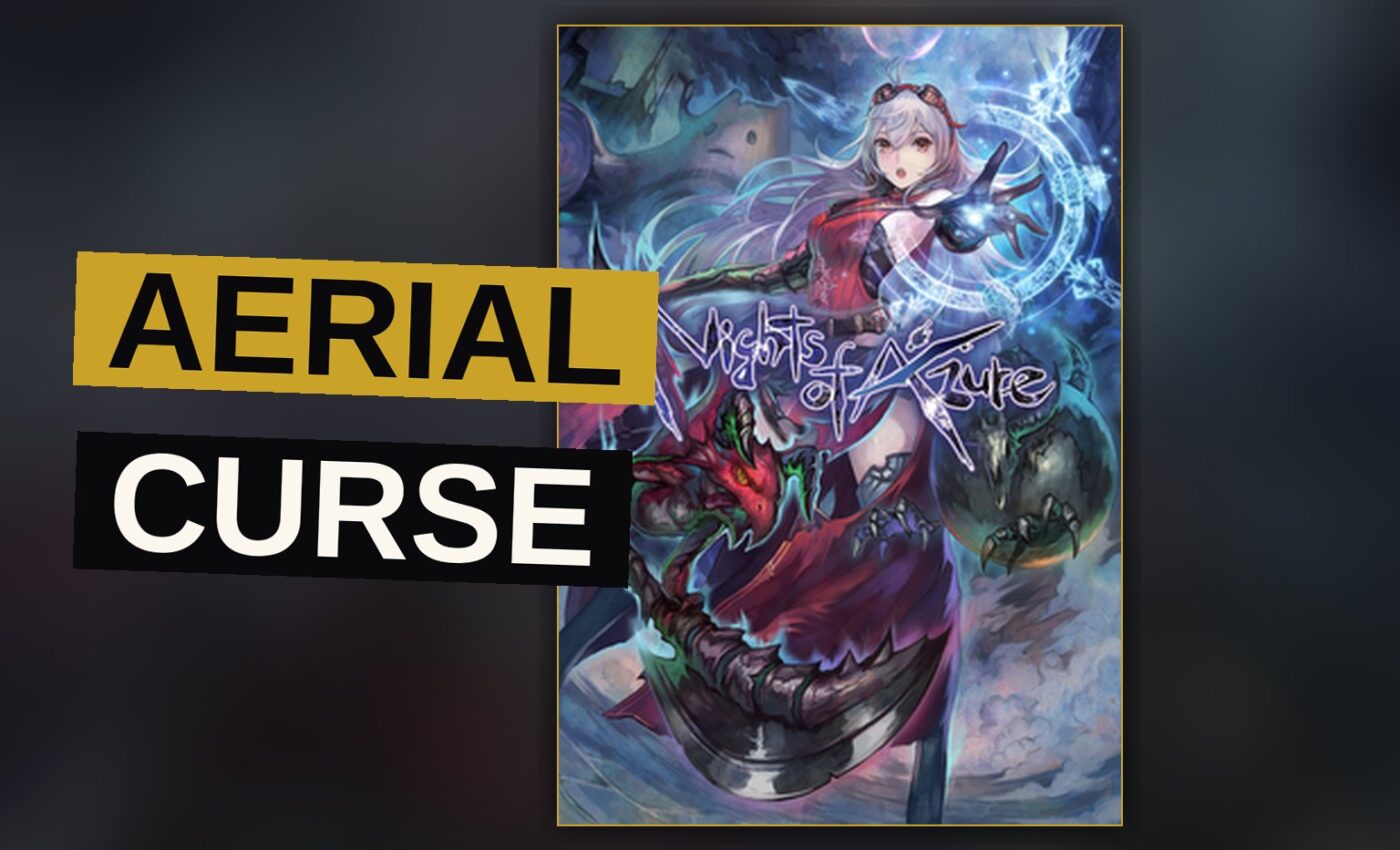
Nights of Azure asks a lot of Arnice. She is a holy knight of the Curia, trained to fight the azure-blooded demons that make Ruswal’s nights lethal for everyone else. She is also part monster, the only human who has touched azure blood and lived, and that fact is the whole game in miniature: a clean fantasy premise with something stranger running underneath it.
Gust built that tension into a 2015 action RPG, and Koei Tecmo shipped it across PlayStation 3, PlayStation 4, PlayStation Vita and PC. The game reached North America on March 29, 2016, Europe on April 1, 2016, and Windows on February 7, 2017. The aggregate lands at 6.6/10 across nine outlets. That number is fair. Nights of Azure has a strong spine and a soft middle.
Trailer, via KOEI TECMO AMERICA.
Arnice, Lilysse and the Curia
The setup is the game’s best asset. Long before the story begins, humans beat the demonic Nightlord, and the blue blood that scattered from the monster’s body polluted anyone who bathed in it. Those people became fiends, and the fiends steal the night itself. No one in Ruswal sleeps after dark. That is a sharp hook, and it gives the Curia a real job rather than a decorative one.
Arnice is the strongest of them, and her edge is not training. It is contamination. She can summon monsters, and she can turn her own blood into weapons. Her heart stayed intact even though her blood did not. The game follows her and Lilysse, a saint destined to seal what remains of the Nightlord and Arnice’s closest friend, on a quest to clear the island. The story’s own framing warns that killing enough enemies may not solve Ruswal’s problem, and that promise is the most interesting thing Nights of Azure says.
The supporting cast does less work. Christophorus is a pure-blooded demon living in an opera house. Simon runs the hotel and a cafe. Corrine is a senior knight. Professor Alucard researches monsters. Lloyd is a merchant with a hidden side. Mistral is a pure-blooded apparition who leads travelers astray with her fragrance. Several of these characters are vivid for a scene and then gone. The voice cast is solid — Mao Ichimichi as Arnice, Hiromi Igarashi as Lilysse, Tomoyo Kurosawa as Christophorus, Masaki Terasoma as Simon, Ayane Sakura as Corrine, Yoshitsugu Matsuoka as Professor Alucard, Satoshi Hino as Lloyd, Eriko Matsui as Mistral — but good delivery cannot fix thin material.
Servans, blood and the transformation gauge
Combat is where Gust’s ideas hold together best. Arnice fights alongside contracted demons called Servans, summoned with SP and split into attacker and support types. They grow stronger across battles and pick up new abilities. She also chains light, heavy and special attacks, and each chain fills a transformation gauge. When it fills, she transforms.
The forms matter. Her demon form controls flames. Her rabbit form leans on speed and melee. Her phantom form improves recovery. She can also shape her blood into different weapons — daggers, longswords — and the choice changes both her moveset and what her summoned demons can do. Blue blood drops from defeated enemies and completed quests, and they work as currency at certain shops or as experience for Arnice. The Ende Hotel is the hub: accept quests, buy items, plan daytime activities, change equipment, save. An optional arena adds restricted battles and a labyrinth.
That is a full set of systems, and on paper it reads like a game with range. In practice the pieces do not interlock as tightly as they should. The transformation gauge rewards aggression, but the Servan management asks for patience, and the two rhythms fight each other more often than they complement each other.
“In the kingdom of Ruswal, very few people leave their homes after nightfall, let alone have the strength and skill to take on the powerful, azure-blooded demons that plague the island.”
A hotel hub and an optional arena
The Ende Hotel is functional, not memorable. Quests, shopping, daytime planning, equipment and saving all live behind one menu, and the arena gives completionists something to grind. Neither adds much to the world. Ruswal as an island-kingdom is described far better than it is explored, and the daytime activity system never becomes more than a scheduling chore.
This is the pattern across Nights of Azure. Every mechanic is present and accounted for, and almost none of them has a second idea behind it. The blood weapons change your moveset, but the fights rarely demand that you use the difference. The Servans level up, but the attacker-support split stays shallow. The game is generous with options and stingy with reasons to care about them.
The sequel, Nights of Azure 2: Bride of the New Moon, arrived in Japan in August 2017 and worldwide that October. A follow-up was reasonable. The first game’s premise earns one.
What 6.6 out of 10 means here
Nights of Azure is a game with a genuinely good idea and an uneven execution of it. Arnice is a strong protagonist — part knight, part monster, bloodsucking and blade-making — and the polluted-blood premise gives the story a moral weight that most action RPGs of its era avoided. Lilysse’s fate as the saint who must seal the Nightlord is the right kind of complication.
The combat has range and no depth. The hub has utility and no personality. The cast has names and faces and not enough time. Gust clearly knew what it wanted: a fast, bloody, monster-summoning action RPG about two women trying to save an island that may not be savable. What shipped is a competent version of that, and competence is the ceiling.
The score lands at 6.6/10 for a reason. It is not a bad game. It is a game whose best ideas — contamination as power, friendship as the thing that survives it — are stated more often than they are played. Nights of Azure is worth a look for anyone who wants a mid-budget action RPG with a real hook. It is not worth defending as more than that.
Nights of Azure: 6.6 of 10
Release dates, platforms and the score
- Release: 2015 (PlayStation 3, PlayStation 4, PlayStation Vita); North America March 29, 2016; Europe April 1, 2016; Windows February 7, 2017
- Developer: Gust
- Publisher: Koei Tecmo
- Platforms: PlayStation 3, PlayStation 4, PlayStation Vita, PC (Microsoft Windows)
- Genre: Action role-playing, hack and slash
- Modes: Single player, third person
- Critic aggregate: 6.6/10 across nine outlets
- Sequel: Nights of Azure 2: Bride of the New Moon, August 2017 in Japan, October 2017 worldwide
- Score: 6.6 of 10
Get the Notebook.
The day's best stories and every fresh verdict, in plain English, in your inbox by seven. One email a day, no more.