Turok 2: Seeds of Evil is a first-person shooter about a warrior who fights through a hostile world. The Nintendo 64 original arrived in 1998 from developer Iguana Entertainment and publisher Acclaim Entertainment, and it sold 1.4 million copies by January 1999. It is the second game in the Turok series and a sequel to Turok: Dinosaur Hunter. A remaster from Nightdive Studios followed in 2017, first for Microsoft Windows and later for other platforms.
Joshua Fireseed and the Primagen
A new Turok, Joshua Fireseed, steps through a portal and meets an alien named Adon, who tells him the Elders of the Lost Land have summoned him. His target is the Primagen, a powerful alien entity imprisoned in the wreckage of his own Lightship after he tried to witness the creation of the universe. The Lost Land was born from that attempt, a barbarian world where time has no meaning.
The Primagen wakes up and sends primitive creatures to destroy five Energy Totems, the devices that bind him to the ship. If the Totems fall, the Primagen escapes and the shockwave destroys the known universe. Joshua fights through the Lost Land, collects ancient powers from sacred talisman chambers, and runs into a mysterious entity called Oblivion, which builds false copies of the chamber portals to lead him into the territory of the Flesh Eaters. The campaign ends on the Lightship, with Joshua facing the Primagen directly.
Six Levels, Five Totems, One Hub
The single-player campaign runs six large levels tied together by a hub area. Each level hands the player a set of objectives — destroy this, rescue hostages, kill enemies — and then demands an exit through a portal. What follows the exit changes as the game goes on.
- Levels one through three require the player to protect a totem.
- Levels four and five require a totem defense and then a boss fight.
- The final level skips the totem and goes straight to a boss.
The game also includes an automap to help players navigate the levels. Once a level is completed, the player moves on through the hub.
The Cerebral Bore and the Rest of the Arsenal
Turok carries an unlimited number of weapons, and the list runs from bows and arrows to pistols, rifles, a shotgun, a grenade launcher, a flamethrower, and a speargun. The standout is the Cerebral Bore, which fires a homing projectile that latches onto an enemy’s head, drills into the skull, and explodes.
Health drops when enemies land hits. Lose all health and you spend a Life Force point to restart from a checkpoint. Lose every Life Force point and the game is over. Ammunition, health, and Life Force pickups are scattered through the levels.
Reviewers praised the game for its detailed graphics, deep levels, and advanced artificial intelligence. The frame rate was inconsistent and the distance fog was heavy. Both were common subjects of criticism.
Last Turok Standing
The original game supports multiplayer, with several game types and split screen. The remaster adds a mode called Last Turok Standing, where players battle friends for a more visceral match. The Nintendo 64 Expansion Pak enables an optional high-resolution graphics mode.
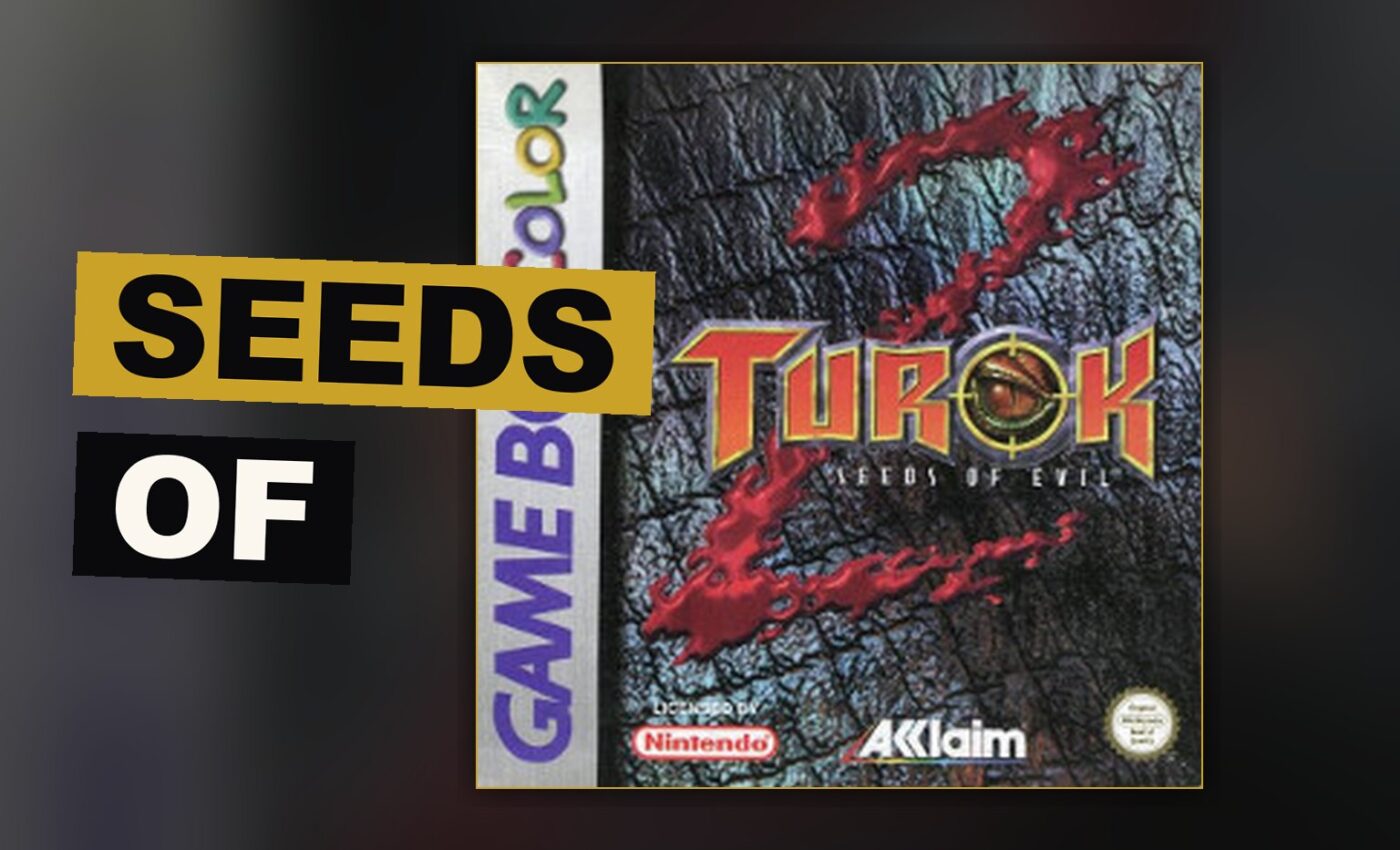
Seeds of Evil was built over 21 months. It was originally planned for a 12MB cartridge with no multiplayer, and it shipped on a 32MB cartridge with multiplayer included. A different game set in the same fictional universe, also titled Turok 2: Seeds of Evil, was released for the Game Boy Color alongside the Nintendo 64 game.
What the Score Says
The 1998 game was positively received by critics. Metacritic, the review aggregate, puts the game at 8.9/10. That number is the aggregate’s, not this paper’s, and it lines up with what the source record shows: praise for the graphics, the level design, and the enemy AI, alongside steady complaints about frame rate and fog. A remaster score would be a separate question, and the source does not give one.
The sequel hook at the end, with Adon warning that the force behind Oblivion still exists, set up Turok 3: Shadow of Oblivion. The remaster from Nightdive Studios is the version in circulation now, having arrived on Windows in 2017 and on Xbox Series X|S, PlayStation 4, PlayStation 5, Xbox One, Nintendo Switch, Linux, and Mac since.
What matters most here is the sales figure and the aggregate score sitting next to each other. A 1998 shooter that moved 1.4 million copies by January 1999 and landed at 8.9/10 did so with a frame rate that stuttered and fog that hid the draw distance. The weapons and the six-level structure carried it. That is the case the record makes, and it is enough.
Get the Notebook.
The day's best stories and every fresh verdict, in plain English, in your inbox by seven. One email a day, no more.