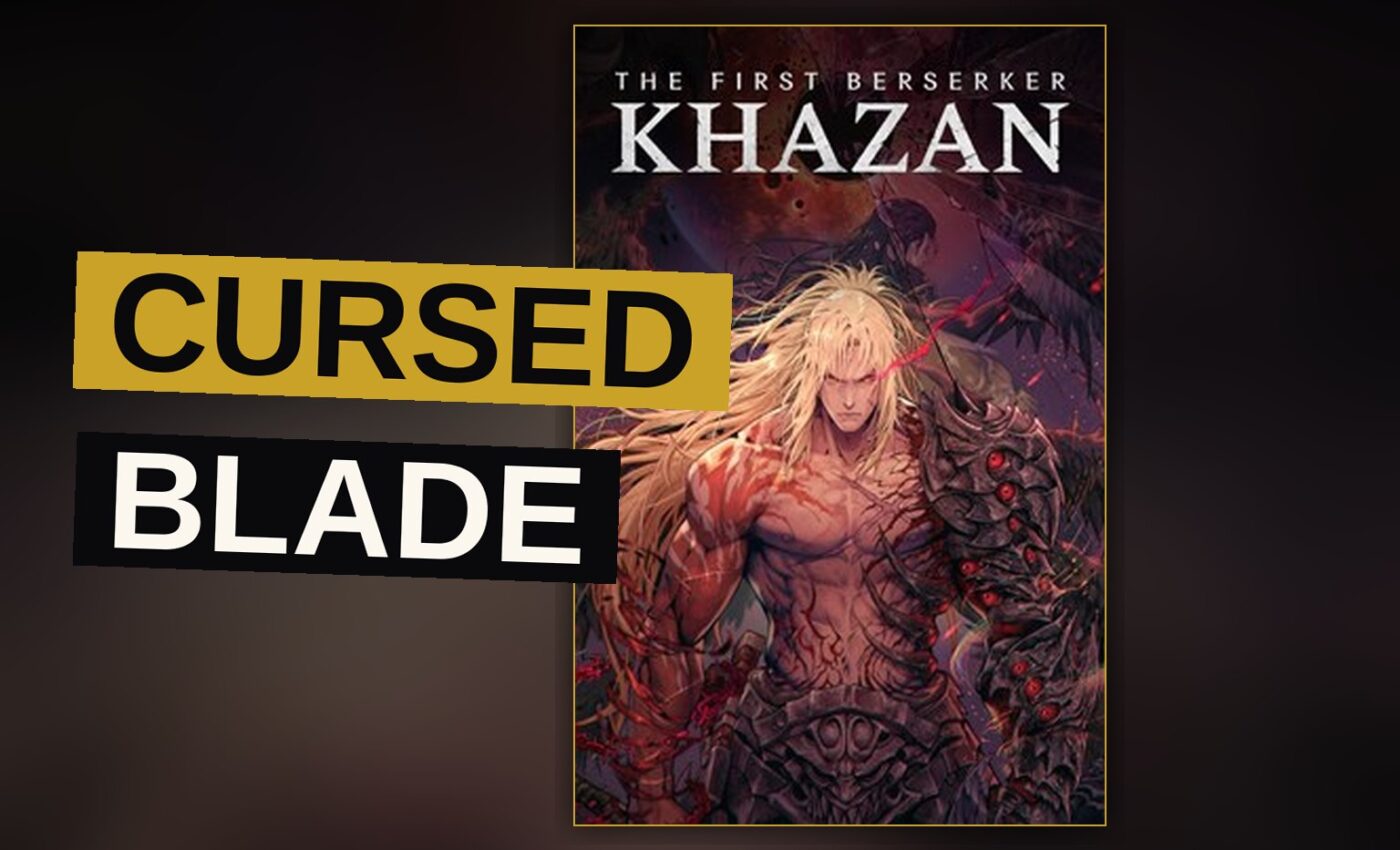
The First Berserker: Khazan launched on PS5, Xbox Series X/S and PC in 2025, and it stands as one of the sharpest action games of its season. The maker built the game around a single disgraced warrior, Khazan, stripped of rank and hunted by former allies. The result is a hard, focused fighting game that rewards patience over wild swings of the sword.
Trailer, via The First Berserker: Khazan.
Khazan the Cursed Warrior
The story opens with Khazan already broken. He has lost his title, his command and his freedom, and the game spends little time explaining why before dropping players into battle. That short opening works well. The plot moves through brief talk and small details in the world rather than long scenes, letting the fighting carry most of the weight.
Khazan himself is slow and stiff at first, but his set of moves opens up fast. Players gain new strikes and counters within the first few hours, and the character grows from a stumbling exile into a truly powerful fighter.
This change in Khazan, from broken man to feared blade, gives the whole game its shape.
The Weapon Arts System
Battle runs on a stance system tied to weapon type. Switching between a heavy sword stance and a stance built around two lighter blades in the middle of a fight changes both the damage dealt and the energy it costs.
That change matters because enemies punish players who fight the same way too long. Bosses read patterns fast, and staying in one stance too long usually ends in a death screen.
The system asks for constant thought, not fast fingers alone. Players must watch an enemy, guess the next move, and answer with the right stance at the right moment. It is a demanding way to fight, and it is also the game’s strongest idea.
Boss Fights and Pacing
The bosses are the center of The First Berserker: Khazan, and the game leans hard on big set fights rather than filling its levels with weak, easy enemies. Each major fight demands a different rhythm, and the difficulty stays hard from the middle of the game onward.
The fights vary widely in what they ask of the player. One boss forces a careful, guarded approach, while another demands sudden bursts of action. A third boss changes its own pattern mid-fight, forcing a new read on the battle. The variety keeps the fights from feeling like the same test repeated with a new look.
Death comes often by design, and few players will clear any of these fights on the first try.
| Chapter | Focus of the Fight | Time to First Clear |
|---|---|---|
| 1 | A single, heavy foe | About 15 minutes |
| 2 | A large machine | About 25 minutes |
| 3 | Two foes at once | About 30 minutes |
| 4 | A slow, strong ruler | About 40 minutes |
| 5 | The final test | About 45 minutes |
These times come from a first run on the standard setting, not from a practiced play. The early chapters teach the basic rules of the stance system. The later chapters ask players to put those rules together under real pressure.
Difficulty Choices
The maker gives players choices in how hard the fight is, a decision that softens the game’s name as a punishing kind of action title. Lower settings cut down enemy damage without taking away boss patterns fully, so new players can still learn the same lessons as veterans of the form.
This is a real and welcome choice. Those devoted to the harder, older way of playing can leave the settings untouched, while players new to this style of game still get a way in.
It is a small change, but it opens the game to far more people than it would otherwise reach.
Look and Feel on PS5 and Xbox Series X/S
On PS5 and Xbox Series X/S, The First Berserker: Khazan runs at a steady speed through most fights. The settings favor grim, plain, iron halls over wide open fields, and the game is better for it. Smaller, tighter levels keep the focus on the fight rather than on walking from place to place.
Load times are short on both machines.
The game also keeps a clear view of the action in the busiest fights. The maker chose a fixed camera for most battles, which keeps the player’s eye on the enemy rather than on the ground. This choice holds up well even when two or three foes crowd the screen at once.
Play on PC
The PC version lets players change the screen size and frame speed, and the game ran steadily through testing. The way the controls answered when switching stance felt fast, which matters given how often the fight asks players to change weapon mid-strike. No large technical trouble came up during the time spent reviewing it.
Menu movement on PC is a touch less clear than on console, since some of the on-screen prompts were plainly built with a controller in mind first.
The PC version also supports a wide range of screen shapes, so players with a very wide screen can see more of the field. This is a small gain, but it helps in fights where the enemy moves from one side to the other quickly.
Where the Game Falls Short
The story, while short and to the point, sometimes gives up clearness for speed. Side characters get little time to grow, and some threads in the plot end without much lead-up. Players hoping for a rich story to sit beside the fighting may come away wanting more.
The number of different enemies outside the boss fights is also thinner than the boss list suggests, with some regular foes appearing again across several chapters. This is the game’s clearest weak point, and it is the one area where more variety would have helped.
The First Berserker: Khazan is not trying to remake its kind of game from the ground up. It is trying to carry out a familiar plan with care, and it mostly succeeds. The stance system gives the fighting a rhythm that stays interesting far longer than most would guess, the boss fights are steadily the strongest parts of the whole game, and the difficulty choices make the game easier to approach without taking away its challenge. The maker has delivered a focused, sure-footed action game. Score: 8.4 of 10.
Get the Notebook.
The day's best stories and every fresh verdict, in plain English, in your inbox by seven. One email a day, no more.