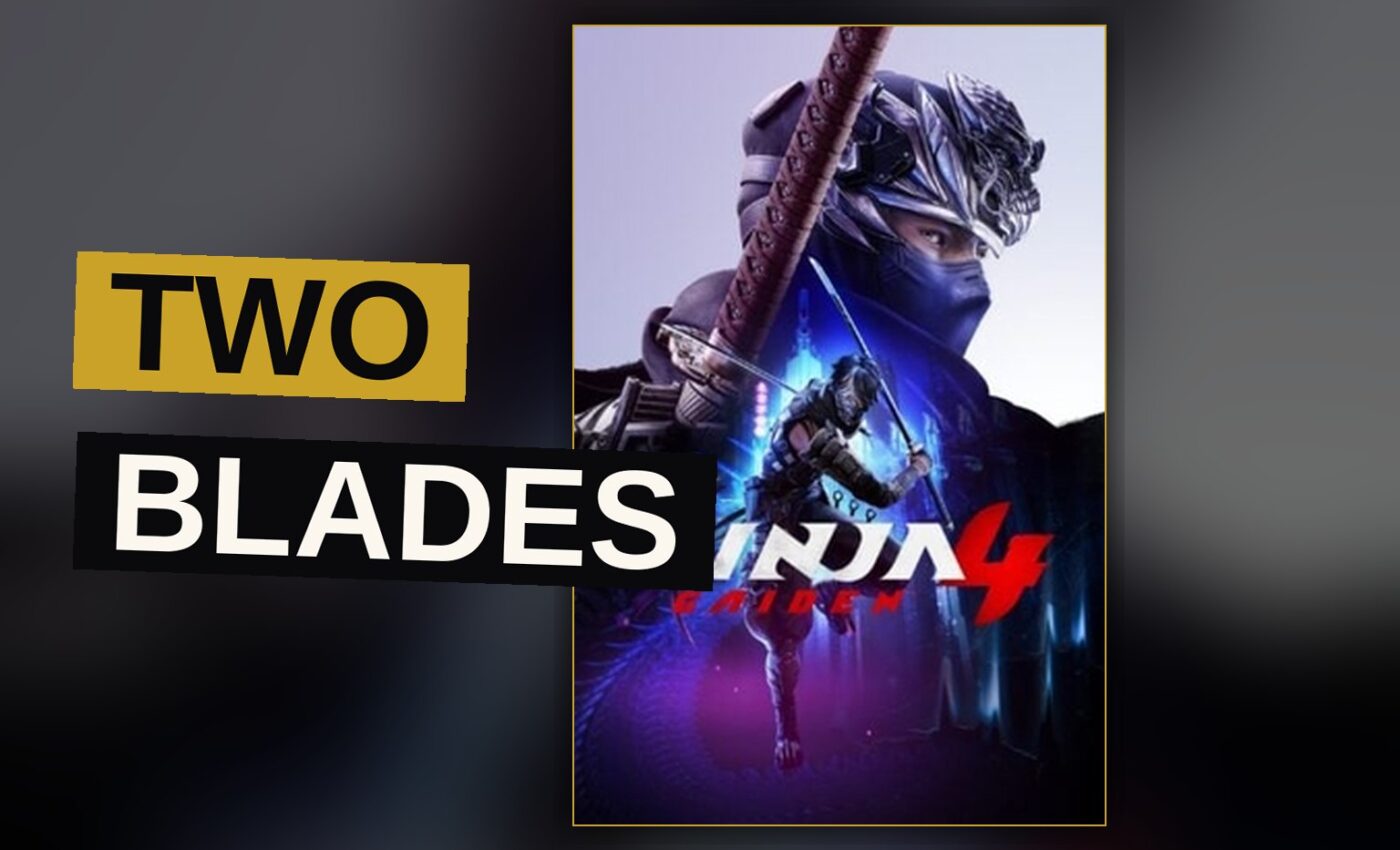
Ninja Gaiden 4 does the hardest thing a long-running action series can attempt: it hands the keys to a new lead and trusts the old one to matter anyway. Team Ninja and PlatinumGames shipped the game on October 21, 2025, for PlayStation 5, Windows, and Xbox Series X/S, with Xbox Game Studios publishing. It is the seventh main entry in the series, and it carries the weight of that number lightly.
Trailer, via Team NINJA Studio.
A New Ninja Named Yakumo
Yakumo is a young ninja of the Raven Clan, sent into a quarantined Tokyo to assassinate the Dark Dragon’s priestess, Seori. The mission is prophecy and penance both — his bloodline descends from the beast, and killing it is the atonement. Ryu Hayabusa, who fought the Dark Dragon back years earlier, is also playable and holds a significant role.
That structure is the smartest decision here. Yakumo learns the series as you do, so a newcomer is not dropped into a decade of muscle memory. Ryu arrives as a “major challenge and growth milestone,” in the director’s framing, and the game treats him that way rather than as fan service.
Tokyo Under Cursed Rain
The setting is the best thing Ninja Gaiden 4 has going. Ryu could not fully destroy the Dark Dragon, so its husk still coils around Tokyo, and cursed rain falls on an evacuated, quarantined city. The land overlaps with the underworld. The Divine Dragon Order, an independent paramilitary force, holds the perimeter.
That premise produces a rainy cyberpunk cityscape, and the director ties those conditions to the game’s core concept of “adversity.” It is not decoration. The rain, the daemons bleeding into the streets, the shrines scattered across a dead metropolis — all of it gives the combat a place to happen that feels specific rather than generic.
Bloodraven Form and the Old Moves
Yakumo fights with Bloodraven Form, a technique that manipulates his own blood and the blood of enemies to build weapons that strike down many foes at once. It is a crowd-control answer to a series that has always punished crowd mismanagement, and it gives the new lead an identity that is not just a slower Ryu.
Ryu keeps the tools players remember, with a moveset close to his earlier appearances. Signature techniques like the Izuna Drop and the Flying Swallow are available to both characters. That shared vocabulary matters: it means switching between them reads as a change of emphasis, not a change of game.
Seori and the Seals
The plot gives Yakumo a problem no amount of skill solves. He infiltrates a DDO prison and confronts Seori, who tells him that killing her forecloses any chance of finishing the Dark Dragon. She is the only one who can break the seals holding it. Her plan is stranger: break the seals, resurrect the beast, purify it, and make it vulnerable — but only if Yakumo helps her escape.
He reluctantly agrees. Days later he moves through Tokyo breaking seals at Dark Dragon shrines and killing the daemons guarding them. Each broken seal makes the Dark Dragon and its daemons stronger. After the second, Ryu and DDO Grand General Kagachi attack. Ryu gains the upper hand, then hesitates when Seori shields Yakumo, unwilling to harm her. Yakumo escapes with her — and then loses her to a fiend, setting off a pursuit aided by Ayane.
That escalating cost is the story’s engine. Yakumo is not getting safer as he gets stronger.
The Return to Form Is Real
Ninja Gaiden 4 received generally positive reviews, with many critics calling it a return to form. That verdict holds up against what the game actually does. The series had drifted; this entry reasserts the things it was known for — third-person, single-player, hack-and-slash combat with adventure pacing — without pretending the last decade did not happen.
The near-future Tokyo timeline sits after Ninja Gaiden 3, and the Dark Dragon’s history reaches back to the 2004 Ninja Gaiden and Ninja Gaiden: Dragon Sword. The game uses that continuity instead of burying it. Yakumo’s prophecy only lands because Ryu already failed once.
Where It Stumbles
The handoff is not frictionless. Splitting playable time between Yakumo and Ryu means the campaign has two centers of gravity, and the story keeps pulling Yakumo away from Seori right when their uneasy alliance is doing the most work. The prison bargain is the most interesting scene in the game, and the plot spends a lot of the middle distance undoing its momentum.
The Dark Dragon is also a villain by reputation more than presence. It is a husk coiled around a city, which is a striking image, but an image is not an antagonist. Kagachi and the Divine Dragon Order carry more immediate weight as obstacles than the god everyone is maneuvering around.
None of that breaks the game. It just keeps a very good action game from being an obvious one.
The Verdict
Ninja Gaiden 4 is the rare legacy sequel that earns its new lead. Bloodraven Form gives Yakumo a reason to exist beyond the name on the box, the cursed-rain Tokyo is the strongest setting the series has had, and Ryu’s presence as both playable character and milestone respects what he built without letting him swallow the story.
The seal-breaking structure is a clean spine for the campaign, and the way each broken seal raises the stakes gives the back half real pressure. The missteps are structural, not mechanical: a villain who is more weather than character, and a middle stretch that separates its two best characters too often.
This is a return to form, and it is worth saying plainly that the form was worth returning to. Score: 8.3 of 10.
Key Facts
- Title: Ninja Gaiden 4
- Release date: October 21, 2025
- Platforms: PlayStation 5, Windows, Xbox Series X/S
- Developer: Team Ninja and PlatinumGames
- Publisher: Xbox Game Studios
- Series position: Seventh main entry
- Metacritic score: 8.3/10
Get the Notebook.
The day's best stories and every fresh verdict, in plain English, in your inbox by seven. One email a day, no more.