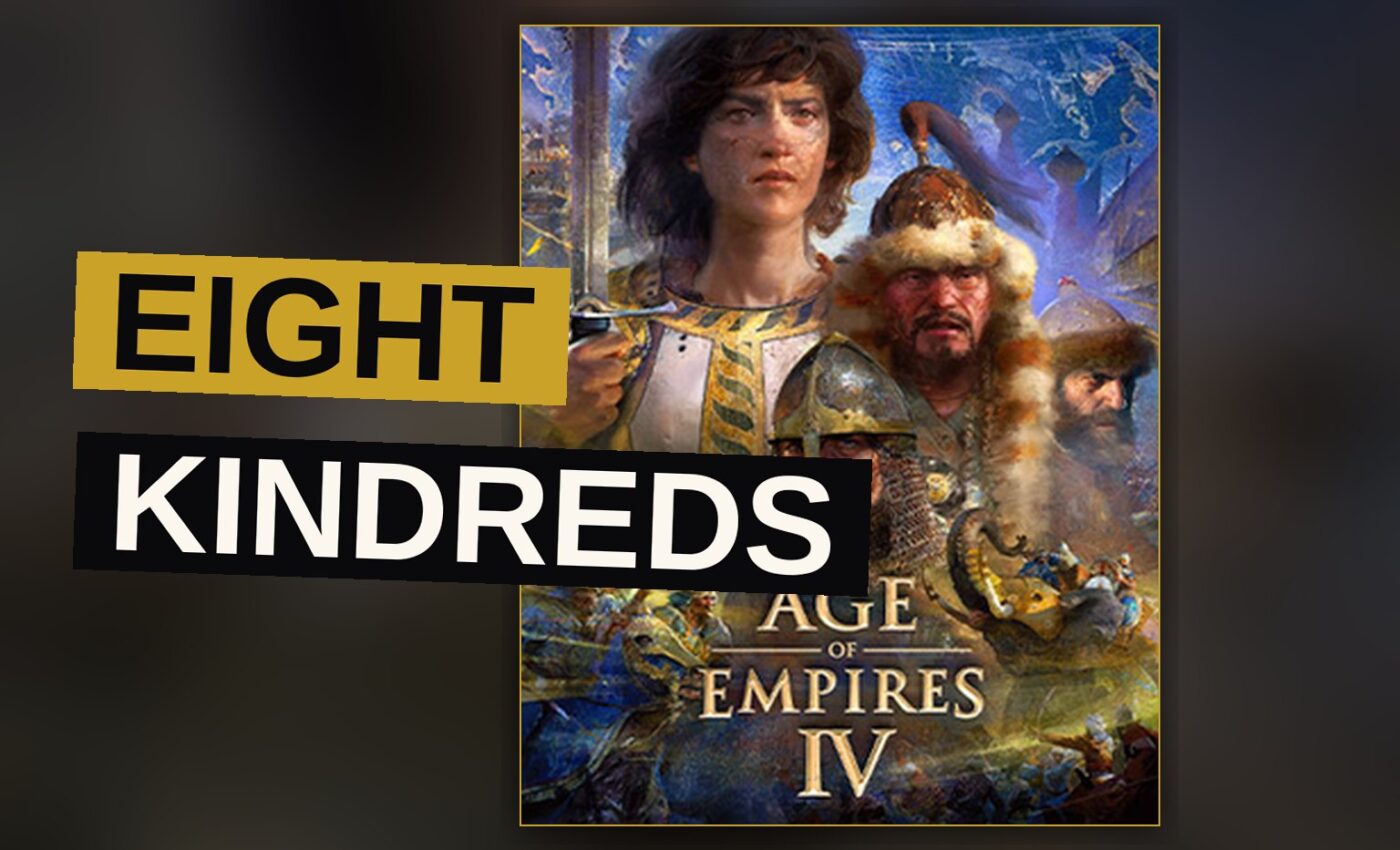
Age of Empires IV returns to a genre that spent years on the shelf. The team behind it built a real-time strategy game that plays it safe in some places and pushes forward in others, landing on PC, Xbox One and Xbox Series X/S.
Trailer, via XBOX.
Eight Groups Worth Learning
The base roster covers eight playable groups, each drawn from a different stretch of history and each built to play differently from the rest. Switching between them changes how a match unfolds. One group moves its entire base as a unit, which forces opponents to think differently about how they track enemy movement. Another leans on a long-term growth system that rewards patient planning over quick early attacks.
No two groups solve a problem the same way. That variety is the game’s strongest feature.
Missions Across Centuries
The campaign mode covers historical stretches spanning hundreds of years, moving through conquests, sieges and the rise of major powers. Real documentary-style video clips sit between missions, narrated with actual historians brought in to explain the events being shown on screen.
This structure works. It gives context that older strategy games skipped entirely, turning each mission into something closer to a history lesson than a simple checklist of goals.
Building and Holding Ground
Combat in Age of Empires IV centers on siege weapons, walls and narrow points on the map where armies clash. Building a strong base and watching an enemy break against it feels satisfying in a way few modern strategy games manage. Large stone-throwing machines can bring down walls, and heavy machines built to smash gates punch through entry points, so holding ground has to involve more than a single wall and hope.
The economy loop is familiar to anyone who played earlier games in the series: gather wood, food, gold and stone, then turn those resources into an army or better buildings. It’s not built from scratch here. It’s refined.
Multiplayer and Matchmaking
Online play uses a ranked ladder system with skill-based matchmaking. A custom match mode lets players set up games against the computer or friends without the pressure of ranked stakes.
| Mode | Focus | Pace |
|---|---|---|
| Campaign | Historical missions, narrated video | Slower, story-driven |
| Custom Match | Games against computer or friends | Player-controlled |
| Ranked Multiplayer | Ladder-based matches | Fast, high-pressure |
Interface Choices on Console and PC
Age of Empires IV was built with mouse and keyboard in mind first. The console version carries over a control setup that works but never feels as sharp as the PC version. Menus and unit selection are clean on PC, and the early lessons do a reasonable job walking new players through resource management before putting them into open combat.
Where It Falls Short
The computer-controlled opponents can be figured out once a player learns their patterns. Some maps favor certain groups over others in ways that aren’t always clear until several matches in. Load times between missions also break up the pacing of the campaign more than they should.
None of this undoes the core loop. It just keeps the game from reaching its full potential.
A Genre Given New Life
Strategy fans who stepped away from the genre will find plenty here to bring them back. Age of Empires IV doesn’t remake real-time strategy from the ground up, but it doesn’t need to. It builds on familiar ideas with enough polish and historical detail to feel new again.
“The rise of the Mongol Empire under Genghis Khan”
That framing, drawn from the campaign’s own description of one mission arc, captures what the mode is going for: history delivered through gameplay, not just video between levels.
Age of Empires IV earns its place among the genre’s better recent entries. It’s not without rough edges, but the large-scale battles, the range of playable groups and the way the campaign presents its history add up to a strategy game worth the time it asks for.
Get the Notebook.
The day's best stories and every fresh verdict, in plain English, in your inbox by seven. One email a day, no more.