
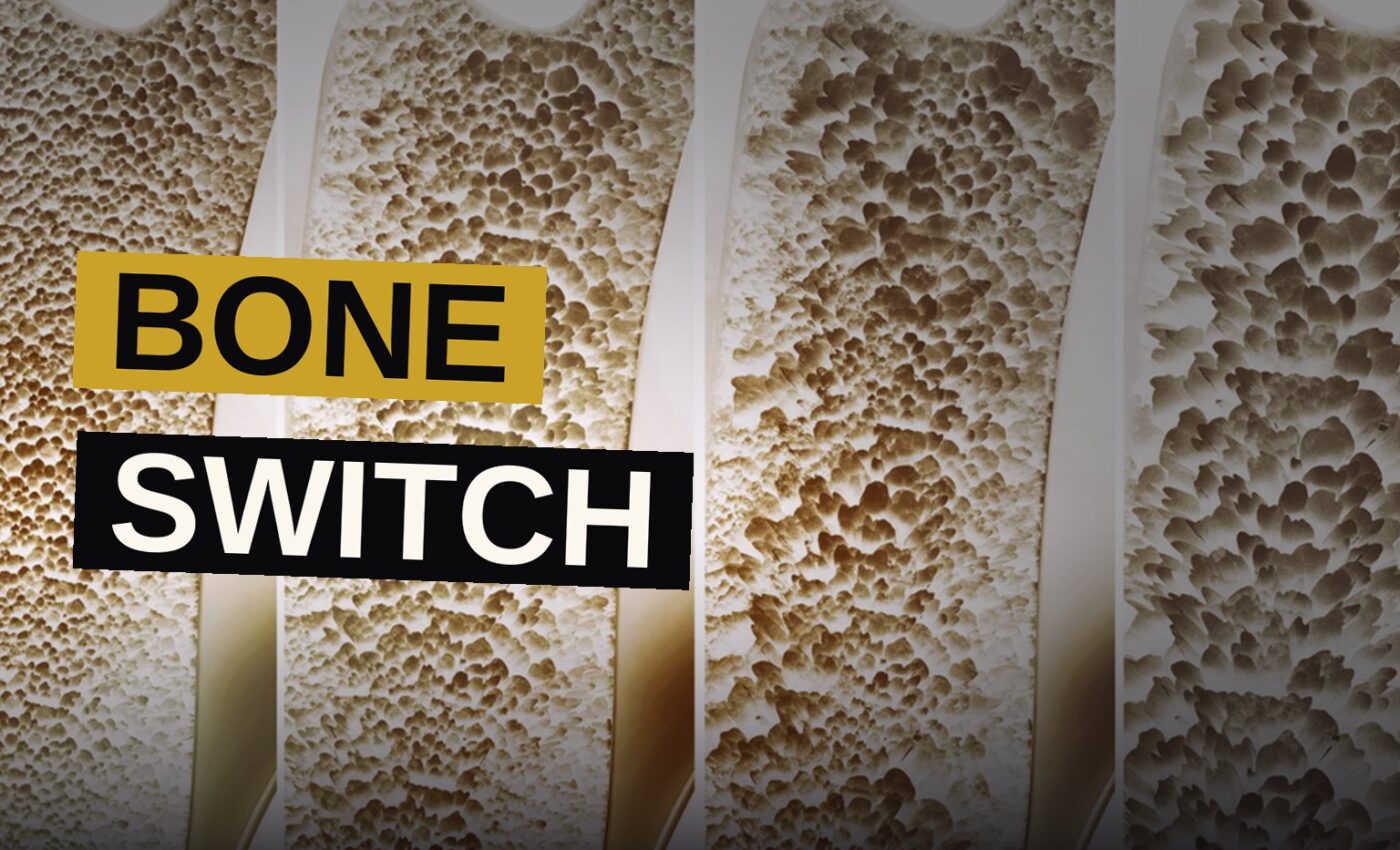
Researchers in Leipzig discovered a compound that strengthens bones in mice by activating a rarely studied receptor, and that same receptor seems to help build muscle as well.
Researchers have found a potential new approach to treating osteoporosis, a disorder that weakens bones and increases the risk of fractures. About six million people in Germany are affected by it, and most of them are women. Because current treatments carry limitations and side effects, scientists have been searching for fresh biological targets.
A receptor found on the surface of cells, known as GPR133, has been singled out by researchers at Leipzig University as central to maintaining bone health. Upon activation of this receptor using an experimental substance labeled AP503, bone strength rose markedly in both healthy mice and in those suffering from osteoporosis-like bone loss.
A Receptor That Responds to Physical Force
The receptor GPR133 falls within a group of surface-bound signaling proteins called adhesion G protein-coupled receptors. These receptors reside on cell surfaces and assist cells in reacting to cues from their environment. While this family of receptors remains poorly understood, recent research indicates that GPR133 acts directly in bone formation and maintenance.
“If this receptor is impaired by genetic changes, mice show signs of loss of bone density at an early age – similar to osteoporosis in humans,” said Professor Ines Liebscher, lead investigator of the study from the Rudolf Schönheimer Institute of Biochemistry at the Faculty of Medicine.
“Using the substance AP503, which was only recently identified via a computer-assisted screen as a stimulator of GPR133, we were able to significantly increase bone strength in both healthy and osteoporotic mice.”
Researchers say GPR133 shows promise as a potential target for new osteoporosis drugs, based on their findings. Their work appeared in the journal Signal Transduction and Targeted Therapy.
How the Switch Shifts the Bone Balance
The skeleton is continuously remodeled through a cycle involving bone-forming cells known as osteoblasts and bone-resorbing cells known as osteoclasts. Osteoblasts create new bone material, while osteoclasts break down old bone as part of the body’s natural renewal process. Keeping the correct balance between osteoblast activity and osteoclast activity is essential for healthy bones.
Bones grow weak when the rate of bone removal surpasses the rate of bone creation. The condition known as osteoporosis sets in once that balance shifts too far toward bone loss.
When GPR133 becomes active, it tips the scale so that cells building bone become more active while those breaking it down slow their pace. This shift leads to bone that is denser and lasts longer.
The compound AP503 seems to copy the natural signal that turns on GPR133 inside bone tissue, where the receptor reacts to physical forces and close contact between neighboring bone cells.
The possibility exists that AP503 might someday be employed to boost bone strength or aid in restoring bone that has grown weak. A likely use case would be osteoporosis tied to menopause, a period when falling hormone levels can speed up bone loss in women.
The Same Compound Also Strengthens Muscle
Beyond the skeleton, these results may hold significance. Earlier work by researchers at Leipzig University showed that AP503 activation likewise bolsters skeletal muscle.
“The newly demonstrated parallel strengthening of bone once again highlights the great potential this receptor holds for medical applications in an aging population,” said Dr. Juliane Lehmann, lead author of the study and a researcher at the Rudolf Schönheimer Institute of Biochemistry.
For older adults, a therapy that bolsters both bone and muscle could prove particularly useful, since these two tissues frequently decline together with age. Enhanced muscle strength helps maintain mobility and balance. Improved bone density lowers the risk of fractures.
Several Leipzig-based projects are currently underway as follow-up work. Scientists are probing GPR133 further, testing whether AP503 might prove useful for other illnesses, and studying the receptor’s broader duties across the body.
Leipzig’s Decade of Receptor Research
Leipzig University has spent over a decade building its reputation in adhesion G protein-coupled receptor research, and the new study ties directly into that history. The school has treated these receptors as a key area of focus, thanks to the work of Collaborative Research Center 1423, Structural Dynamics of GPCR Activation and Signaling.
The program centers on how these receptors shift form, get activated, and send signals within cells. Leipzig University holds an international reputation as a major center for research in this field.
Professor Ines Liebscher serves as lead investigator on the study, while its lead author is Dr. Juliane Lehmann. The research was published in Signal Transduction and Targeted Therapy, “The mechanosensitive adhesion G protein-coupled receptor 133 (GPR133/ADGRD1) enhances bone formation,”.
The Path Toward a Treatment
The project remains in its early stages, working with living creatures rather than human subjects. So far, AP503 — a substance only recently discovered through a computer-assisted search as an activator of GPR133 — has been put to the test in two groups of laboratory mice: first in healthy specimens, and then in animals bred to mimic human bone loss, where stimulating the receptor led to a marked increase in bone strength.
There is a clear need for fresh approaches. Some six million people in Germany suffer from osteoporosis, most of them women, and current treatments carry limitations and side effects. A substance that boosts bone-forming osteoblasts while holding back bone-resorbing osteoclasts — and which also builds up skeletal muscle — would be particularly useful for older adults, who frequently see declines in both tissues together. The researchers have already pointed to one possible use: osteoporosis linked to menopause, where falling hormone levels can speed bone loss in women.
“The newly demonstrated parallel strengthening of bone once again highlights the great potential this receptor holds for medical applications in an aging population.”
The Leipzig team’s follow-up projects — understanding GPR133 more fully, investigating whether AP503 could have applications in other diseases, and examining the receptor’s wider functions throughout the body — will determine whether AP503 or similar compounds can move toward clinical development. For now, the receptor has been identified as a switch worth flipping.
Source: sciencedaily.com
Get the Notebook.
The day's best stories and every fresh verdict, in plain English, in your inbox by seven. One email a day, no more.