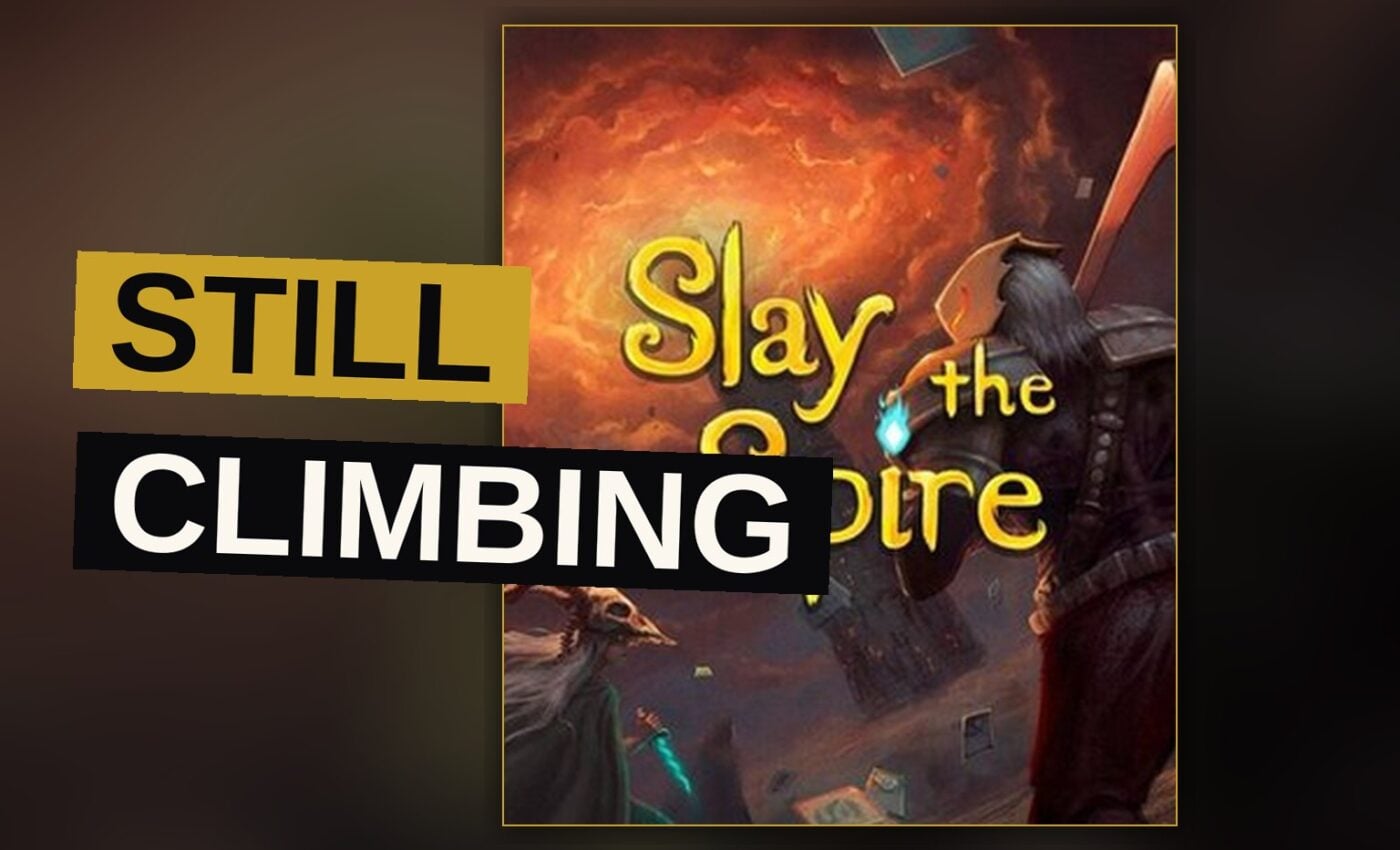
Slay the Spire ends the way it begins: with a choice you will probably get wrong. Mega Crit Games’ deck-building roguelike asks players to pick one of four characters, climb a procedurally generated spire, and build a winning deck out of whatever the floors hand them. It is single-player, side-on, fantasy, and it came out in early access for Microsoft Windows, macOS and Linux in late 2017 before an official release in January 2019. Console and mobile ports followed into 2021. Seven years on, it is still the game the genre gets measured against.
Trailer, via Mega Crit.
Four Climbs, Four Rulebooks
Each character starts with different health, a unique starting relic, gold and a starter deck. Cards and relics stay character-specific for the whole run, so the four climbs feel like four different games sharing a rulebook. You work up several floors, each one a branching map of encounters with a boss at the end. Monsters, elite enemies, campfires, shopkeepers, chests and choice-based events all sit on that map, and the path you take decides what you can afford later.
Three Energy a Turn
Combat is turn-based. Every turn you draw a fresh hand and get three energy points. Play whatever you can pay for; everything left over goes to the discard pile. Cards come as attacks, skills that buff you, debuff enemies or add block for the turn, and powers that stay in play until the fight ends. Enemies telegraph their next move — how hard they will hit, whether they will block, whether they will cast. That single design decision is why Slay the Spire works.
Wounds and Curses
Some enemies and some of your own cards stuff unplayable junk into the deck — Wounds and Curses that dilute your hand and drag negative effects along with them. This is the game’s real threat. A deck is not just what you add; it is what you fail to remove, and the shopkeeper who strips a card for gold is often the most valuable stop on the map. Slay the Spire understands that deck-building is mostly subtraction.
Relics That Carry Over
Relics give permanent buffs and carry across the entire run, which makes them the closest thing to a through-line in a game built on randomness. Potions are the opposite: limited, disposable, spent in a bad turn and gone. Between the two, every resource decision has weight. Do you buy the card, cut the card, or hold the gold for a relic you have not seen yet? The game rarely tells you, and that silence is the point.
A Genre Built Here
Slay the Spire is widely credited with popularizing roguelike deck-building, and the credit is deserved. It was nominated for multiple awards in 2019 and 2020, and its influence is now the default grammar of the genre. A sequel, Slay the Spire II, arrived in early access in March 2026 — early access, not a full release. That the original still holds up against everything it inspired is the strongest argument for it.
What the Randomness Costs
The procedural generation is the weakest part. A run can hand you a floor layout that starves a deck of the relics it needs, and no amount of skill fixes a bad draw at the wrong boss. The four characters are distinct, but the climb itself can blur after enough attempts. These are real complaints, and they do not sink the game. They just mean some runs are lost before they start.
The Numbers
- Developer: Mega Crit Games
- Initial PC publisher: Mega Crit
- Console and mobile publisher: Humble Bundle
- Early access (Microsoft Windows, macOS, Linux): late 2017
- Official release (PC, macOS, Linux): January 2019
- Genres: RPG, strategy, turn-based strategy, adventure, indie, card & board game
- Theme: Fantasy
- Perspective: Side view
- Modes: Single player
- Metacritic: 8.8/10
- Sequel: Slay the Spire II, early access, March 2026
When It Landed
| Platform | Release |
|---|---|
| Microsoft Windows, macOS, Linux (early access) | Late 2017 |
| PC, macOS, Linux (official) | January 2019 |
| PlayStation 4 | May 2019 |
| Nintendo Switch | June 2019 |
| Xbox One | August 2019 |
| iOS | June 2020 |
| Android | February 2021 |
Why It Still Holds
Slay the Spire earns its reputation. The three-energy turn, the telegraphed enemy moves, the relics that persist and the potions that do not — every system feeds the next, and none of them is decoration. The deck-building is the whole game.
The randomness is a genuine flaw, not a feature to wave away. But the runs that go right are the reason people keep climbing a game with four characters and a branching map. Mega Crit Games built the thing the rest of the genre still answers to.
Get the Notebook.
The day's best stories and every fresh verdict, in plain English, in your inbox by seven. One email a day, no more.