
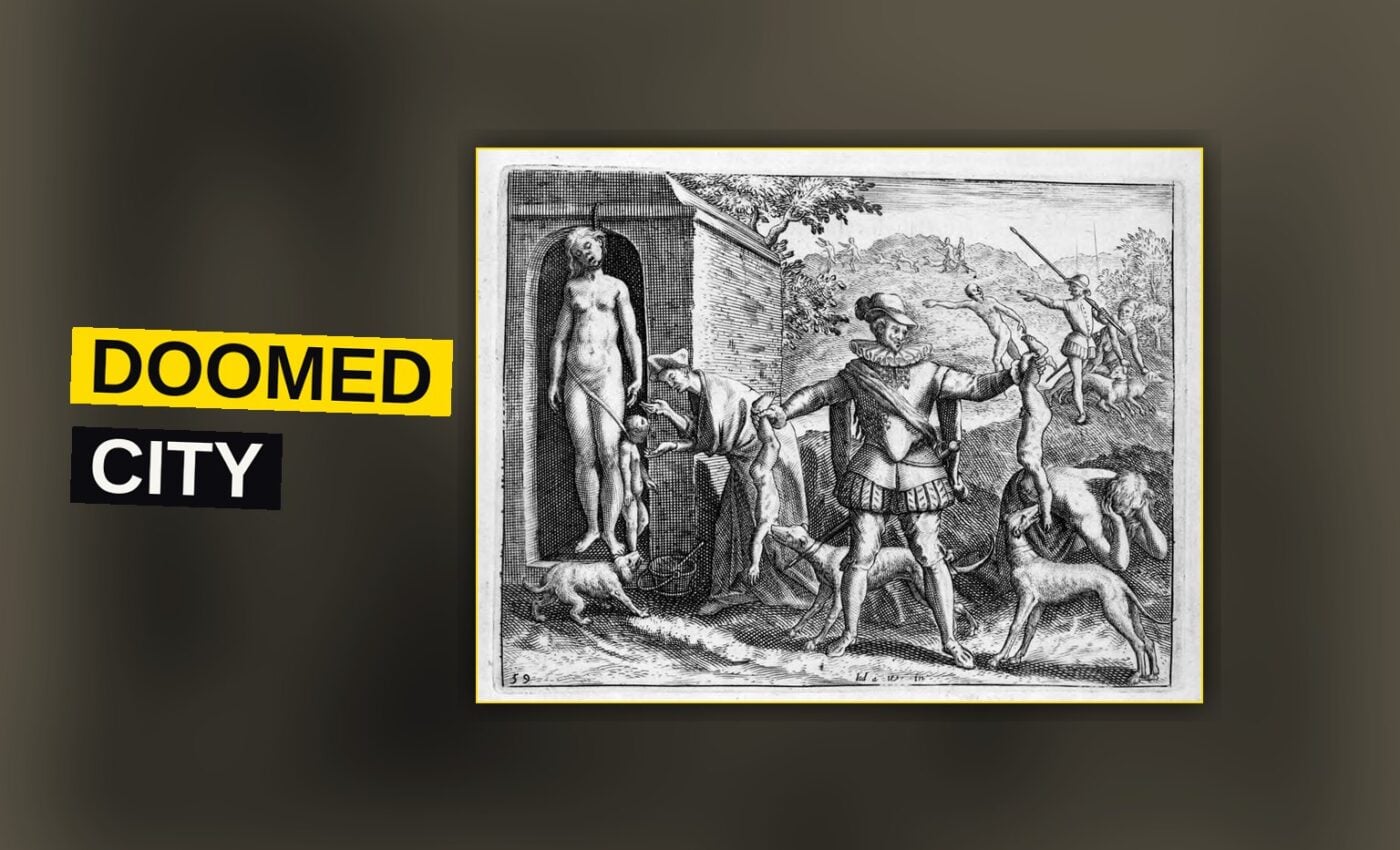
Black Legend drops players into a 17th-century Spanish city overrun by a cult inspired by the great alchemist Mephisto. The game is a turn-based strategy RPG built around tactical combat and alchemical crafting, and it wants to be a dark, immersive experience. That ambition does not always land.
Trailer, via Warcave.
The City and the Cult
The setting is a doomed city, besieged by a cult that worships Mephisto, a figure drawn from historical alchemical lore. Players fight through waves of enemies in battles that unfold in real-time within a turn-based framework. The city itself is dense, filled with narrow streets, churches and guild halls, and the game leans heavily on that period detail.
Combat is the core loop. Players manage a small band of warriors, each with their own skills and weaknesses, and move them across grid-based arenas to strike down cultists. The system rewards planning and punishes carelessness. Losing a battle can mean losing a character permanently, which gives fights a weight they might otherwise lack.
Alchemy and the Art of Mephisto
Alchemical crafting runs alongside the combat. Players gather ingredients, combine them into potions and bombs, and equip those items to their fighters. The alchemy system adds depth to encounters, since a well-timed potion can turn a losing fight into a win. It is a clever addition, though it does not always feel essential to the campaign.
The 17th-century setting is used as both backdrop and theme. The game draws on the historical concept of the Black Legend — the supposed anti-Spanish and anti-Catholic propaganda of the 16th century — to color its narrative. This framing allows the game to explore themes of religious persecution and imperial cruelty without having to explain them directly.
The Story and Its Protagonist
The plot follows a warrior tasked with liberating the city from the cult. He is joined by a cast of allies, each with their own motives and secrets. The story moves at a steady pace, alternating between quiet character moments and large-scale battles. It does not attempt to be subtle, leaning on dramatic speeches and grim imagery to sell its tone.
The protagonist’s arc is the heart of the game. His journey through the city, marked by loss and betrayal, gives the narrative its emotional anchor. The game’s writers lean on this character to carry the weight of its themes, and he mostly succeeds.
Performance Across Platforms
Black Legend launched on Xbox Series X|S, PlayStation 4, PC, PlayStation 5, Xbox One and Nintendo Switch. Performance varies across those platforms. The game is at its best on Series X|S and PC, where the turn-based combat holds up well and the city looks detailed. On the Switch, the frame rate dips during battles, and the dense streets become harder to navigate.
| Platform | Combat | Look |
|---|---|---|
| Series X | S / PC | Smooth |
| PlayStation 4 | Acceptable | Moderate |
| PlayStation 5 | Smooth | Detailed |
| Xbox One | Rougher | Moderate |
| Switch | Dips | Moderate |
The Switch version is the weakest link. Battles slow down during enemy waves, and the game’s dark palette loses clarity on the smaller screen. Players who own the game on multiple systems will likely find the Series X|S or PC versions the most satisfying.
Sound Design and Atmosphere
The music and sound design support the game’s grim tone. Enemy shrieks, church bells and distant shouting fill the city streets, giving the world a sense of dread even when nothing is happening on screen. The score shifts between tense and triumphant, matching the action on screen.
The game’s audio is one of its stronger elements. Sound cues tell players where enemies are hiding, and the ambient noise of the city helps sell the sense of danger. It is a small detail, but it matters in a game built around stealth and positioning.
Where It Falls Short
The pacing suffers in the middle stretch. Some missions feel repetitive, with similar objectives and enemy types. The game’s difficulty spikes can also frustrate players who expect a steady curve. Losing a key fighter mid-campaign can change the shape of a mission entirely, and that risk is not always communicated clearly.
The game’s reliance on the Black Legend concept as its central theme means it occasionally leans on heavy-handed exposition. Characters deliver long speeches about Spanish cruelty and the corruption of power, which slows the momentum of the action. These moments are meant to ground the fantasy in history, but they can feel like lectures rather than storytelling.
Comparing the Versions
The performance difference between Series X|S and Switch is stark. The PC and Series X|S versions offer a smoother experience, with battles running at full speed and the city rendered in high detail. The PlayStation 5 version matches that quality, while the older consoles and Switch struggle more.
| Feature | Series X|S / PC | Switch |
|—|—|—|
| Frame rate | Smooth | Dips |
| Detail | High | Moderate |
| Pacing | Consistent | Slower |
| Difficulty | Balanced | Rougher |
Players who want the best experience should aim for the PC or Series X|S versions. The Switch version is playable, but it shows the strain of porting a complex game to a handheld.
Final Word
Black Legend is a solid, if uneven, turn-based RPG. Its combat is engaging, its setting is atmospheric, and its protagonist is compelling. But the middle stretch drags, and the Switch version shows its limits. For players willing to put in the hours, there is a rewarding campaign here. For anyone looking for a polished package, the game falls short.
The game is currently available on Xbox Series X|S, PlayStation 4, PC, PlayStation 5, Xbox One and Nintendo Switch. Prices vary by platform.
Get the Notebook.
The day's best stories and every fresh verdict, in plain English, in your inbox by seven. One email a day, no more.


