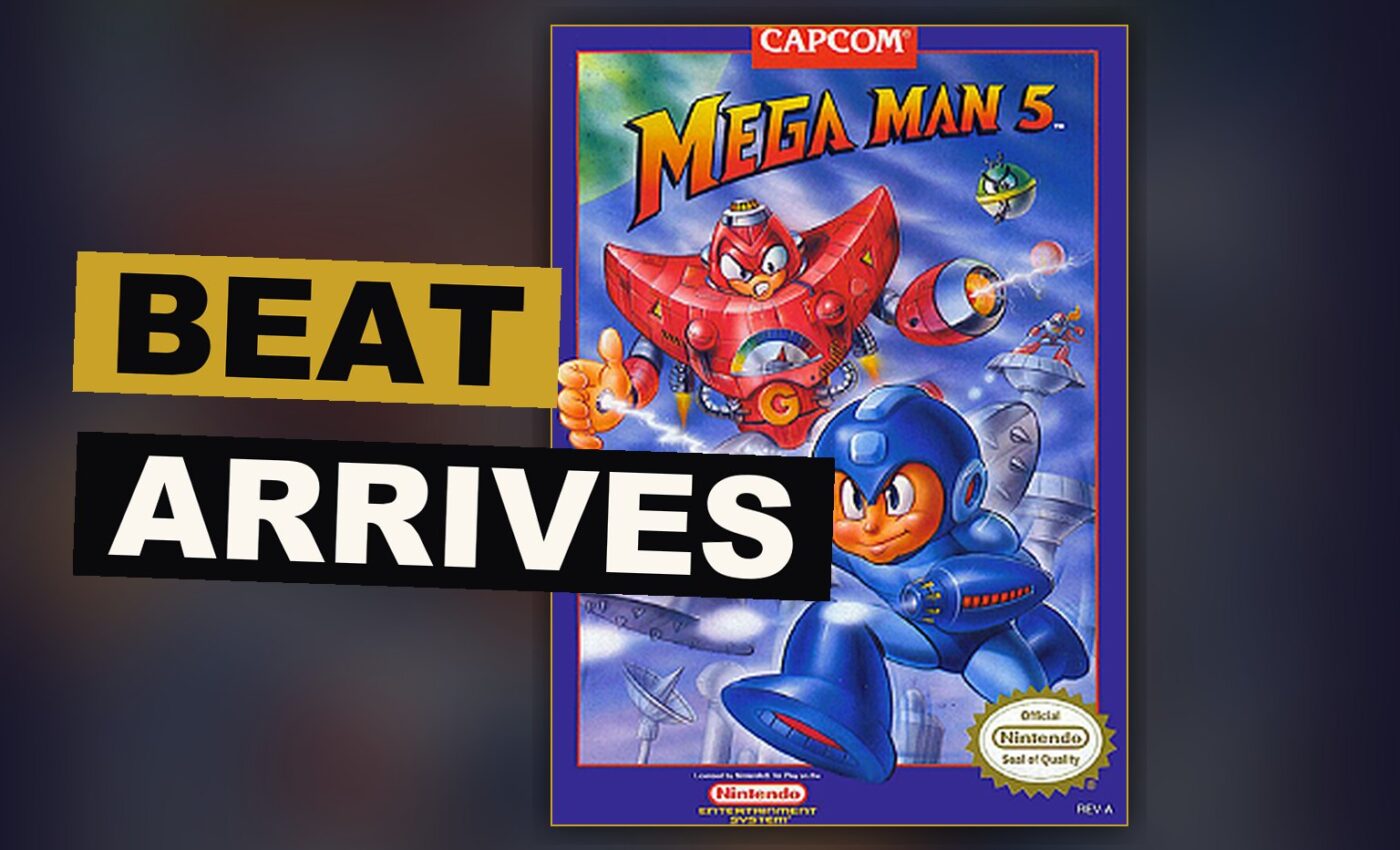
Mega Man 5 arrives on the NES with a simple promise: more of what made the series work, polished until it reads plain and clear. That promise holds up.
The Robot Masters
The eight bosses give the game its shape, and each one demands a different plan. Players who study each boss before rushing in will fare better.
- Gravity Man, who twists the screen and turns it over
- Crystal Man, whose stage turns into a puzzle of moving stone
- Star Man, whose attack punishes careless motion
- Charge Man, a fast, direct fight built on timing
Order matters here. Picking the wrong boss first can leave a player without the right means to face the next fight.
Beat and the New Additions
The bird companion Beat joins the cast this time, and he changes how difficult moments play out. Called in at the right moment, he can carry a player past danger during a hard spring or a wide opening in the ground.
New devices drawn from each Robot Master keep the fight against them fresh, and the game rewards trying each one rather than relying on a single choice.
Level Design and Difficulty
The stages step up in ambition compared to the earlier games in the series. Hazards pile on top of each other, and enemies are placed with care, forcing players to check their pace and think rather than charge ahead.
Difficulty rises steadily.
- Early stages ease players into the controls
- Middle stages test quick skill against harder enemy attacks
- Late stages join everything learned into long, demanding runs
Nothing here feels wrong or cheap. Every death teaches something, and every attempt feels within reach.
Sound and Presentation
The soundtrack matches the action beat for beat, with music that stays in the mind well after the console is off. The game pushes the NES hardware hard, packing detail into each stage without checking the action down.
Color use stands out too. Each stage carries its own look, giving the eight worlds distinct identities instead of running together.
Where It Lands
Mega Man 5 does not remake the series from the ground up. It builds on what came before, making controls tighter and level design stronger, and adding Beat as a useful new piece without making the game harder to follow.
Players of the earlier games will feel at home immediately. Those new to the series will find a game that teaches its rules clearly and never punishes without reason.
Few NES titles balance challenge and fairness this well.
Mega Man 5 earns its place among the best on the console. Tight design, music worth remembering, and strong new additions add up to one of the best works the series has produced.