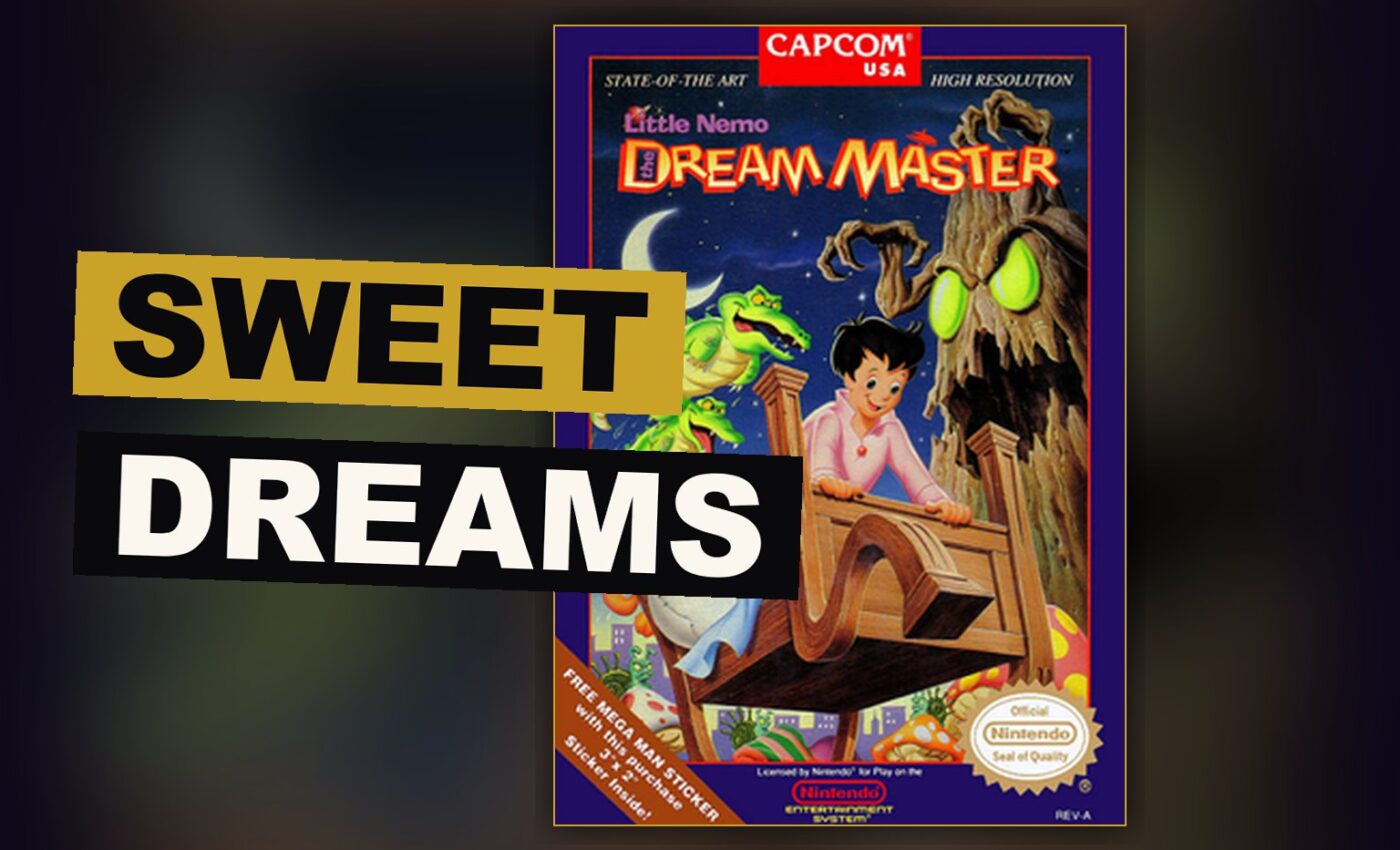
Little Nemo: The Dream Master asks players to feed sweets to monsters before they can strike them. That single rule shapes almost every level in this NES platformer, and it still feels strange decades later.
The game puts players in the part of Nemo, a boy who slips into a dream world full of large creatures and changing rooms. Nemo cannot attack on his own. Instead, he throws sweets at enemies, and once they eat enough, he can enter them and use their powers. A frog lets him spring higher. A bee lets him fly over open spaces. Other creatures grant other powers as the game goes on. The idea turns ordinary enemies into temporary tools, and it gives the game a rhythm that sets it apart from other action titles on the system.
The Sweets System
The sweets system sounds simple, but it changes how a player has to think about every room. Throwing sweets takes time, and enemies do not always act as hoped. Players have to plan several steps ahead, deciding which creature to win over and when to let it go. This eases the pace of play compared to games that let a hero fight right away. Some players will find this pace hard to bear. Others will find it makes the game feel more like a puzzle than a plain running and springing title.
Little Nemo: The Dream Master moves through many settings, from bright forests to darker portions of the dream world that tend toward nightmare rather than pleasant sleep. The scenery carries real detail for the hardware, and the drawing of Nemo and the creatures he controls holds up well next to other NES games from the same period.
Level design depends on the sweets and creature idea constantly. Getting through a stage often means returning to an earlier spot to find the right animal for a certain barrier. That return trip can feel like repeated work in the middle portion of the game, where fresh ideas grow scarce and older tricks return.
The difficulty rises and falls without much warning. Early levels ease players into the sweets system gently, but later stages demand careful timing with creatures that do not answer commands as well as Nemo himself. A badly timed spring while inside the bee, for example, can send a player falling back through a level already passed. This change in difficulty keeps the middle and later parts of the game from matching the strength of the opening.
The music backs up the dream setting with sound that moves from light to serious depending on the stage. It is not the most striking score on the NES, but it does its work without growing wearisome over many playthroughs. The look of the game, in general, is neat, with clear outlines around every sprite and few quiet moments even when several enemies fill the screen at once.
Facts at a Glance
- Platform: NES
- Genre: Platformer
- Core idea: give sweets to tame enemies, then use their powers to move forward
- Score: 7.8 of 10
Little Nemo: The Dream Master does not try to be the fastest or hardest platformer on the NES. It succeeds because its central idea, winning over creatures through patience rather than force, still feels different among its peers.
The changes in difficulty and the repeated portions keep it from standing among the system’s very best games, but the fresh thinking behind its core idea gives it a lasting appeal that beats out more elaborate titles from the same period.
Little Nemo: The Dream Master earns its place as a solid, unusual addition to the NES library, built on an idea few other games attempted. It rewards patience more than quick reactions, and that choice still sets it apart today.