Life Force puts a ship on screen, throws enemies at it from every side, and gives the player a few seconds to prove they can last. It is hard. It is loud. It is also one of the better shooters the NES ever received.
The Setup
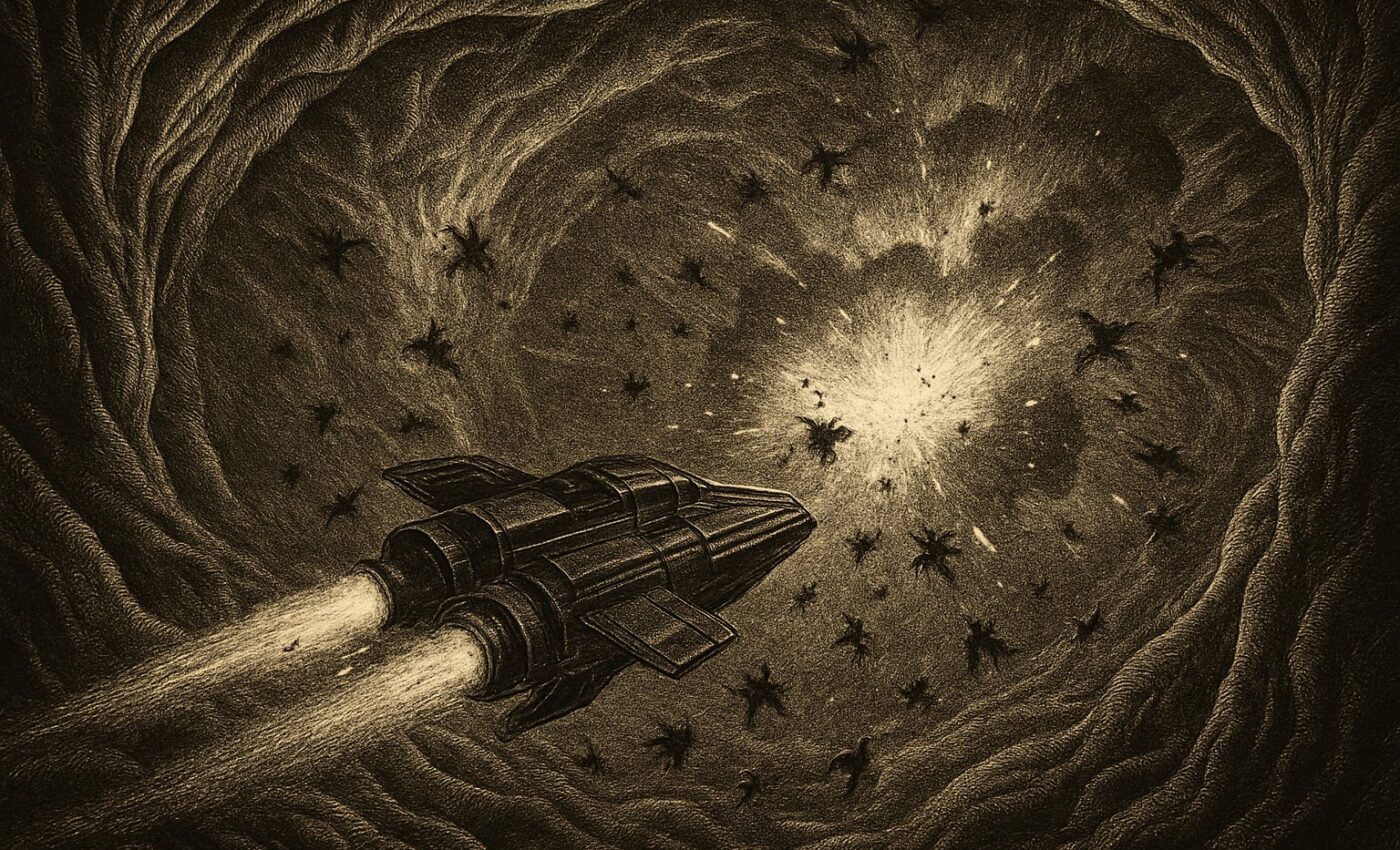
Life Force sends players through a scrolling world built from strange, living matter. Ships pass walls of flesh, cave systems, and enemies that split apart and reform. The game does not waste time on story. It puts a ship on screen and starts throwing enemies at it within seconds.
Two players can join at once, and that matters. Life Force is built for shared runs, with both ships sharing the screen and the danger. A single hit can end a run in an instant, so every choice made near an enemy wall counts.
Upgrades
Enemies drop items that fill a meter at the bottom of the screen. Players choose when to claim an upgrade, picking from stronger guns, wider shot, better protection, and small companion machines that follow behind the ship and copy its fire. The system rewards patience. Claiming an upgrade without a plan often leaves a ship worse off than before.
The strongest builds tend to follow a rough order that most players learn through repeated attempts:
- The straight, focused shot, for cutting through strong enemies
- Companion machines, for extra fire that doubles a ship’s force
- A quicker ship, to keep pace with the level’s push forward
- A barrier, for one hit of protection when things go wrong
Losing a life takes away every upgrade at once. That single choice shapes the whole game. A ship that felt strong seconds earlier suddenly feels bare and weak, and the drop in power can end a run before the player has time to recover.
Level Design
Life Force sets its stages across settings built from strange, living matter. Some paths narrow to the size of a single ship. Others open into wide rooms filled with enemies firing from many directions at once. The level design does not ease players in. It expects clear timing and careful memory in equal measure.
Boss fights close out most stages, and this is where Life Force shows its best design work. Bosses fill large parts of the screen, with weak points that open only after steady fire. Beating one down feels earned, not handed over.
Difficulty
Life Force is hard, and it makes no attempt to soothe that fact.
Enemy movements call for careful timing, and the plan of each level punishes hesitation. A moment of doubt near a wall of enemies usually costs a life. For players used to modern checkpoints, losing every upgrade on death can feel harsh, even wrong, since a full stage’s worth of progress on a ship can disappear in a moment.
That harsh edge is also part of what makes finishing Life Force feel good. Clearing a stage without dying, keeping a build whole from start to end, offers a payoff that few gentler games can match.
Sound and Sight
The NES was not known for showing living, changing worlds, but Life Force pushes the hardware toward that look all the same. Walls seem to move like something alive. Enemies split and reform. Scenery changes in ways that make the game feel alive rather than still, which was rare for a shooter on this console at the time.
The music matches the pace on screen. Fast, driving tracks push each stage forward, giving Life Force a sense of urgency that suits its difficulty. Sound effects land with weight behind every shot fired and every enemy destroyed.
Two Players
Playing together remains one of the best reasons to return to Life Force. Sharing the screen with a second player adds a layer missing from playing alone. Deciding who takes which upgrade, watching each other’s blind spots, and helping a struggling partner all add depth that a single player does not get.
It also raises the danger. Two ships on screen means twice the exposure to enemy fire, and working together becomes as important as quick hands.
Life Force still holds up decades after it first appeared, not as a museum piece but as a shooter players return to and finish. It earns a 7.8 of 10.