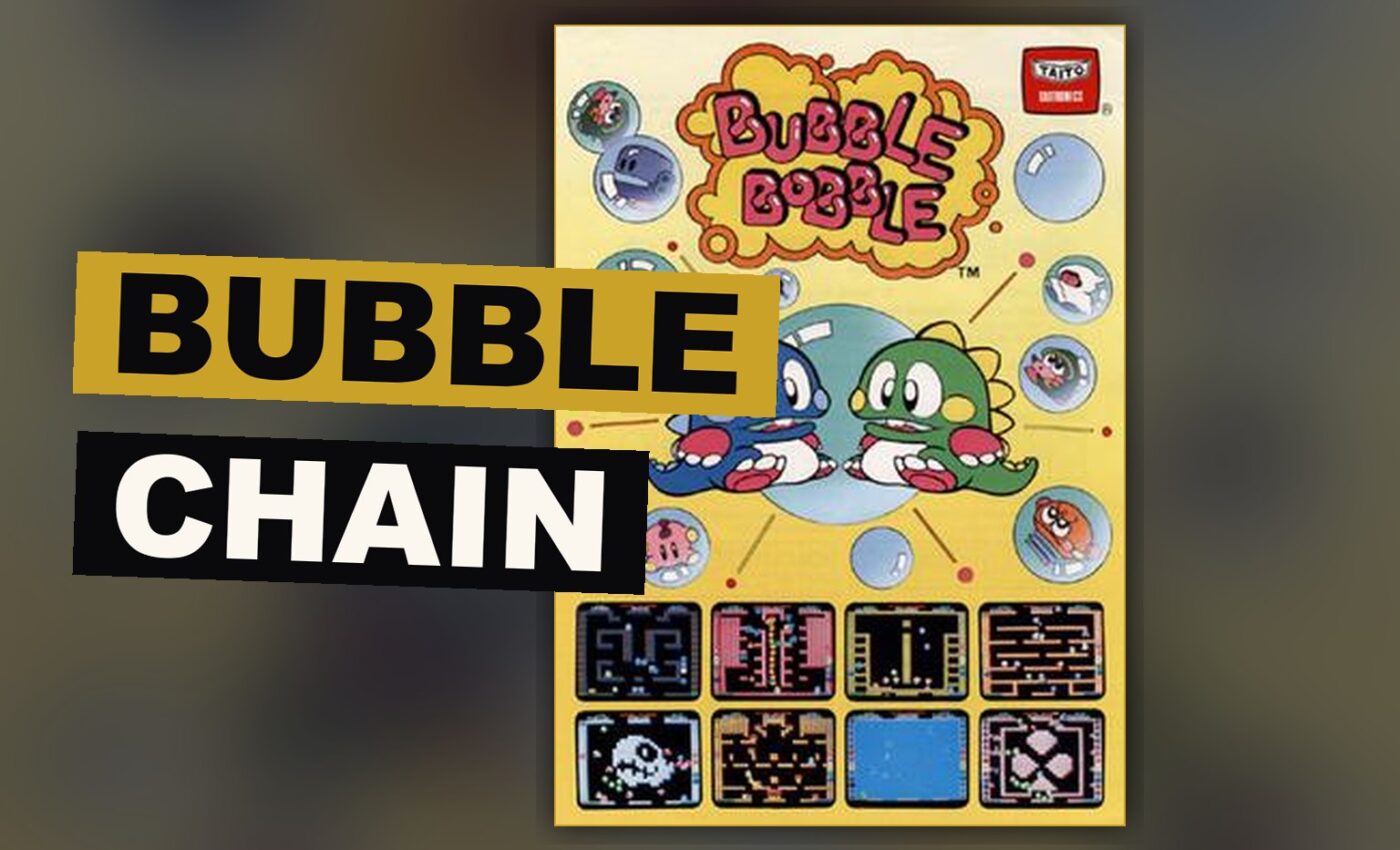
Two small dragons blow bubbles at every enemy in sight, and that single idea carries the whole game. Bubble Bobble on the NES is a port of the arcade original, and it still plays like a fast, cheerful puzzle built for one round after another.
The Dragons and Their Bubbles
The two dragons do not attack with fire. They send out bubbles that catch enemies instead of killing them at once. Once an enemy is caught inside a bubble, popping it turns the enemy into fruit or treasure, and a level ends when every enemy on the screen is gone.
The deeper trick is a chain of pops. Popping several bubbles together earns more points than popping them one by one, and skilled players learn to hold back and set up a chain before they strike. That choice carries risk, since waiting too long lets enemies pile up around the player.
How the Levels Move
The game runs through more than a hundred short levels, and each one asks the player to solve a small problem of platforms and paths. Some levels are open and easy to read. Others box the player into narrow spaces where one badly placed bubble can shut the player in rather than the enemy.
Play rarely stands still. If a level runs too long, more enemies appear, and near the end of that wait a rush of danger forces the player to act. That keeps early levels from feeling empty or dull.
Bubble Bobble also allows two people to play at the same time, and this changes the whole feel of the game. A second player can free the first by popping a bubble before an enemy reaches them, and getting through the harder levels often depends on working together rather than skill alone. Played by one person, the game still holds up well, but the challenge grows by a good deal. Some levels seem built with two players in mind, and a player without a partner has fewer paths open when enemies close in from more than one side.
Arcade Original Against the NES Port
| Feature | Arcade Original | NES Port |
|---|---|---|
| Look of the game | Finer detail in the art | Fewer colors, plainer art |
| Sound | Fuller arcade music | Thinner but still familiar tunes |
| Two people playing | Two players share one screen on a single machine | Both players share one screen |
| Number of levels | More than a hundred short levels | Levels carried over, though the exact count may differ |
The NES port loses some polish in how it looks, but the way the game plays stays the same as the arcade version. Anyone who played the arcade machine will know this rhythm at once, even with rougher edges in how it looks and sounds.
Where the Game Falls Short
New players are punished early. Most early deaths come from placing a bubble wrong, and the game gives little guidance beyond letting the player figure things out alone.
Some levels also repeat the same enemy ways again and again, and long periods of play can start to feel worn rather than fresh. The charm of the art carries the game further than it should, but by the later levels, the repeats are hard to miss.
Bubble Bobble on the NES stays true to a simple arcade idea, and that idea holds more depth than it first appears once the trick of chaining bubbles falls into place for the player. Playing with a partner is still the best way to enjoy it, though a player on their own will find enough here to enjoy despite the harder late levels. It is not a perfect port, and the repeated ways late in the game keep it from being great, but it remains one of the best games built for shared play on the console.