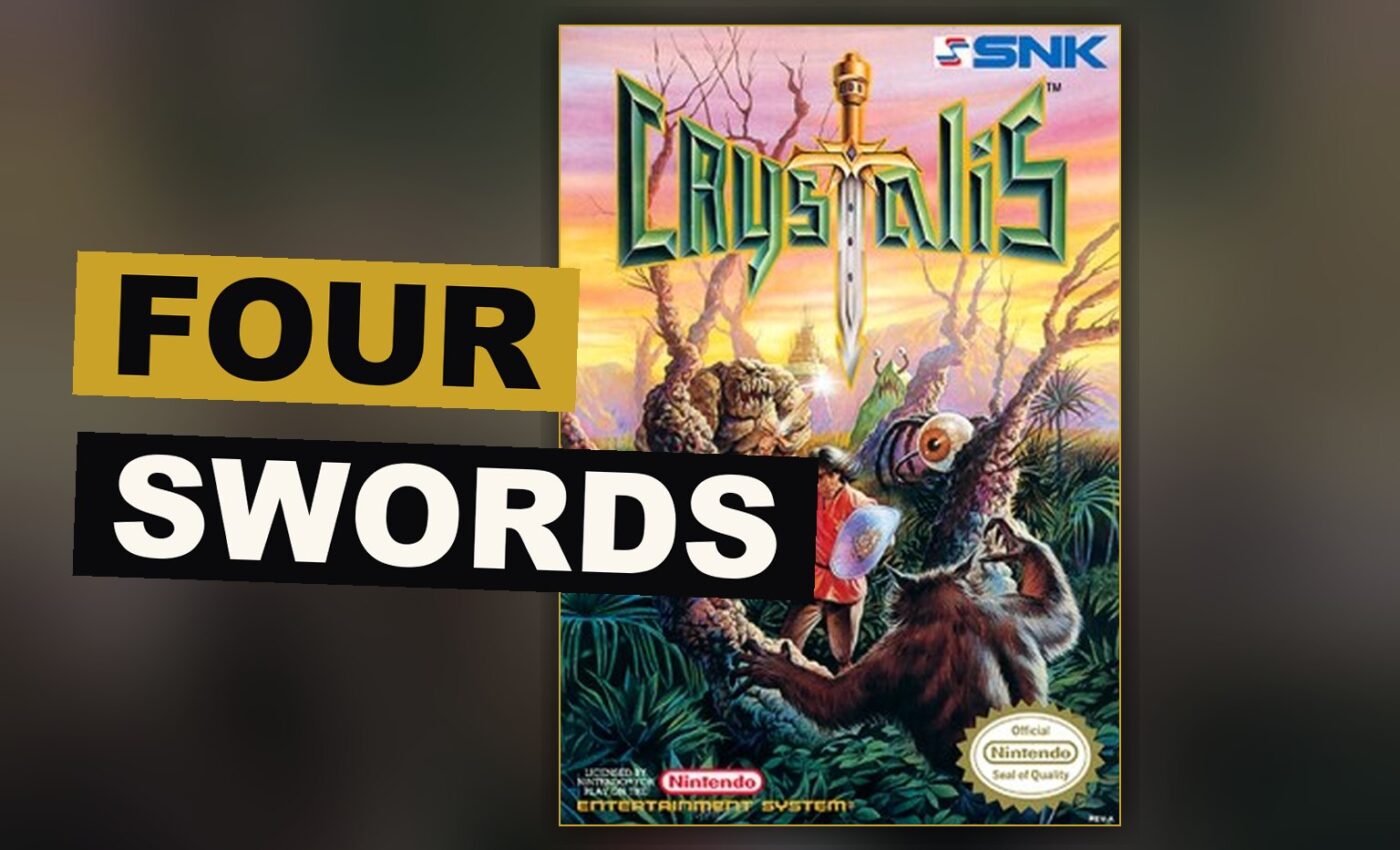
Crystalis asks players to save a ruined world with a sword, a set of powers tied to wind, fire, water, and storm, and surprising patience for a game that reached the NES in 1990. The title landed late in the console’s life, and it still holds up as one of the system’s most ambitious experiments.
A World After War
The story drops the hero into a future long after a great war left the land in ruins. Towns are being built again. Monsters roam the wilds. The story is simple by modern standards, but it gives every dungeon and field a reason to exist, and the world feels connected in a way many NES games never bothered with.
Fighting, Strength, and Puzzles
The action favors direct fighting over menus and turns, a choice that set Crystalis apart from other games of its kind on the system. Players strike with swords, move around enemy attacks, and gain experience to raise stats. The fighting is not loud or grand, but it answers to the player well, and the rising difficulty rewards careful play over rushed attacks.
Crystalis mixes fighting with light puzzle work, and the two feed each other well. Getting ahead often depends on using the right sword or item in the right spot, not just fighting harder. The game rarely explains itself in plain terms, so players rely on watching closely and trying again, which suits the searching mood the makers were going for.
The Four Swords
The four swords at the center of the game are its best idea. Each one carries a different power, and each solves problems the others cannot.
- The Wind Sword clears certain enemies and opens paths that would otherwise stay shut.
- The Fire Sword handles others and serves purposes outside of fighting as well.
- The Water Sword grants safe passage through hazards that would otherwise stop progress.
- The Storm Sword strikes with the power of storm itself and opens its own set of doors, both in fighting and outside of it.
Switching between them turns finding a way forward into a running puzzle, and the game trusts players to work out which sword opens which door.
Sound and Look
The presentation stands out for the hardware. The music, written for the NES’s limited sound hardware, still carries real melody and mood across towns, fields, and dungeons. The look of the game pushes detail into its characters and settings without losing its definition, and the world has a sense of scale that few NES games matched.
Where It Falls Short
The game is not without trouble. Some late parts demand repeated fighting that makes the pace grow heavy. Item and sword handling can turn hard to manage during longer sessions, and a small number of puzzle answers are hard to see, sending players back over old ground without much guidance.
That said, none of these issues weighs down what the game gets right.
Standing Today
Crystalis has held a name as one of the NES’s rarely praised works, a title that rarely gets the attention of the console’s biggest sellers but earns respect from those who seek it out. Its mix of fighting, searching, and light puzzle design pointed toward directions the genre would take further in later years.
Crystalis remains a rewarding, if sometimes demanding, work in the NES library. It joins together direct fighting, four distinct swords, and a quietly ambitious world into something that still plays well decades later. The rough edges are real, but they do not weigh down the game’s fresh thinking or its skill.