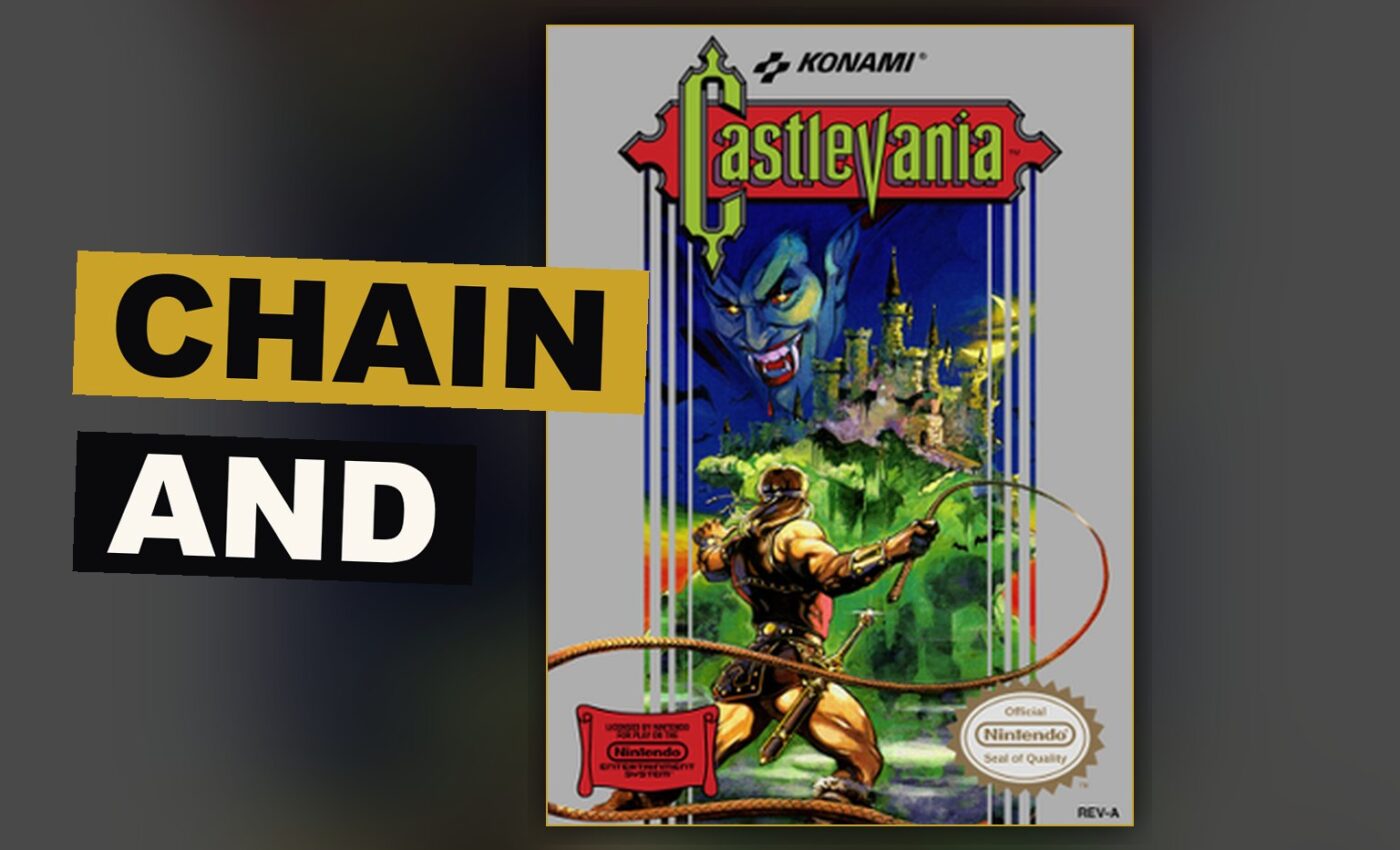
Castlevania puts players in control of Simon, a hunter of vampires, on a march through a dark castle built by an ancient count. The NES game, developed and published by Konami, sets a tone that later action titles would spend years trying to copy. It is hard. It gives little room for error. And it still holds up as a tight, carefully made piece of design.
The Chain and the Fight
Simon carries a chain as his chief item, and it is the whole game. Players strike low, strike high, and throw extra items such as blades, holy water, and axes once they find them kept inside lamps placed through each level. Control feels rigid by modern standards. Simon cannot turn direction once he leaves the ground, and a hit from an enemy sends him slipping away, often straight into an opening with no floor beneath it.
That rigid feel is not a weakness so much as the point. Castlevania asks players to learn each room, each set of stairs, each bat before it lets them through. Progress comes from study as much as quick hands, and the game gives no easy path around either one.
Level by Level
The castle is broken into six levels, each ending in a fight against a guarding foe. The pacing holds steady from start to finish, and the challenge grows level by level rather than in sudden rises of difficulty.
| Level | Setting | Boss |
|---|---|---|
| 1 | Outer Gate | Giant Bat |
| 2 | Water Chamber | Stone Foe |
| 3 | Inner Halls | Wrapped Guardians |
| 4 | Clock Room | Stitched Monster and Companion |
| 5 | Castle Keep | Death |
| 6 | Throne Room | The Count |
Each fight asks for its own plan. Death moves a long blade across the whole screen, and players who have not gathered enough hearts for extra items will find that fight brutal. The Count himself changes form during the battle, a twist that still catches new players off guard. Every boss room feels like a fair test of what came before it in that level.
Sound and Setting
The soundtrack, credited to a Konami sound team, stands apart from most NES games of its time. “Vampire Killer,” the theme that plays through the first level, has outlived the game itself, turning up in covers and tribute recordings for decades. The music carries a weight that matches the stone rooms and lit halls on screen.
The look of the game is plain but effective. Each level looks different from the last, moving from a broken outer gate to a chamber filled with water to a room packed with turning gears, and every setting stands apart from the one before it despite the limits of the hardware. Small touches, like the lamps set along the walls, give the halls a sense of depth beyond what the machine seems built for.
Where It Falls Short
Not everything works well. The way a hit sends Simon slipping away turns the parts of each level requiring careful footing into a real test of patience, especially near openings with no floor below. Some enemy arrangement feels less like a fair puzzle and more like a setup that a new player has no way to see coming.
Losing all of Simon’s lives does not end a run for good. The game grants unlimited continues, and each one sends the player back to the start of the current level rather than the start of the whole game. Even so, a returning player must fight through that level again from its opening room, which still costs time and patience when a boss fight has gone wrong near the end.
The game does not ease any of this for the player.
The Verdict
Castlevania is a game of its time, and it does not cover that up. Its rigid control and harsh hit detection will test the patience of players used to the smoother feel of modern action games. But its level design, music, and mood give it an identity that still holds together many years afterward.
It rewards patience and careful study over quick hands alone. Few games from this period balance trial and reward so well, and fewer still are remembered this clearly so long after they first appeared.
Metacritic places the game at 7.4 of 10.