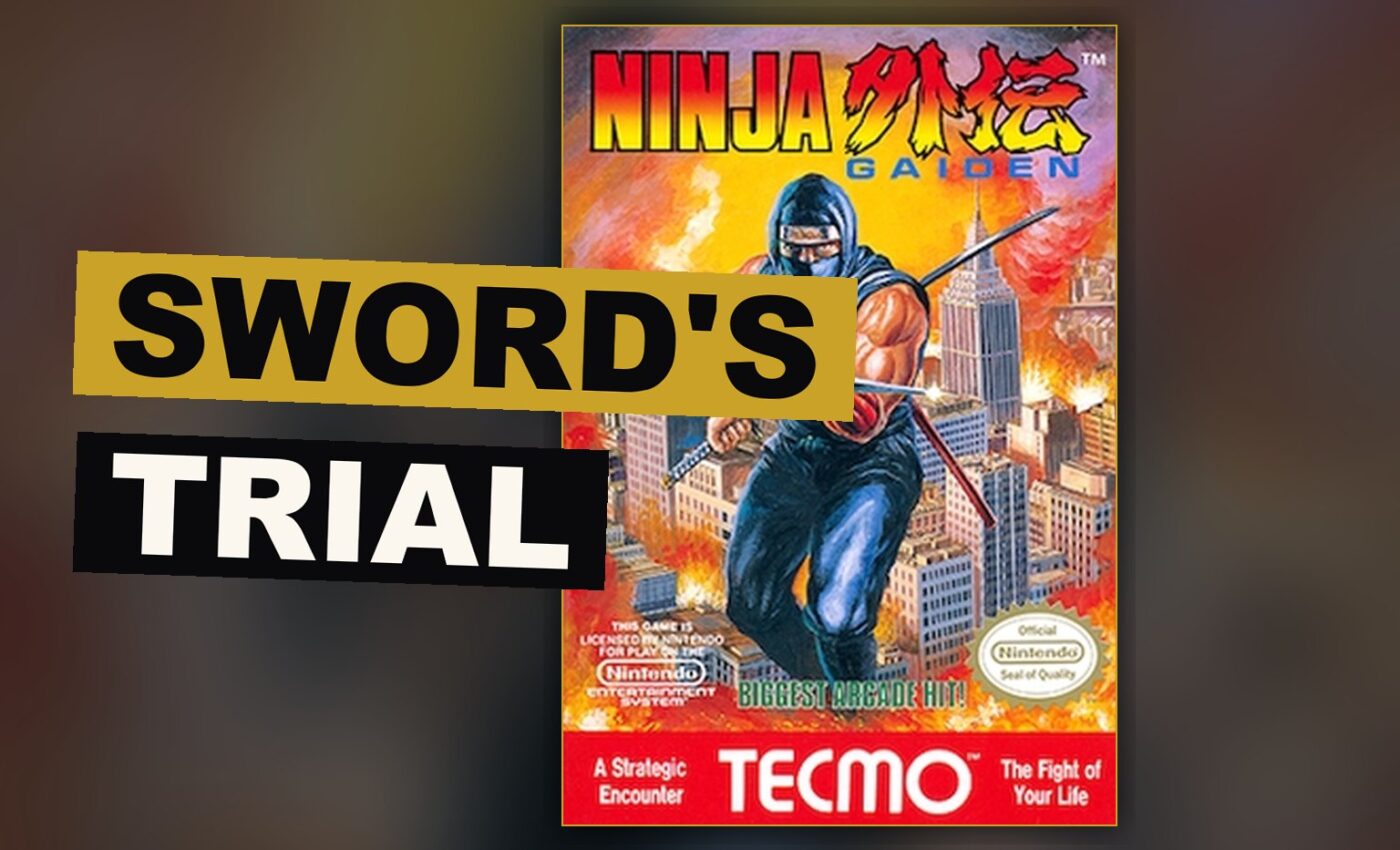
Ninja Gaiden puts a single fighter on screen with a sword and a story that unfolds between levels, on the NES. It mixes fighting seen from the side with short story scenes taken from arcade games and cartoons, a mix that was rare for the system at the time. The game is remembered for those scenes shown between stages as much as for its hard levels.
The Hero’s Search for Answers
Ninja Gaiden breaks up its levels with short scenes shown between stages, not during them. These scenes follow a single fighter as he looks into his father’s death and gets drawn into a scheme involving an evil idol and a rival fighter. The words spoken are simple, but showing a story this way was new for a home console game of this kind.
The scenes give Ninja Gaiden a feeling of forward motion that most fighting games on the NES lacked. Players are not just clearing levels. They are watching a story unfold, scene by scene, between rounds of fighting.
Fighting and Moving
The hero’s sword strikes are quick and pleasing, and springing off walls opens up high parts of each stage. Extra arms, gained from beaten foes, add some variety, including fire wheels and throwing stars. The core set of moves is small but carefully made.
The trouble is what the game builds around those moves. Enemies often force the hero back, and openings sit right where that force will send him. A single hit near an edge can take away several minutes of careful play, and this is one of the complaints about Ninja Gaiden mentioned often in reviews then and since.
Ninja Gaiden is hard.
Some of that difficulty comes from tight enemy positions and hard springs, which rewards care and repeat play. Some of it comes from choices, like forcing players into deep openings, that feel less like a fair test and more like a cost for small mistakes.
Later stages bring in enemies that come back fast if a player stays too long, pushing a faster pace that can feel exciting or not fair depending on the moment. Boss fights ask players to learn enemy motions more than react fast alone, and most can be beaten once a player learns the timing.
How It Compares
| Feature | Ninja Gaiden (NES) | Most Fighting Games on the NES |
|---|---|---|
| Story telling | Scenes shown between stages | Little or none |
| Fighting feel | Quick, precise sword strikes | Varies |
| Force into openings | Common, often costly | Less common |
| Springing off walls | Core feature | Rare |
| Difficulty | Hard, especially in later stages | Often hard but more forgiving |
The table above sums up why Ninja Gaiden stands out from other games on the console. It is not just another game of its kind. It is a game trying to do more with story while asking more of the player’s patience.
The music, made for the NES, holds up well against other games from the same years. Stage tunes change tone to match the mood of each story scene, giving the game a feeling that few fighting games on the system matched.
On screen, Ninja Gaiden uses a limited set of colors well. Characters are small but easy to read, and the art in the scenes between stages, rough by later standards, carries more feeling than most character art of its time.
Closing Thoughts on Ninja Gaiden
Ninja Gaiden succeeds as an early try at joining story and fighting on a system that rarely supported either well. It fails, at times, to make its difficulty feel fair rather than harsh. Both things are true at once, and that mix marks the whole experience.
Players who want tight, hard stages will find plenty to like in the hero’s moves and the steady stream of enemies and threats. Players who want a story built into the game will like the scenes, even if the story itself stays simple. Neither group will walk away without some annoyance at the system of force, which remains the game’s most lasting fault.
Ninja Gaiden earns its place in NES history not because it is without fault, but because it tried something different and mostly got it right. The fighting is good, the presentation reaches high, and the difficulty, while sometimes harsh, gives the game a lasting name among players who finished it.