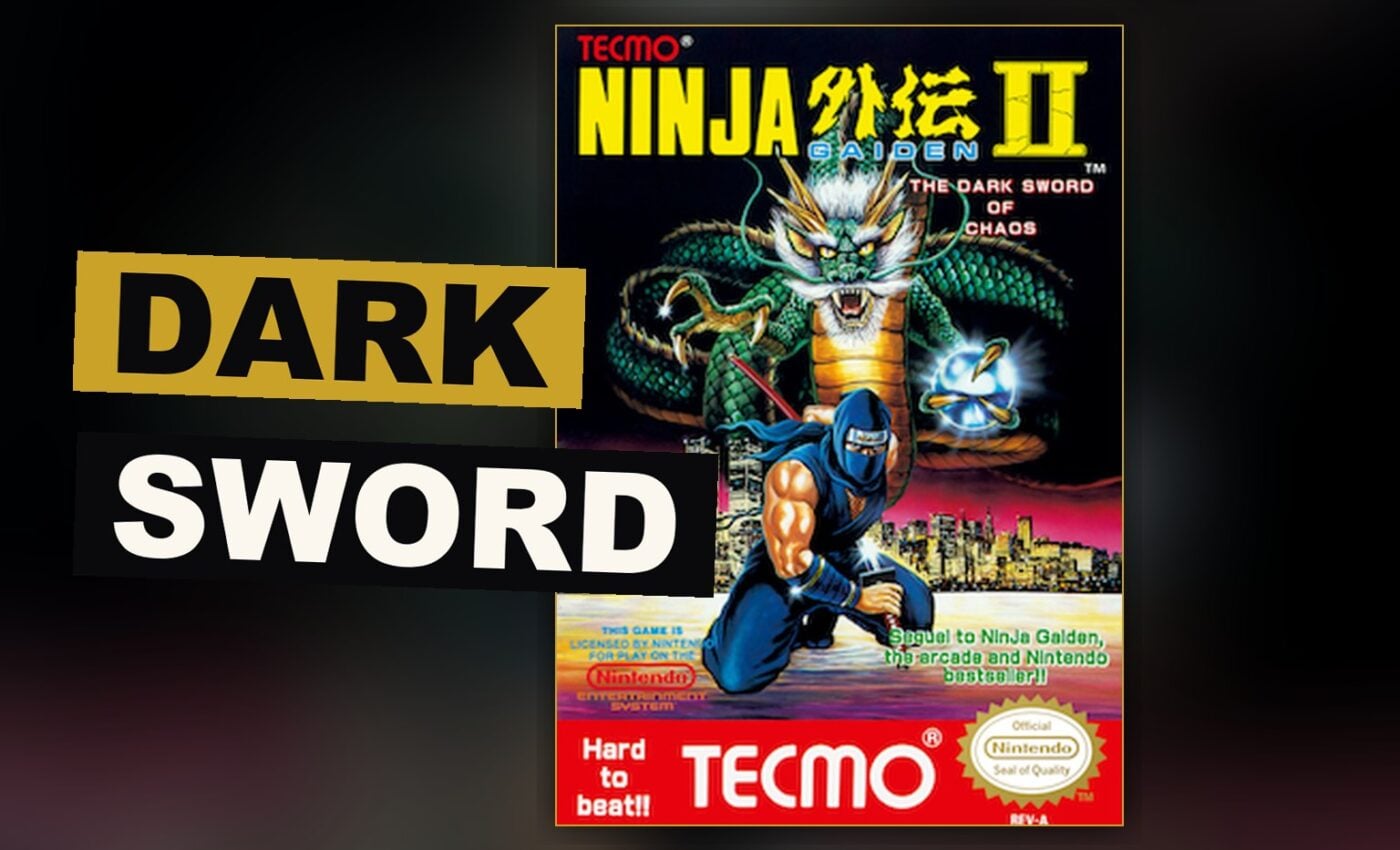
Ninja Gaiden II: The Dark Sword of Chaos brings back the hero of the first game and puts him up against a new enemy blade that shapes the fights ahead. This is a harder, faster game than the one before it, and it asks players to learn moves again in new ways.
The Numbers
- Title: Ninja Gaiden II: The Dark Sword of Chaos
- Platform: NES
- Series position: second game in the Ninja Gaiden NES set
- Critical score given here: 7.5 of 10
The Sword Itself
The Dark Sword of Chaos is not just a title. It belongs to the villain the hero faces down across the story, not to the hero himself. Its presence in the story raises the stakes of the fight and stays over the levels leading up to it.
That threat sits alongside a simpler fact: Ninja Gaiden II: The Dark Sword of Chaos throws more enemies at once than the first game did, and the hero has to face down groups on screen with a stronger set of moves than before, tested by tighter enemy groups and faster pace.
Level Design and Look
The stages in Ninja Gaiden II: The Dark Sword of Chaos favor tight platforms set against enemy groups meant to punish hesitation. Foes appear in numbers at narrow points in each stage. Open drops sit beneath paths that look safe.
Scaling narrow passages returns from the first game, and it remains a strong point here. The hero rises through these passages by pushing off one wall and then the other, and the game builds some of its best moments around this idea.
The music carries the same drive as the first game’s music, with fast tracks that fit the pace of the action. The figures on screen are well drawn for the NES, and the hero stays smooth on screen whether he is scaling a passage or striking down a foe. The scenery changes across stages without repeating too often, giving each part of the game its own look.
Story Scenes
The scenes that carry the story between levels come over from the original Ninja Gaiden, and they still stand out for a game on this hardware. Ninja Gaiden II: The Dark Sword of Chaos uses them to give the action a frame instead of leaving it bare.
The story follows the hero against his enemy, and the scenes keep that fight clear even though the levels themselves stay silent on story. This works because the scenes are short and the game does not rest on them too heavily.
Difficulty
Ninja Gaiden II: The Dark Sword of Chaos is not an easy game. Enemies return quickly even after being struck down. A hit from an enemy can throw the hero off his feet and into an open drop, turning a single mistake into a lost life.
This is where the game splits opinion. Some players find the challenge fair once enemy habits are learned. Others find the problem of being thrown clear of a path hard to accept, since a hit near a drop can cost several minutes of careful play in a moment.
This same problem, being struck and thrown clear, can feel less like a fair test and more like a result of choices that do not always favor the player. It remains the single most common complaint raised about Ninja Gaiden II: The Dark Sword of Chaos. There is also little room to roam free, since the fixed path of the first game returns here, keeping the pace tight but leaving no room for a second look at old ground.
Final Word
Ninja Gaiden II: The Dark Sword of Chaos builds on the first game with a stronger set of moves, harder enemy habits, and a villain whose blade gives the story real weight. The story scenes still give the game weight rarely seen in NES action games of the period, and the scaling passages remain a high point of the series.
The difficulty, though, cuts both ways.
Being thrown clear of a path near open drops, along with the sheer number of enemies, can turn a fair challenge into a harsh one, and the fixed path keeps the game feeling narrow even when the action is strong. Ninja Gaiden II: The Dark Sword of Chaos earns its place as a worthy second game, held back only by rough edges in how its difficulty is built.