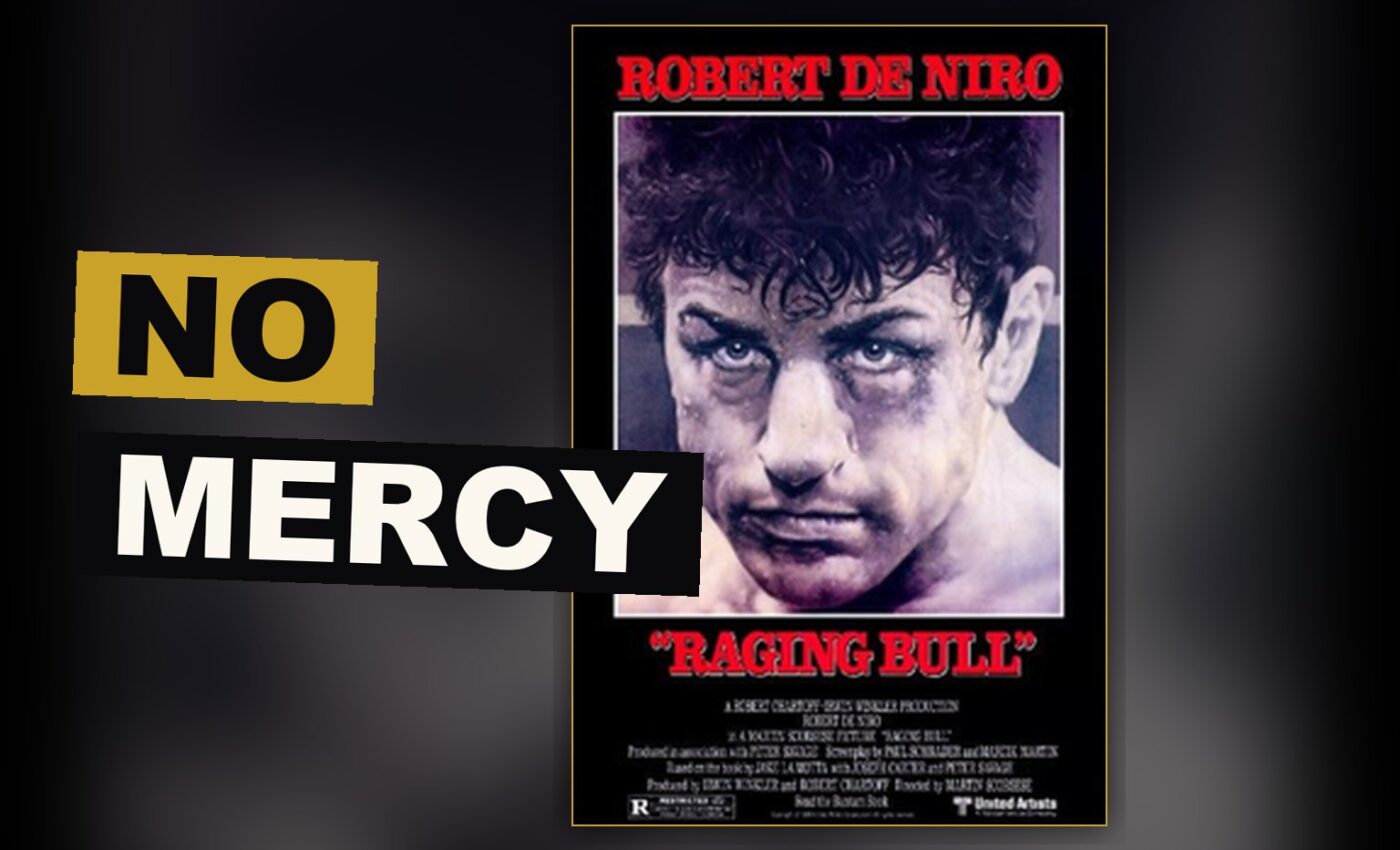
Raging Bull hits hard and leaves a mark. The 1980 film follows a boxer from the ring to the ruin of his personal life, and it does so without asking the audience to like him.
That choice makes the film hard to watch. It also makes it work.
The Lead Performance
The actor who plays the boxer shows a man who cannot keep love apart from harm. He is jealous and dangerous outside the ring, not just inside it. The actor gained a large amount of weight to play the older version of the man, a fact that drew much notice at the time, but the change in body is not the point. The point is the quiet beneath the anger, the moments where the boxer seems to know exactly how badly he is acting and cannot stop himself all the same.
The actor who plays his brother gives the film its balance. Their bond breaks down over the course of the story, and he plays that breakdown with a mix of loyalty and being worn down that feels real.
Shot Without Color
The director filmed Raging Bull without color, a choice that sets it apart from most films of its time. The boxing scenes are not shown like sports on television. They are shown like harm, close and hard to follow, with sound that turns blows into something closer to shots fired than sport. The camera moves inside the ring in ways that put the viewer in the fight rather than in the seats.
Here is what stands out most about the film’s making:
- The boxing scenes, which put feeling above clear sight
- The choice to film without color, which takes from the picture the look of its time
- The cutting, which holds pace inside the storm of each scene
- The lead actor’s full effort across two very different stages of the same man
- The home scenes, which are quieter but just as tight as anything in the ring
That mix of harsh and bare is what keeps the film from being just a boxing story.
No One to Cheer Against
Raging Bull does not build toward a happy end. The boxer does not learn a lesson in any usual sense. He ends the film alone, saying lines in a mirror in a dressing room, a shadow of the man who once held a title. The director does not ease that ending or explain it away.
Some viewers find that refusal hard to take. The film does not give an end that settles things, and it does not ask forgiveness for its main character. But that refusal is also the film’s strength. It treats the man’s fall as a fact rather than a sad tale that needs telling, and it trusts the audience to sit with that trouble.
The film runs long in places, mostly in the middle part covering the marriage. Some scenes repeat the same feeling of jealousy followed by harm followed by sorrow, and the repeat can feel like the film making its point more than once. That said, the repeat mirrors the course the man himself cannot break, so even the less quick parts of the film serve a purpose.
Raging Bull is not an easy watch, and it does not try to be. It is a study of a man most people would not want to know, brought to life by a performance given fully, one of the most devoted in American film. The direction, the camera work, and the cutting all serve that study rather than drawing away from it.
The film has earned its place in talk among critics over the years since 1980, and watching it now, that name holds up. It is harsh, controlled, and unwilling to comfort its audience, and that mix is rare.