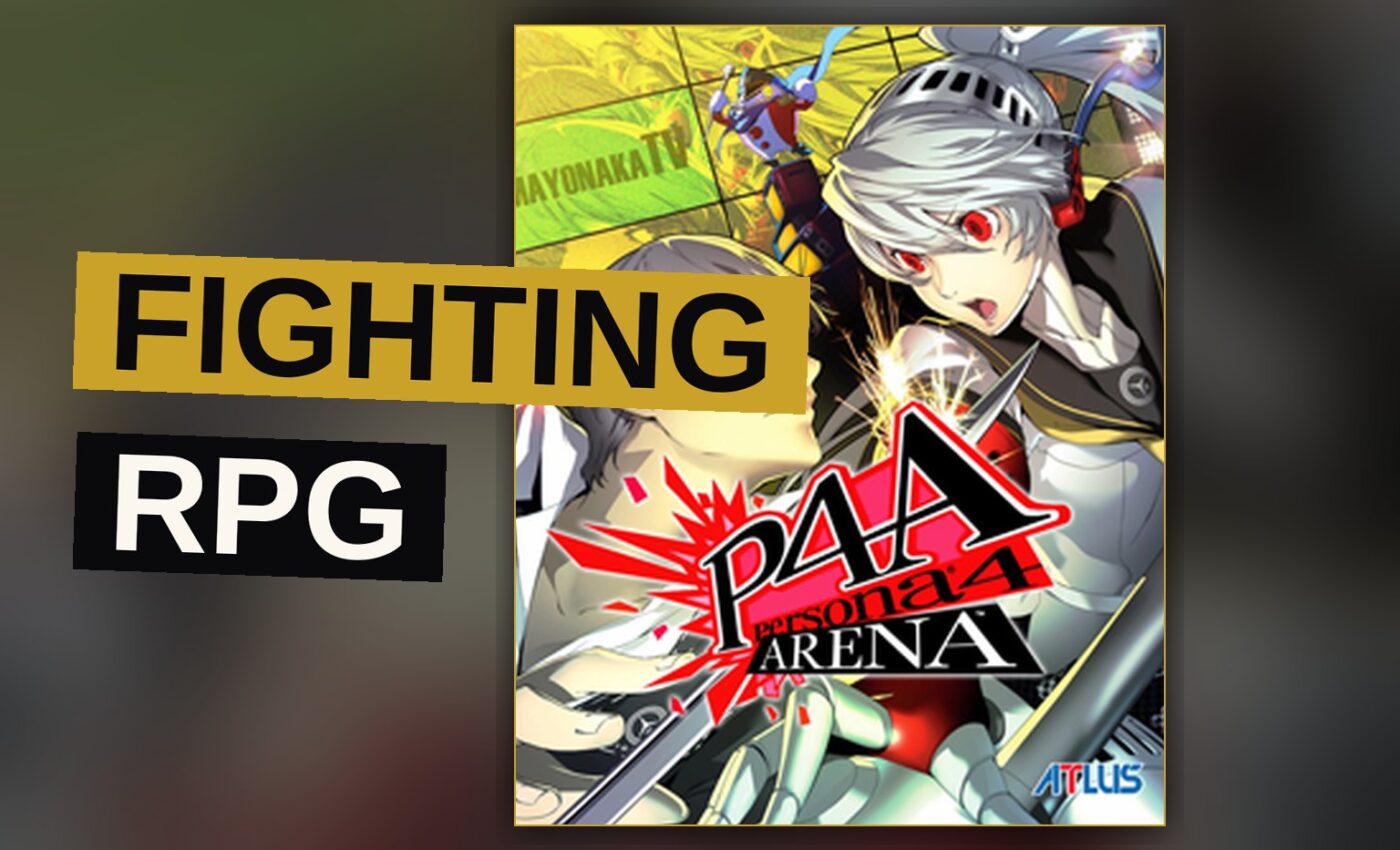
Persona 4 Arena is a fighting game that should not work. It takes a turn-based role-playing game about high school students solving a murder mystery and turns it into a fast, technical 2D fighter. The fact that it succeeds is a surprise. The fact that it remains one of the best anime fighting games of its era says everything about its design.
Developed by Arc System Works, the studio behind the Guilty Gear series, and published by Atlus, the game launched in arcades in 2012 before arriving on PS3 and Xbox 360 later that year. The story picks up after the events of Persona 4, with the investigation team drawn into a new tournament called the P-1 Grand Prix.
Trailer, via Official ATLUS West.
Inside the P-1 Grand Prix
The premise is pure Persona. A fog rolls over Inaba, a red screen flickers on, and the characters are pulled into a fighting tournament against their will. The writing carries the same warmth and humor as the source game. Teddie, the bear-suited comic relief, is as insufferably cheerful as ever. The new characters, including the shadowy Labrys, add a genuine mystery that unfolds across the story mode.
What matters more is the combat. Each character fights alongside their Persona, a manifestation of their inner self. You control the fighter directly, but the Persona attacks are mapped to a separate button. This creates a unique rhythm where you have to manage two distinct movesets at once.
Skill Button Mechanics
The core mechanics are built around the “Skill” button. Pressing it alone performs a Persona attack. Pressing it with a direction performs a different move. The system is intuitive enough to pick up quickly, but the depth comes from the “One More” mechanic, borrowed from the RPG series. Landing a specific attack that knocks an opponent down grants you a bonus move. This creates a flow where you can chain combos into extended pressure, but the opponent can also escape with a burst.
This is where Persona 4 Arena distinguishes itself. It is a game about spacing, meter management, and reading your opponent. The “Awakening” mechanic, which triggers when your health drops below a threshold, gives you a powered-up state and a new super move. It turns the final moments of a round into a tense gamble.
Thirteen Fighters, Thirteen Styles
The roster of thirteen characters is small but varied. Each fighter has a distinct playstyle. Yu Narukami is a balanced all-rounder. Chie Satonaka is a rushdown character who excels at close range. Aigis, a robot from Persona 3, uses a gun and a variety of projectiles to control space. Mitsuru Kirijo is a zoning character with a rapier and ice magic. The differences are sharp enough that switching characters feels like learning a new game.
| Character | Playstyle | Key Strength |
|---|---|---|
| Yu Narukami | Balanced | Versatile tools |
| Chie Satonaka | Rushdown | Close-range pressure |
| Aigis | Zoning | Projectile control |
| Mitsuru Kirijo | Zoning | Long-range pokes |
| Labrys | Power | Heavy damage |
Reading Heavy Story Chapters
The story mode is a visual novel. It is long, wordy, and often tedious. You will spend hours reading dialogue between fights. The narrative is a direct sequel to Persona 4, and it expects you to know the characters and their history. If you have not played the original RPG, much of the emotional weight will be lost. For fans, however, the story is a welcome return to Inaba.
Every character gets a chapter, and each chapter follows the same structure. A fight happens, then a long conversation, then another fight. Some chapters drag on for over an hour of pure text. The payoff is a genuinely interesting mystery that ties back to the Persona 4 canon.
Hand-Drawn Sprites and Sound
The game looks stunning. The character sprites are hand-drawn and animated with a fluidity that few fighters match. The soundtrack was composed by Atsushi Kitajoh, and it is a mix of rock, electronic, and jazz that fits the tone perfectly.
The voice acting is strong in both English and Japanese. The English cast reprises their roles from Persona 4, and the performances are consistent.
“A fighting game that should not work.”
Online Mode and Local Play
The online mode is functional but dated. The netcode is not great by modern standards, and the matchmaking is sparse. The local versus mode is where the game shines. The tutorial mode is thorough, teaching you the basics of movement, blocking, and combo execution.
Scoring the Tournament
Persona 4 Arena is a niche product. It requires patience to learn, and its story mode is a commitment. But for those who put in the time, it offers one of the most rewarding fighting game experiences of its generation.
The flaws are real. The story mode is too long. The online mode is weak. The roster, while varied, is small. But the core combat is excellent, and the “One More” system rewards aggression without breaking the balance. The Awakening mechanic keeps every round tense until the final hit.
Persona 4 Arena earns a score of 7.8/10.
Get the Notebook.
The day's best stories and every fresh verdict, in plain English, in your inbox by seven. One email a day, no more.