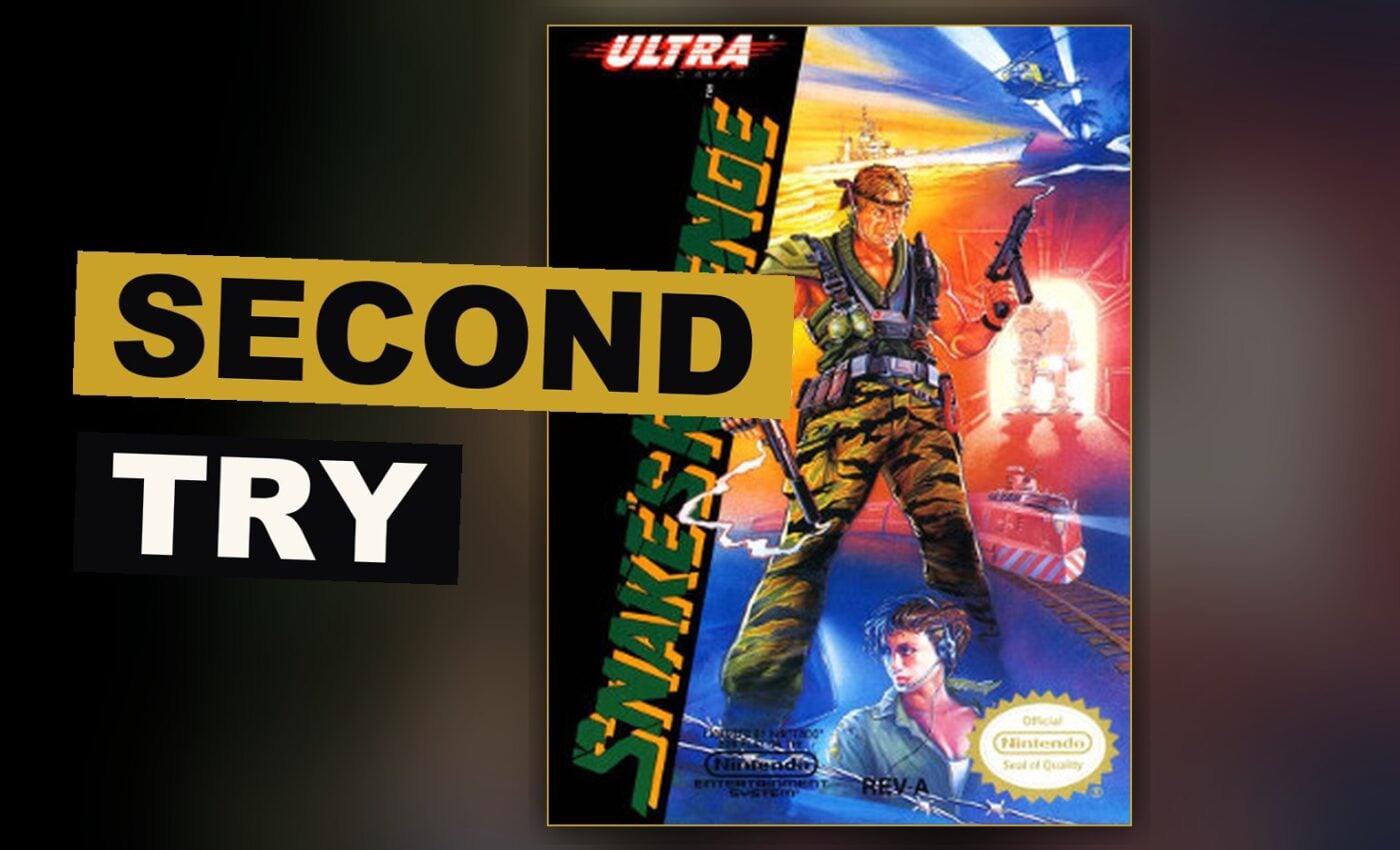
Snake’s Revenge came out for the NES as a second game tied to Metal Gear, made without the person who first built that game. Players still move through enemy ground, try to stay out of sight of guards, and use tools to get through each level. This game pushes players toward fighting more than staying out of sight, a change that split opinion among people who loved the first game’s quiet, careful style.
What Changed From Metal Gear
Snake’s Revenge asks players to fight more often. Guards can be beaten face to face, and the game gives players tools built for a fight rather than for staying out of sight. This change moved the game away from the quiet, watchful style that people knew from Metal Gear.
Some choices in the design stand out:
- A short set of letters and numbers takes the place of older, harder ways of saving progress found in early NES games.
- Boss fights push players toward a straight fight instead of slipping past danger.
- The path through each level is marked more clearly than in the first game, where the ground plan could leave a player lost.
Players who spent time with the first game will feel the change from the very first level. Guards no longer feel like a puzzle to slip past. They feel like a wall to break through instead.
Strengths and Weaknesses
The game’s design makes it less hard for a new player to get through. Clear paths cut down on the lost feeling some people had with the first game’s open, puzzling ground plans. This comes at a price, though: the quiet, careful play style that made the first game stand apart feels weaker here.
Fight scenes can start to feel the same after a while.
The table below sets out how Snake’s Revenge compares to Metal Gear in a few key ways.
| Feature | Metal Gear | Snake’s Revenge |
|---|---|---|
| Main focus | Staying out of sight | Fighting guards directly |
| Level design | Open, at times hard to read | Clearer, more guided |
| Save system | Hard to use | Short code system |
| Boss fights | Built around slipping past | Built around a straight fight |
Reception and What Followed
Snake’s Revenge was made without the person behind the first game, and that fact shaped how longtime players saw it. His absence is often given as the reason the game feels so different in tone and design from Metal Gear. He later came back to the series with a game many hold up as the stronger of the two, one built with the same careful, quiet style as the first Metal Gear.
Even with a mixed reaction, Snake’s Revenge holds a place in the story of the series as a try at moving the format toward open fighting. It shows what the series might have looked like without the person who first shaped it. That alone gives it worth to players who study the early years of the series.
Some longtime players have come back to it since, less to praise it than to see how far the series moved from its early style. It stands now as a marker of a road the series did not stay on for long.
Final Word
Snake’s Revenge gives players a game that can be enjoyed, even with its faults, but it lacks the feel that set Metal Gear apart. The fighting works well enough on its own terms, yet it takes away the quiet dread of moving unseen that many wanted back. Clear paths help new players get through, but longtime players may miss the challenge of finding their own way through danger.
Snake’s Revenge lands with a score near the middle: 6.1 of 10.