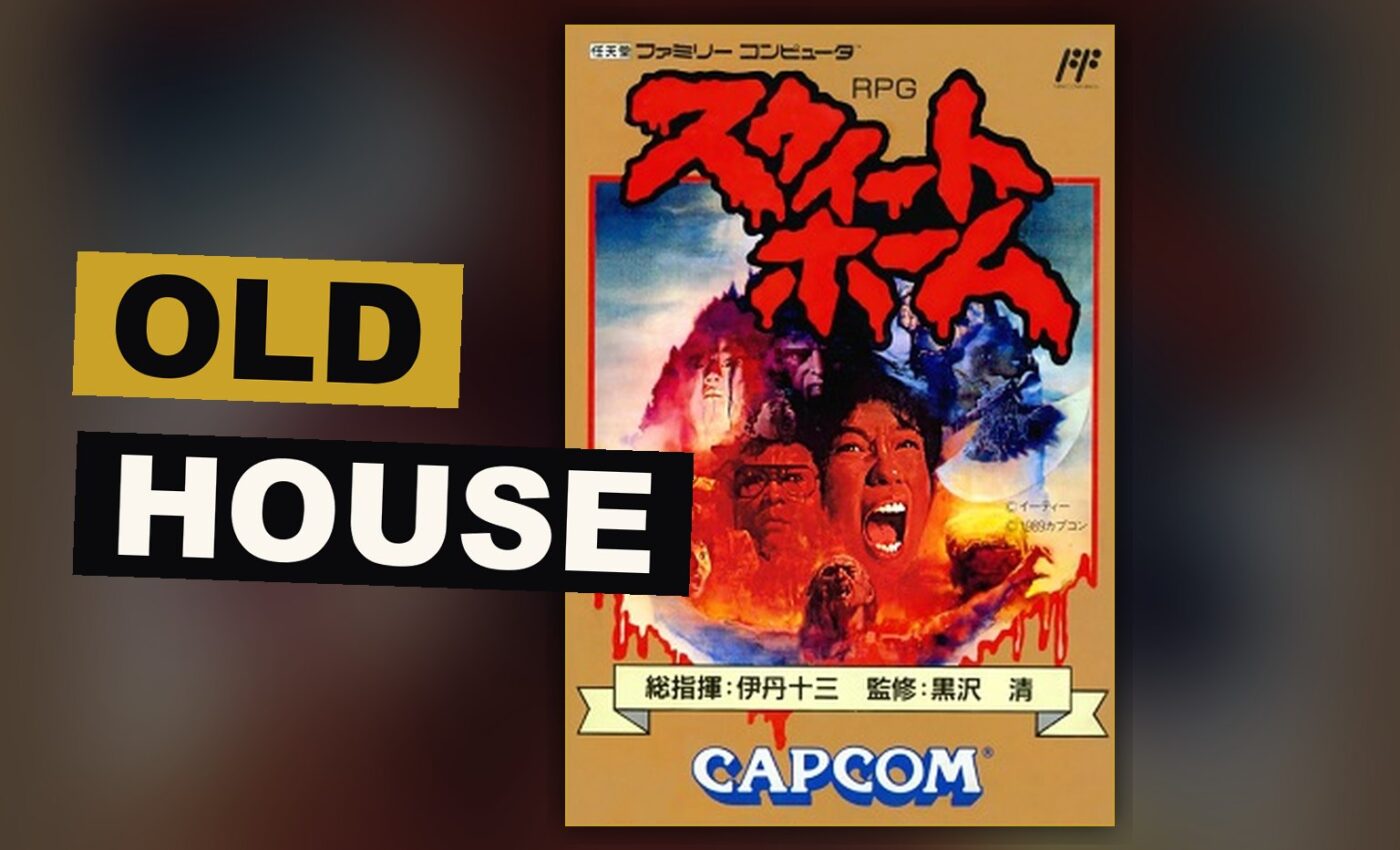
Sweet Home turns 35 this year, and it still stands as one of the strangest, most ambitious horror games ever made for the NES. Capcom built it around a horror film of the same name. The game grew far beyond that film, delivering ideas that would shape horror games for years afterward. It scores 7.7 out of 10.
The Premise
A film team enters an old house to recover lost paintings by a dead artist. The house holds the spirit of a bitter, angry mother, and the team splits into groups to search room by room. Players guide five characters at once, each carrying a unique item — a lighter, a key, a vacuum, a medicine case, a camera. Losing a character means losing their item for good, which can shut off entire paths forward.
That setup makes every choice weigh heavy. Sweet Home does not let players correct past mistakes easily, and permanent death for named characters gives the game a rare sense of consequence for its time.
Fighting and Fear
Battles play out in a regular system similar to a game of adventure, but resources run thin fast. Healing items are scarce, and monsters can wound characters, cutting their top health total forever. The game does not explain much. Players are left to piece together the house’s sad history through notes and item descriptions found through the halls.
One line from the game’s text has remained with players for decades:
“It won’t come off… the blood… won’t come off…”
That kind of image carries the game’s mood better than any filmed scene could. Sweet Home depends on suggestion, short lines of text, and sudden frights rather than graphic detail, and the approach still lands.
What Came After
Capcom’s own Resident Evil, made years later, borrowed heavily from Sweet Home — the old house setting, item management, several characters the player controls, and dangers waiting behind nearly every door. The game’s maker has pointed to Sweet Home directly as an influence.
The game is not without rough edges. Its puzzles can be obscure, its text locks out anyone without help putting it into English, and the position of certain dangers can lead to cheap deaths that feel harsh rather than exciting. The battle system, while sound, delays the pace in the back half of the house.
Still, few games from 1989 tried this much at once. Sweet Home mixes horror mood, resource management, and permanent loss into a single package, and it mostly succeeds. It asks players to care about five ordinary people caught somewhere they should never have entered, and by the credits, most players do.
Sweet Home never got a wide publication beyond its home country, and its standing has grown mostly through copies brought from abroad and versions put into English by devoted players. That rarity has only added to its attraction among horror game historians. For anyone tracing horror games back to their beginnings, this is the house where the genre first opened its doors.