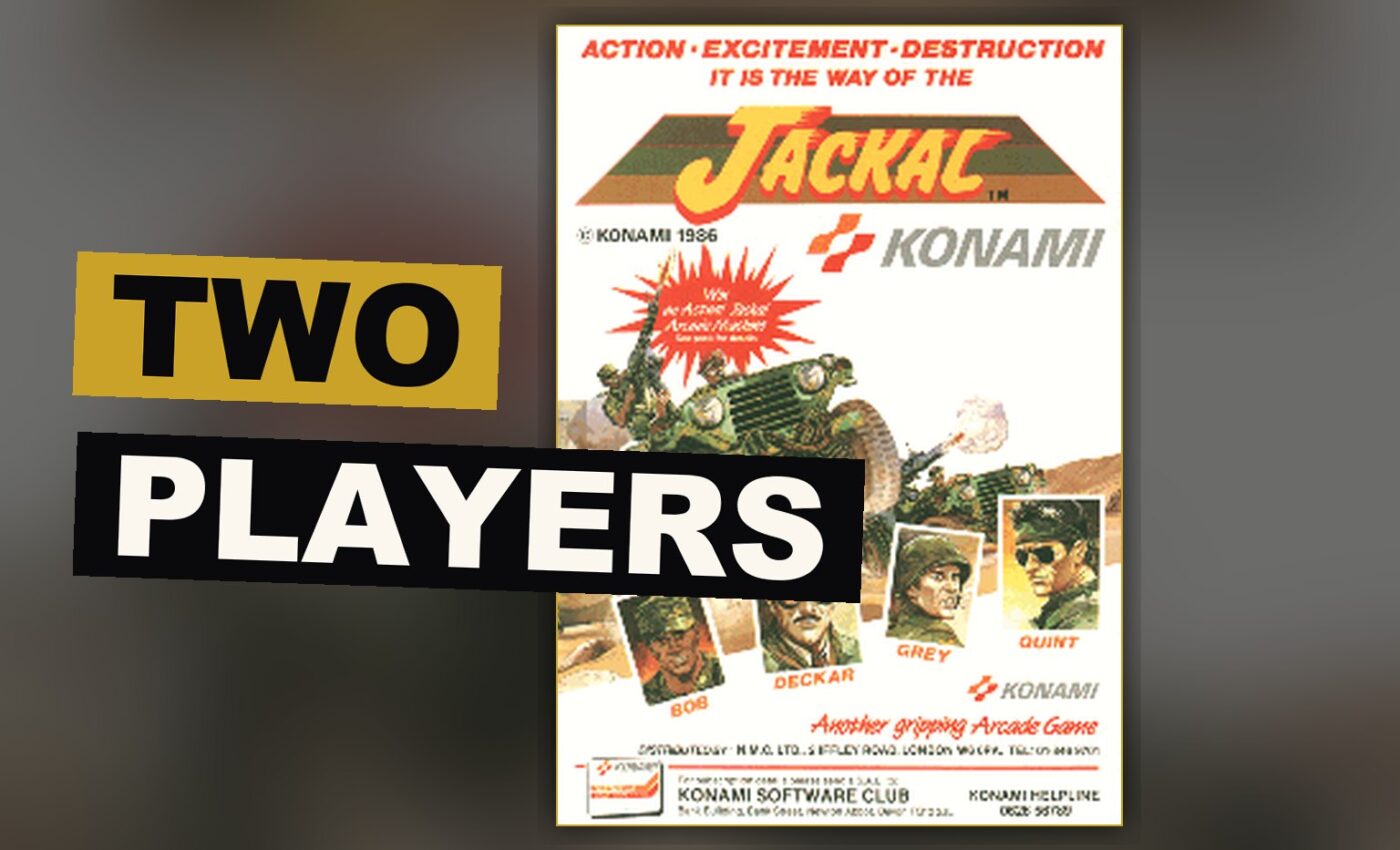
A vehicle, a gun, and a battlefield full of enemy soldiers. That is the setup for Jackal, the shooter seen from above that puts players in the driver’s seat of a mission to save prisoners from enemy hands.
The Setup
Jackal places players in a war setting with one job: free the prisoners held by enemy forces and get them out alive. Soldiers move across the screen in waves, and the action rarely lets up.
Players can pick up a freed prisoner and drive them to a safe point, then turn around and go back out for more. It is a simple design, but it holds together well across the whole game.
The quick pace stays constant from the first screen to the last, and that quality is a large part of what makes Jackal work.
Two People, One Vehicle
Jackal supports two players at once, and that is where the game earns real credit. Working through the same level together changes the whole feel of the experience.
Some things stand out when two people play side by side:
- Shared screen space keeps both players in the fight together
- Working together on a freed prisoner makes each save faster
- Enemy fire gets harder to avoid with two vehicles drawing attention at once
Playing with a second person turns Jackal from a decent shooter into something closer to a real team effort. The game clearly was built with this in mind.
Guns and Extra Items
Extra items drop from beaten enemies and change how the vehicle fights. In order of how strong they are, players can pick up:
- A gun that fires faster than the standard gun
- A wider gun that clears larger groups of soldiers at once
- A gun that fires a stronger shot at hard enemies
None of these upgrades last. Getting hit takes the better gun away, and players are back to the plain gun in an instant. That risk keeps every battle exciting, since one mistake can cost several minutes of careful play.
The system is not deep, but it does not need to be. It gives players a reason to keep moving instead of sitting back and firing from one spot.
Where It Falls Short
The experience of playing alone is thinner than the mode built for two people. Without a second vehicle on screen, some parts of Jackal feel worn down by the same enemy formations showing up again and again, and the challenge rests more on sheer numbers than on clever design.
To look at, Jackal does not push the NES hardware very far. The forest scenery and enemy figures get the job done without much change from one stage to the next.
The core action still carries the game, even when the scenery does not change much.
How It Holds Up
Jackal does not try to be much more than it is. It hands players a vehicle, a gun, and a screen full of enemies, and lets the shooting carry the weight of the game. That formula holds up best with a second player in the room, since the whole design points toward two people working together rather than one.
Playing alone will still turn up a solid shooter, just one that shows its age and its limits more clearly than the mode built for two people does. That mode built for two people is where Jackal earns its keep, and it is the reason the game is still worth returning to.