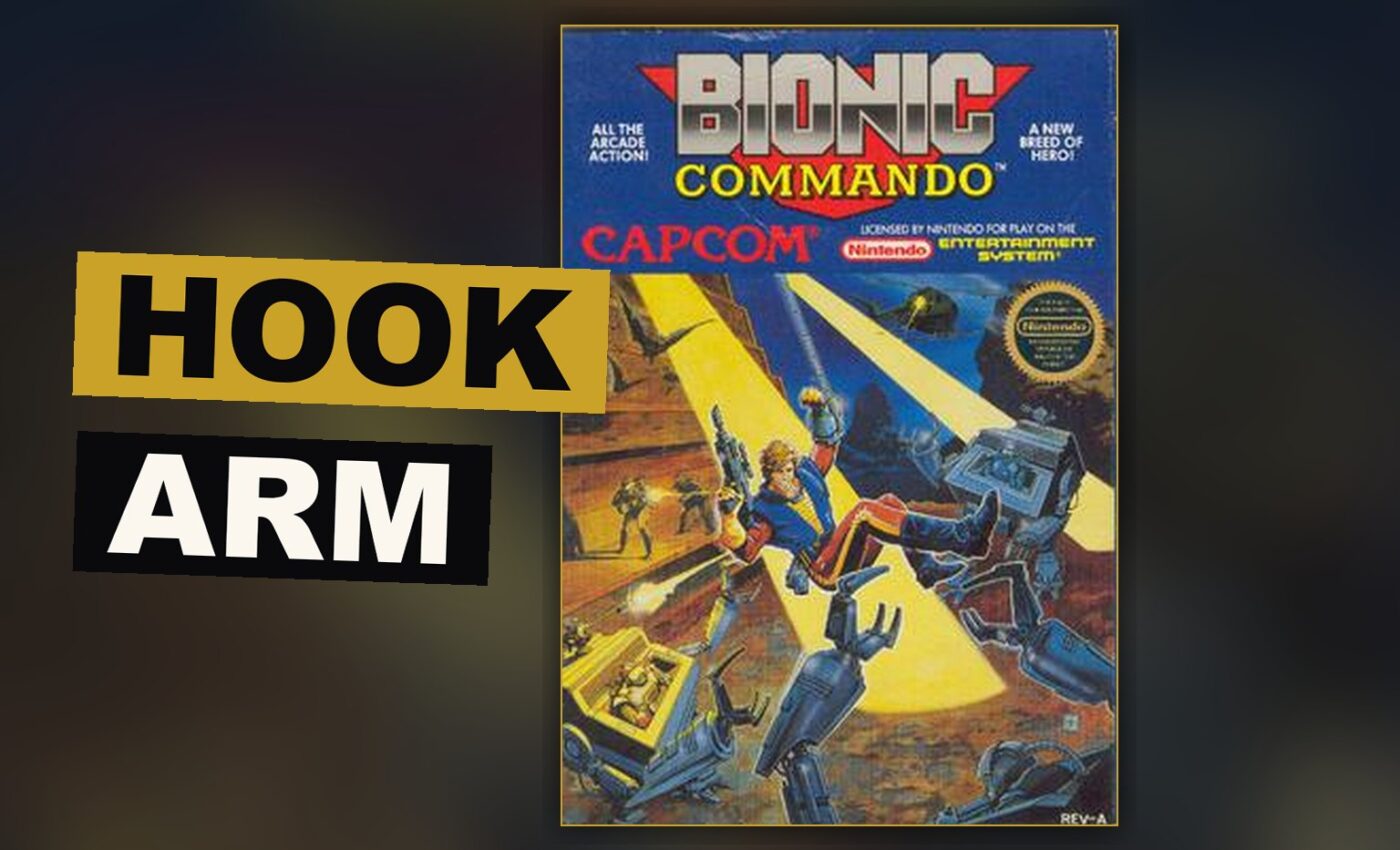
Bionic Commando arrived on the NES with a promise no other platform title of its time could match: no spring button. Instead, players use a mechanical arm fitted with a hook, firing a line to reach across open space, go up walls, and enter enemy fire from above. The idea sounds small on paper. In practice, it changes how the whole game plays.
The Hook and How It Works
The hook is the whole game. Players aim it, fire it, and draw themselves forward, using the line instead of a spring to cross open space. It takes time to learn. Early stages feel awkward, the arm often misses its mark, timing feels foreign, and players used to standard platform controls will trip up often.
Once the hook use sinks in, though, the game opens up. Stages stop being simple forward paths and start feeling like puzzles set in open air, where the right aim matters more than fast reaction work. That takes patience most NES titles never ask for.
Level Plan and Sound
The game splits its stages between action floors and a screen showing the wider ground, where players pick missions and manage supplies. This plan gives Bionic Commando a sense of scale absent from most games of its kind at the time. Players are not just moving forward; they are picking a path.
Some stages build hard around the hook, asking for careful aim over open drops. Others feel like standard shooters with the hook added on top. The best moments come when both parts work together, when enemy fire and hook timing force players to think and act at once.
In its look, the game holds up well against its NES peers. The scenery is full for the hardware, and enemy soldiers and vehicles read clearly on screen even during fast action. The music backs this up with driving tunes that suit the war setting without wearing thin.
Bionic Commando does not rely on story to carry players through its missions. The story serves mostly as a reason to move from stage to stage, with short exchanges between missions setting up the next step rather than building people.
Learning the hook takes real effort, and the game does little to help. Early failures can feel harsh rather than useful, since the hook punishes early mistakes before players have had a chance to gain skill with it. Difficulty does not rise at a steady pace across the mission list, too. Some stages feel made for players who favor hook work; others feel like older shooter ideas with the hook added along with them.
Here is how the game measures against its peers:
| Feature | Bionic Commando | Common NES Platform Title |
|---|---|---|
| Core Travel | Hook line draw, no spring | Travel by spring |
| Level Plan | Wide ground picks along with action floors | Single forward path only |
| Learning Effort | High, resting on hook skill | Gradual, familiar controls |
| Look Detail | Full scenery, clear figures | Varies by title |
| Story Part | Small, only setting up next step | Often small as well |
That table tells the story in short form. Bionic Commando trades what is familiar for reach.
Final Verdict
Bionic Commando works because it commits fully to one strong idea and builds a whole game around it rather than treating the hook as an added trick. The mission list gives it shape beyond a plain set of stages, and the look and sound support the tone it aims for.
It falls short of greatness because that same full focus brings friction. Players who give up during the early hook work may never see what later stages offer, and the difficulty does not always help new players get there.
Bionic Commando remains a strong piece of the NES library, one built on a single strong idea rather than a checklist of genre habits. It asks players to set aside old habits, and for those willing to put in the time, it gives back something few other games of its time tried.