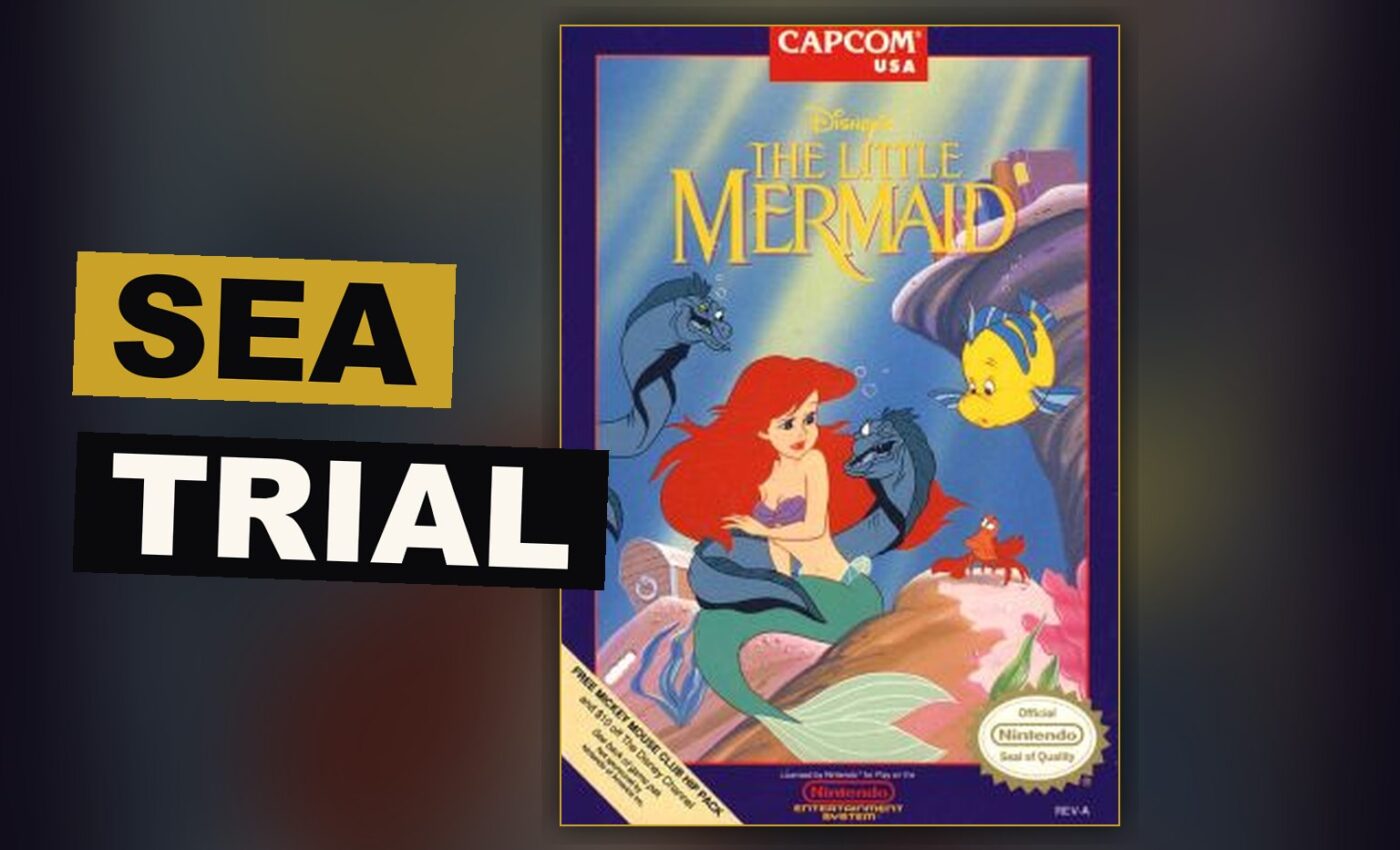
The Little Mermaid arrived on the NES with a hard task: turn a beloved Disney film into an action game, and land somewhere between pleasure and difficulty. It does neither perfectly. The game asks players to guide the young princess through levels set beneath the waves and other stages, changing the style of play as it goes, and the result is a title that works well in places and disappoints in others.
Sea Levels
The sea stages are where The Little Mermaid does its best work. The princess swims freely in eight directions, firing bubbles at foes, and the control feels smooth for the hardware. Scenery changes from bright coral to darker caves, giving these stages a sense of place that suits the source material.
Enemy conduct repeats often, though, and later stages narrow into tight passages that punish small mistakes. Health falls fast when the princess touches a hazard, and safe points to begin again from are few.
Time Outside the Water and Difficulty
Some stages put the princess on foot and ask for careful timing, a change that feels less smooth than the swimming levels, with hit detection that seems less forgiving. The drop in life once players leave the water is hard to miss.
Boss fights ask for study of enemy order more than quick reaction. That approach was common for NES titles, and it holds here without adding much that feels new.
The Little Mermaid is short by modern standards, built around a small set of stages. Its difficulty grows greatly near the end, and the difference between an easy start and a hard finish is the game’s clearest problem. That is a hard ask for any player expecting the game’s early stages to prepare them.
Music carries much of the game’s charm. Simple versions of songs from the film appear throughout, and they stand out as one of the game’s better parts, giving familiar tunes new life on NES hardware. The look of the princess and other characters stays close to the film’s design, even within the limits of the console.
Control feels sure in the water but weaker on land, where timing a spring upward can feel doubtful. Players moving between the swimming stages and the stages on foot sometimes struggle to suit their pace to the change, and that switch remains one of the more debated parts of the design.
For an NES game made from a film, The Little Mermaid tries more than most such titles of its time, switching between two styles of play instead of settling for one. That choice does not always pay off, but it keeps the game from feeling ordinary.
A Rough Run Through
Below is a general sense of how the game’s pacing unfolds across a playthrough, organized loosely by stage rather than any fixed order.
| Stage | Focus | Note |
|---|---|---|
| Opening | Swimming | Introduces the bubble attack |
| Early | On foot | Princess moves on land |
| Mid-game | Swimming | Passages grow tighter |
| Late game | Mixed | Difficulty grows greatly |
| Closing | Boss battle | Built on enemy order |
Players who finish The Little Mermaid today will likely remember the music and the sea levels long after the hard final portion has faded from mind. The Little Mermaid earns a 6.6 of 10.