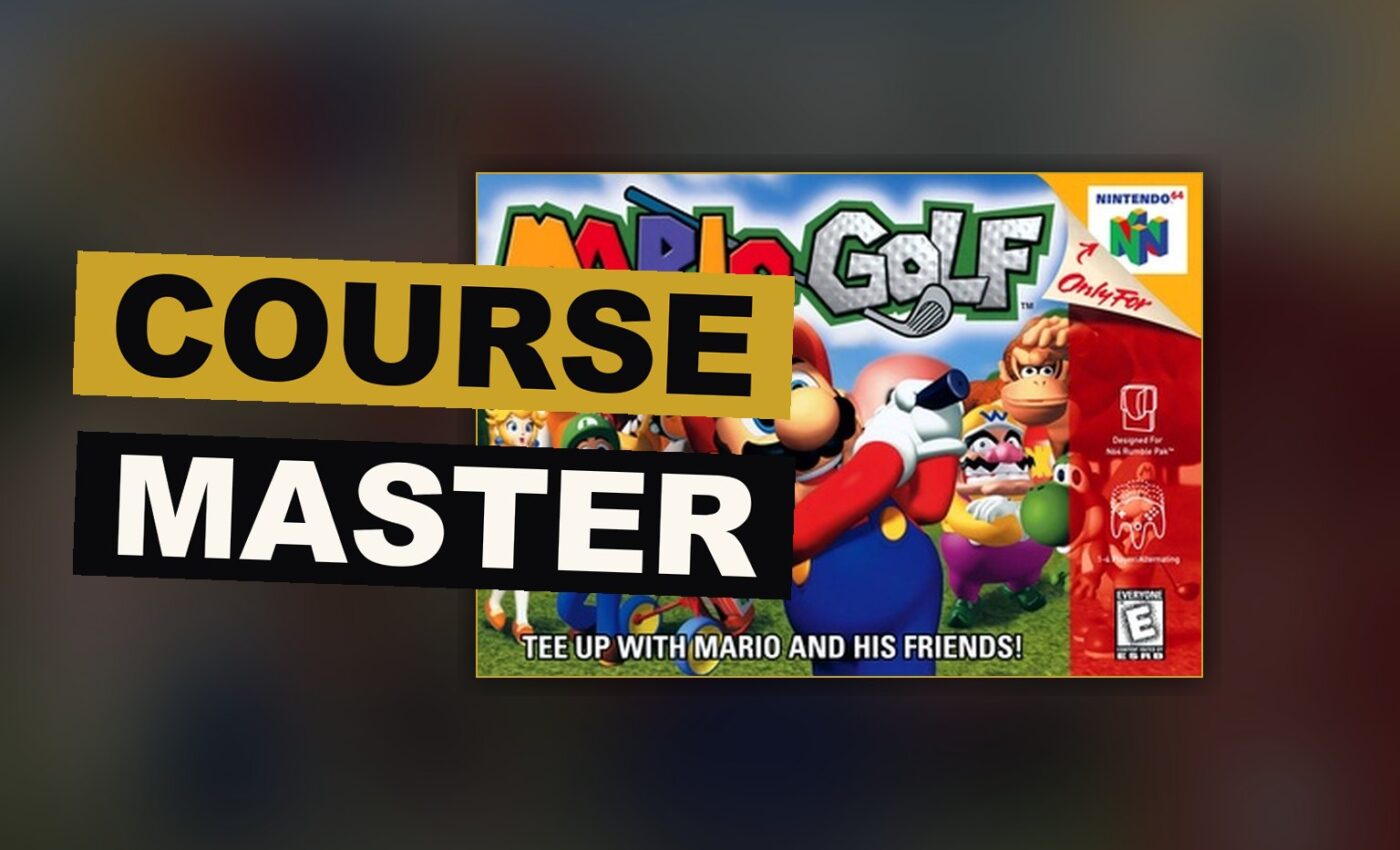
Mario Golf puts Mario, Peach, Bowser and a full cast of familiar faces on the course, and it turns out they know their way around a set of clubs. The Nintendo 64 game joins real golf rules with light character touches, and the result works far better than expected.
The Rules of the Course
The game gives players a full set of tools: a shot meter, wind reports, ground checks and club selection that rewards patience. Nothing here abandons real golf for tricks. Instead, the game builds a solid, sound set of rules, then lets the cast’s personalities show through small touches in animation and course reaction.
Courses run from open, forgiving designs to tight, demanding ones. Ring Shot and match modes break up standard play, giving the game variety that rewards different skills. The core shot method — a meter that tests power, timing and aim — stays steady across every mode, so skill built in one mode carries over to the rest.
Characters and Their Numbers
Each character carries a distinct set of numbers, so choice matters beyond looks. Some hit farther but lose aim. Others control shots well but give up distance. That balance gives the roster real weight instead of treating it as mere show for the eye.
Below is a look at how a few characters compare on key traits:
| Character | Power | Control | Bend |
|---|---|---|---|
| Mario | Balanced | High | Medium |
| Peach | Low | Very High | Low |
| Bowser | High | Low | Medium |
Course design deserves equal credit. Designs move between wide open ground and narrow, testing greens, and hazards sit with clear purpose rather than as mere trim.
Where It Stands Out
A few things set Mario Golf apart from other sports games on the system:
- A shot method that rewards timing without punishing new players too harshly.
- Character numbers that truly change strategy, not just looks.
- Several modes, including Ring Shot, that keep play fresh when playing alone.
- Group play that holds up over many sessions.
- Course variety that avoids the same hazard shapes again and again.
Group play stands out most. Four players can compete at once, and the game keeps a good pace even with a full table of players. That matters in a golf game, where a dragging turn order can kill the spirit of the match fast.
A Few Weak Points
No game is without weak points, and Mario Golf has a few. Certain views on approach shots can keep the golfer from a clear sight of the green, forcing a guess at distance. Pauses between rounds, while brief, add up over a full match. The game also draws on a fairly small set of sound tones, and this grows dull during long sessions.
None of these points spoil the whole. They are small friction, nothing more, in a game that otherwise moves well from start to green.
The lasting strength of Mario Golf comes from how well it balances ease of play and depth. New players can pick up a controller and grasp the shot meter within a few rounds. Skilled players will find much to master in wind reading, ball bend and course strategy.
That balance is rare. Many sports games on Nintendo 64 pick one path, arcade thrill or true simulation, and stay there. Mario Golf manages both without feeling like it gave up ground on either side.
The character cast does real work here too. Mario, Peach, Bowser and the rest give the game a look of its own and a reason to keep playing past the base rules alone. Choosing a different golfer changes strategy enough that a return trip to the same course feels like a new round.
Final Word
Mario Golf earns its name as one of the strongest sports games on Nintendo 64. It joins a deep, fair shot method with a roster that adds true weight of strategy, and it wraps the whole package in courses that reward careful play. The weak points, view troubles, a bit of waiting, small sound variety, are real but small.
For anyone in search of a golf game that respects the sport while still having a good time with its cast, Mario Golf delivers. It stands as a strong, sound game that earns its place among the system’s best.