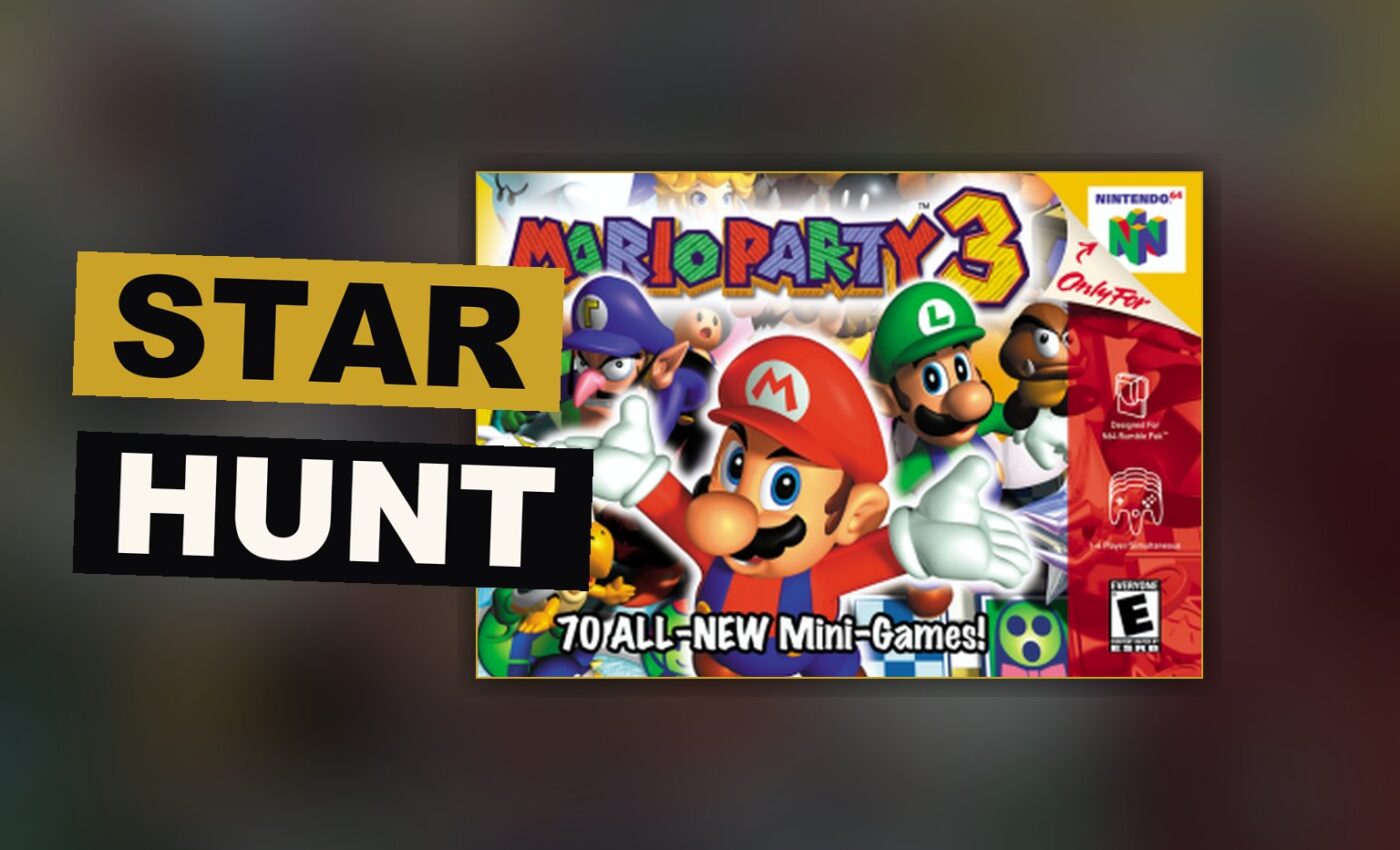
Mario Party 3 closes out the Nintendo 64 era of the series with eight playable characters, five boards, and a new duel mode that splits the room. It is the third and final Mario Party title for the Nintendo 64, developed by Hudson Soft and published by Nintendo. Japan got it first on December 7, 2000. North America followed on May 7, 2001, Australia on September 3, 2001, and Europe on November 16, 2001.
That release order matters more than it sounds. Mario Party 3 was the final first-party Nintendo 64 title released in North America, which makes it the last thing Nintendo shipped for the console in that territory. It sold over 1 million copies worldwide, and it earned that number without much help from reviewers.
Eight Characters, Two of Them New
The roster is the biggest draw. Mario, Luigi, Princess Peach, Yoshi, Wario, and Donkey Kong return from the first two games. Princess Daisy and Waluigi join as newcomers.
Both newcomers sit out Story Mode. That is a strange call for the two characters the box is selling, and it is the kind of restriction that reads as an oversight rather than a design choice.
Daisy’s appearance here is her last in a yellow and white dress with long hair. Yoshi’s “record-scratching” voice also ends with this game, and does not return until New Super Mario Bros. Wii. Luigi gets his main voice for the first time in a Mario Party game. None of that is gameplay, but it is the sort of detail that makes a final installment feel like a hinge.
The Millennium Star and the Toy Box
The story opens with Mario and his friends watching the Millennium Star descend. The star is born once every thousand years, and whoever possesses him becomes the “Superstar of the universe.” The group starts arguing over who gets him.
The star ends the argument by dropping everyone into a large toy box. He tells them they have to prove their worthiness and earn his acceptance by collecting the seven “Star Stamps” scattered across several lands. That is the frame for the whole game, and it is thinner than the boards it holds up.
Five Boards, Four Players, One Dice Block
The game is a board game first. Five themed maps carry the action, and each board game runs four players. At least one has to be human; the rest can be computer-controlled, with skill set individually to “Easy”, “Medium”, or “Hard.”
Length is set before anyone rolls. “Lite Play” runs 20 turns, “Standard Play” runs 35, and “Full Play” runs 50. A “Custom Play” allows any number of turns between 10 and 50, restricted to multiples of 5. Turn order comes from a dice block, highest number first, lowest last.
Duels, Chain Chomps, and Three Save Slots
Duel maps are the real addition. Two players try to drop each other’s stamina to zero, and they do it using non-player characters such as Chain Chomps. It is a direct fight inside a game built on indirect pressure, and it gives two players something to do while the other two wait.
Mario Party 3 is also the first in the series with multiple save slots. That is a small quality-of-life fix, but in a game where a Full Play session runs 50 turns, it is the difference between finishing a board and losing it.
A Mixed Reception and a Million Copies
Reviews landed mixed. Critics split on the new minigames and features, and on whether any of it counted as a meaningful improvement over the first two games.
The sales tell a different story. Over 1 million copies worldwide puts Mario Party 3 among the best-selling Nintendo 64 games, and it did that as the console was winding down. The audience showed up regardless of what the reviews said.
What Came After Mario Party 3
Mario Party 4 arrived for the GameCube in 2002. Content from Mario Party 3 was later remastered for Mario Party: The Top 100 on the Nintendo 3DS in 2017 and Mario Party Superstars on the Nintendo Switch in 2021.
The game got its first official re-release on the Nintendo Classics service on October 27, 2023. That is a long gap between the original and an official way to play it again.
| Release | Date |
|---|---|
| Japan | December 7, 2000 |
| North America | May 7, 2001 |
| Australia | September 3, 2001 |
| Europe | November 16, 2001 |
| Nintendo Classics re-release | October 27, 2023 |
Where the Duel Maps Land
The duel maps are the best idea here, and they are the reason to pick this over the first two games. Two players squaring off with Chain Chomps and stamina bars cuts against everything the series normally does, and it works.
The Story Mode restriction on Daisy and Waluigi is the worst of it. Two new characters, and the mode with the most structure locks them out. That undercuts the roster the game leads with.
Here is the ranking of what Mario Party 3 actually brings, from most to least valuable:
- Duel maps and the stamina system
- Multiple save slots
- Princess Daisy and Waluigi as playable characters
- The Millennium Star framing
The framing lands last for a reason. It sets up seven Star Stamps and a toy box, then gets out of the way. Nobody is here for the story.
Mario Party 3 is a better send-off than a landmark. It refines the formula rather than rebuilding it, adds one genuinely new mode, and hands the Nintendo 64 its last first-party release. The mixed reviews were fair about the minigames and unfair about the duels. Over 1 million buyers found the fun anyway, and the remasters in 2017 and 2021 confirm which parts were worth keeping.
Get the Notebook.
The day's best stories and every fresh verdict, in plain English, in your inbox by seven. One email a day, no more.