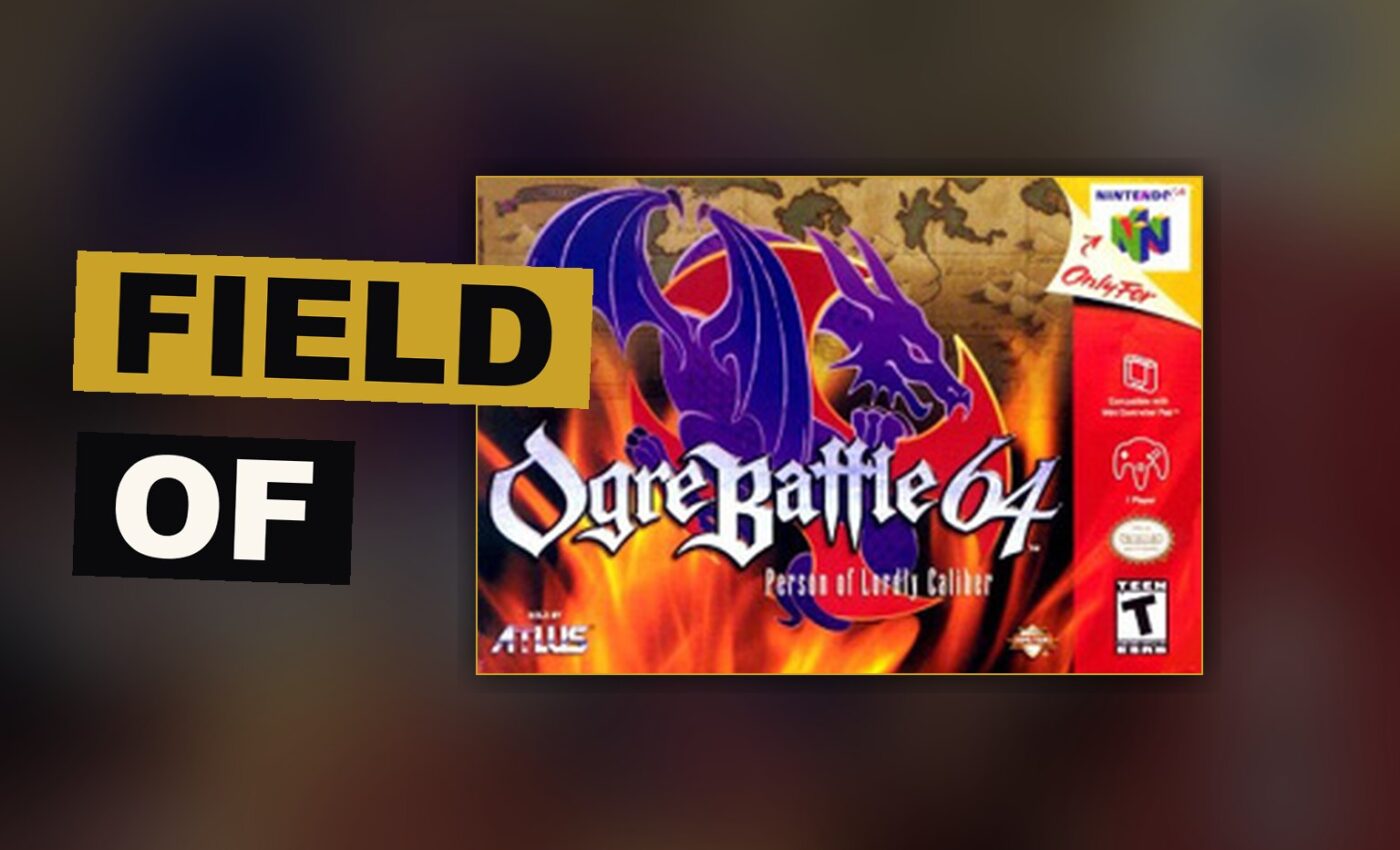
Ogre Battle 64: Person of Lordly Caliber arrived on the Nintendo 64 in 1999, published by Atlus in North America and Nintendo in Japan. Quest Corporation developed it. It is the third game in the series, after Ogre Battle: The March of the Black Queen and Tactics Ogre, and it remains the one that fans of the genre name first.
It scores 8.2 out of 10.
The score matches the published critical figure on Metacritic, and it holds up. Ogre Battle 64 is a real-time tactical RPG that asks more of a player than most games of its era, and it earns that ask.
Magnus Gallant and the Southern Region
The story follows Magnus Gallant, a recent graduate of the Ischka Military Academy and a fledgling captain in Palatinus’ Southern region, Alba. He is assigned to a troubled province, and what he finds there is a ruling elite interested only in keeping its own status. The lower classes pay for that.
Civil war follows. Magnus has to choose between his noble origins and the revolution, and the game does not let him stand apart from the choice. He joins Frederick Raskin, the revolution’s leader, and the Blue Knights march.
The campaign moves in stages. Magnus liberates the southern region with Zenobian aid, then Nirdam, then unites with them. He returns the Eastern Region of Capitrium to the Orthodox church. Then he marches on Latium, the capital.
That is a lot of ground, and the game keeps widening the frame. The enemies escalate from the puppet kingdom of Palatinus to the Holy Lodis Empire to the Dark Hordes of the Netherworld. Each step up makes the early battles look small.
Three Endings, One Certainty
Ogre Battle 64 has three possible endings, determined by the player’s Chaos Frame. Within those endings are slight scene variations depending on which characters joined the army. That structure is the game’s best argument for a second run, and it is not decoration.
All three endings share one fact: Frederick dies an untimely death. The game does not spare him in any version.
The Chaotic ending expels Magnus from the revolutionary army. They call him a monster who settles everything by force. He realizes his actions were for naught, disappears, and the people forget the general who saved them. Palatinus is destroyed by Barbarians.
The Neutral ending names him General Magnus Gallant, the guardian of Palatinus.
The Lawful ending is the fullest. After Frederick dies, tribes from the East of Gallea and Zeteginia invade, hoping to strike while Lodis has weakened Palatinus. Magnus becomes Magnus Gallant, the Paladian King. His rule is remembered forever, and his son Aeneas Gallant takes the throne.
| Ending | Magnus’ fate | Palatinus |
|---|---|---|
| Chaotic | Expelled, forgotten | Destroyed by Barbarians |
| Neutral | General and guardian | Preserved |
| Lawful | Paladian King | Defended, then ruled by his son |
The Chaos Frame and the Class System
The Chaos Frame is the mechanism that decides which of those endings a player sees. It tracks how the army behaves, and it turns a long campaign into a record of the player’s choices. That is the genre-defining character class system doing real work, not just filling a menu.
The game is single player, played from a bird’s-eye isometric view. It is real-time tactical combat layered onto an RPG, and the flow differs from The March of the Black Queen in ways that matter. Quest made significant gameplay tweaks, and the result moves faster and reads clearer than its predecessor.
The platform history is messy in the way that cult games often are. Ogre Battle 64 came to PAL regions for the first time through the Wii Virtual Console in 2010, eleven years after the original release. It has also been tied to the Wii U, the 64DD, and the Nintendo 64 itself, with publishing handled over time by Atlus, Nintendo of Europe, Quest, Square Enix and Nintendo.
What Holds Up and What Does Not
The multiple endings are the part worth defending. They are not a branching gimmick bolted on at the end. The Chaos Frame makes the player live with the army they built, and the three outcomes read as genuinely different verdicts on the same man. The Lawful ending’s invasion by the tribes of Gallea and Zeteginia lands harder because the player spent the whole game deciding what kind of leader Magnus would be.
The Blue Knights are the through-line. Magnus’ battalion is the unit the story attaches to, and the escalation from Palatinus to Lodis to the Netherworld gives the campaign a shape that most tactical RPGs of the period never found.
The weaker part is the friction. Real-time tactical combat with an isometric view and a class system this deep is a lot to hold at once, and Ogre Battle 64 does not always explain itself. Players who want the Lawful ending have to understand the Chaos Frame well before the game makes its importance obvious. That is a real cost, and it is why this is an 8.2 and not higher.
What it is not is dated in the ways that usually sink a 1999 strategy game. The story of Magnus Gallant, a noble officer who sides with the lower classes against his own elite, still carries weight. The three endings still mean something. The Blue Knights still earn their name.
Ogre Battle 64 has retained its place in the hearts of tactical RPG fans for over a decade, and the reason is simple: it made the player’s choices count, then showed them the bill. That is rarer than it should be.
Get the Notebook.
The day's best stories and every fresh verdict, in plain English, in your inbox by seven. One email a day, no more.