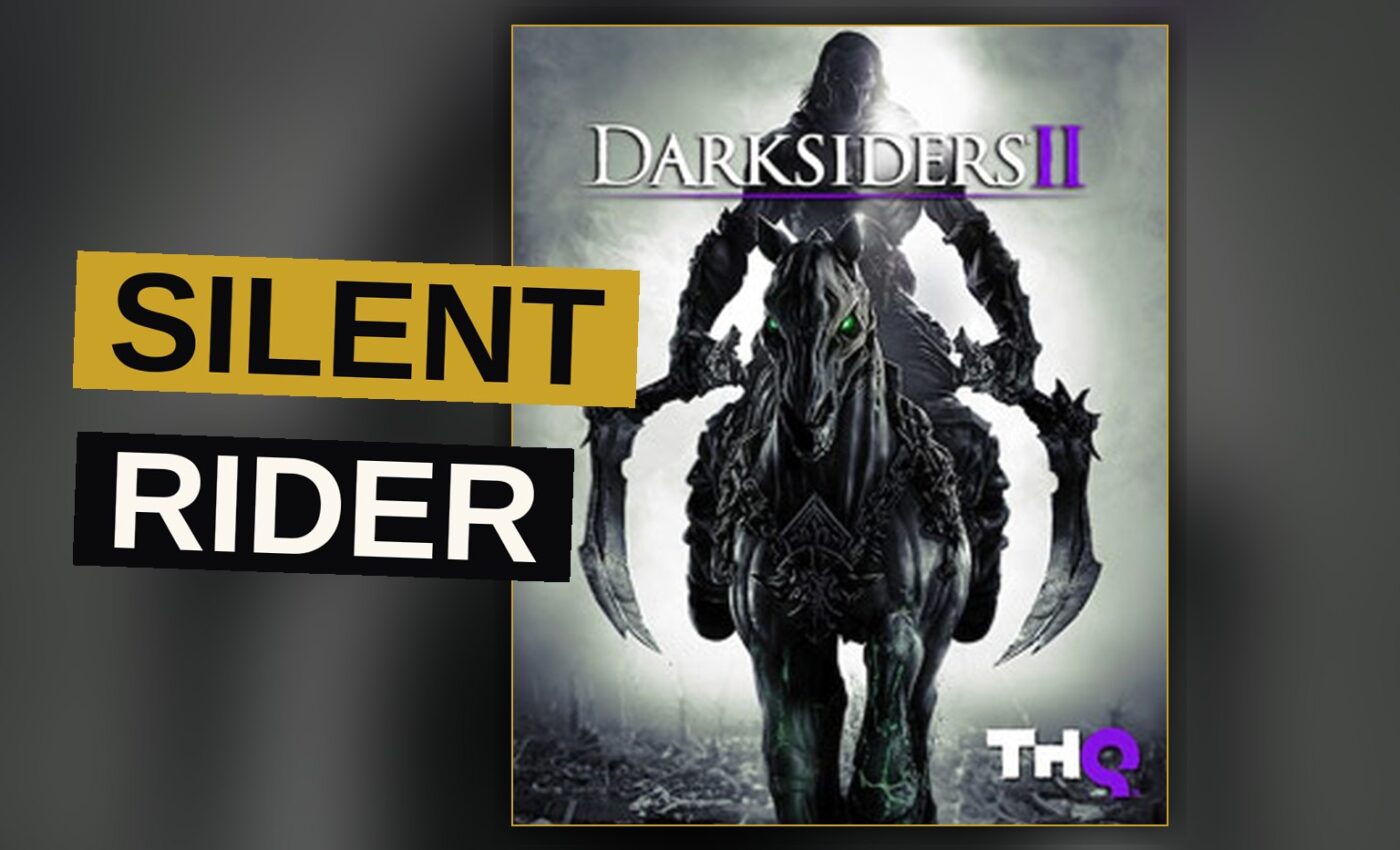
Darksiders II drops the Four Horsemen and replaces them with a single horseman, Death, who rides a skeletal steed across a broken, war-torn world. The sequel trades the open sandbox of the original for a tighter, more focused campaign, and the change pays off. Developer Vigil Games took the fantasy of the first game and made it feel bigger, sharper, and more personal.
Death is a silent protagonist, a hooded rider who speaks only through grunts and growls. He wields a scythe named Devine, a weapon that can swing, charge, and unleash blasts of energy. The combat is fast, fluid, and brutal, and it forms the backbone of the entire experience.
Trailer, via PlayStation.
Devine’s Moves
Devine is the heart of Darksiders II. It is a multi-purpose tool that changes shape mid-combat, switching between a sweeping blade, a charging spear, and a ranged attack. Players build a skill tree that unlocks new combos, counters, and special moves, and the system rewards aggression. Enemies are telegraphed, and reading their tells becomes a reflex.
The enemies themselves are varied. Some are small, weak foes that fill space. Others are massive bosses that require positioning and timing. Boss fights are the highlights, and they are designed around Devine’s full range of attacks. A fight against a giant armored knight might call for a charged thrust, while a demonic brute demands a quick flurry of slashes.
“Death is a silent rider, a hooded specter whose blade answers questions that words cannot.”
The Desert of Sorrow
The game takes place in a shattered realm called Despair, a land of ruins, deserts, and ancient temples. The setting is dark, but it is not empty. Despair is filled with side quests, hidden treasure, and lore that explains the conflict between Heaven and Hell. The world is large enough to explore, but it is structured around a central path, which keeps the pacing tight.
Each area has its own visual identity. The Desert of Sorrow is a vast, sun-baked wasteland with crumbling fortresses. The Forest of Illusions is a twisted, foggy wood that plays tricks on the eye. The Temple of Abaddon is a towering structure that feels ancient and oppressive. The variety is welcome, and it keeps the journey from feeling monotonous.
The Skill Tree
The skill tree is the core of Darksiders II’s depth. It offers upgrades for health, damage, speed, and abilities. Players can choose a balanced route or specialize in melee, ranged, or defensive playstyles. The system is generous, and there is always something to spend points on.
The progression loop is simple: kill enemies, collect souls, buy upgrades. It is a classic RPG formula, and it works. The game does not overload the player with options, and the upgrades are meaningful. A few extra souls spent on health or evasion can change how a boss fight plays out.
| Upgrade Type | Focus | Example |
|---|---|---|
| Melee | Damage and combo strings | Increased Devine damage |
| Ranged | Energy blast power | Stronger Devine blasts |
| Defense | Health and evasion | Reduced damage taken |
Hidden Gems and Quests
Darksiders II has a strong main story, but it also includes a wealth of optional content. There are hidden gems, secret rooms, and bonus arenas scattered throughout the world. These extras are not mandatory, but they reward curiosity. Finding them often requires backtracking, and the game does not mark them on the map.
The side quests are brief, but they add context to the world. One quest sends Death to a village to retrieve a lost child. Another task him with retrieving a holy artifact from a ruined temple. They are small, but they flesh out the world beyond the main plot.
Meeting Fury
The story follows Death as he investigates a false alarm. He is summoned by the Charred Council, the rulers of the Four Horsemen, and tasked with tracking down a demon who has stolen a powerful artifact. The investigation leads him to Despair, where he meets a female warrior named Fury, who is searching for the same artifact.
The plot is straightforward, but it is well paced. The game does not rush the setup, and it does not drag the middle. The narrative is delivered through cutscenes, voiced conversations, and environmental storytelling. The dialogue is sparse, but it is effective. Death remains a mystery, and his silence adds to his presence.
Fury is a welcome addition. She is a playable character who appears in certain sequences, and she brings a different perspective to the adventure. Her presence shifts the tone from grim to humorous at times, and it gives the story a human element.
Music and Voice
The audio design is strong. The music is orchestral and epic, with a heavy emphasis on percussion. The sound effects are punchy, and the scythe’s swings land with weight. The voice acting is solid, and the characters deliver their lines with conviction.
The visuals are competent. The game runs on a dated engine, but it holds up well. The environments are detailed, and the character models are expressive. The lighting is dramatic, and the color palette is stark. The game does not push the hardware to its limits, but it does not need to.
What Holds It Back
Darksiders II is not a perfect game. It stumbles occasionally. Some areas feel empty, and the pacing slows in the middle chapters. The difficulty spikes in the final stretch, and some players may find the later bosses frustrating. These issues are minor compared to the overall package.
The game is available on PS3, PC, Wii U, and Xbox 360. Performance varies across platforms, but the core experience is consistent. The PC version offers the best visuals and the most flexibility. The console versions are solid, though they show their age.
The Verdict
Darksiders II is a confident sequel. It builds on the strengths of the original while fixing its weaknesses. The combat is better, the world is larger, and the story is more focused. It is not a perfect game, but it is a very good one.
Get the Notebook.
The day's best stories and every fresh verdict, in plain English, in your inbox by seven. One email a day, no more.