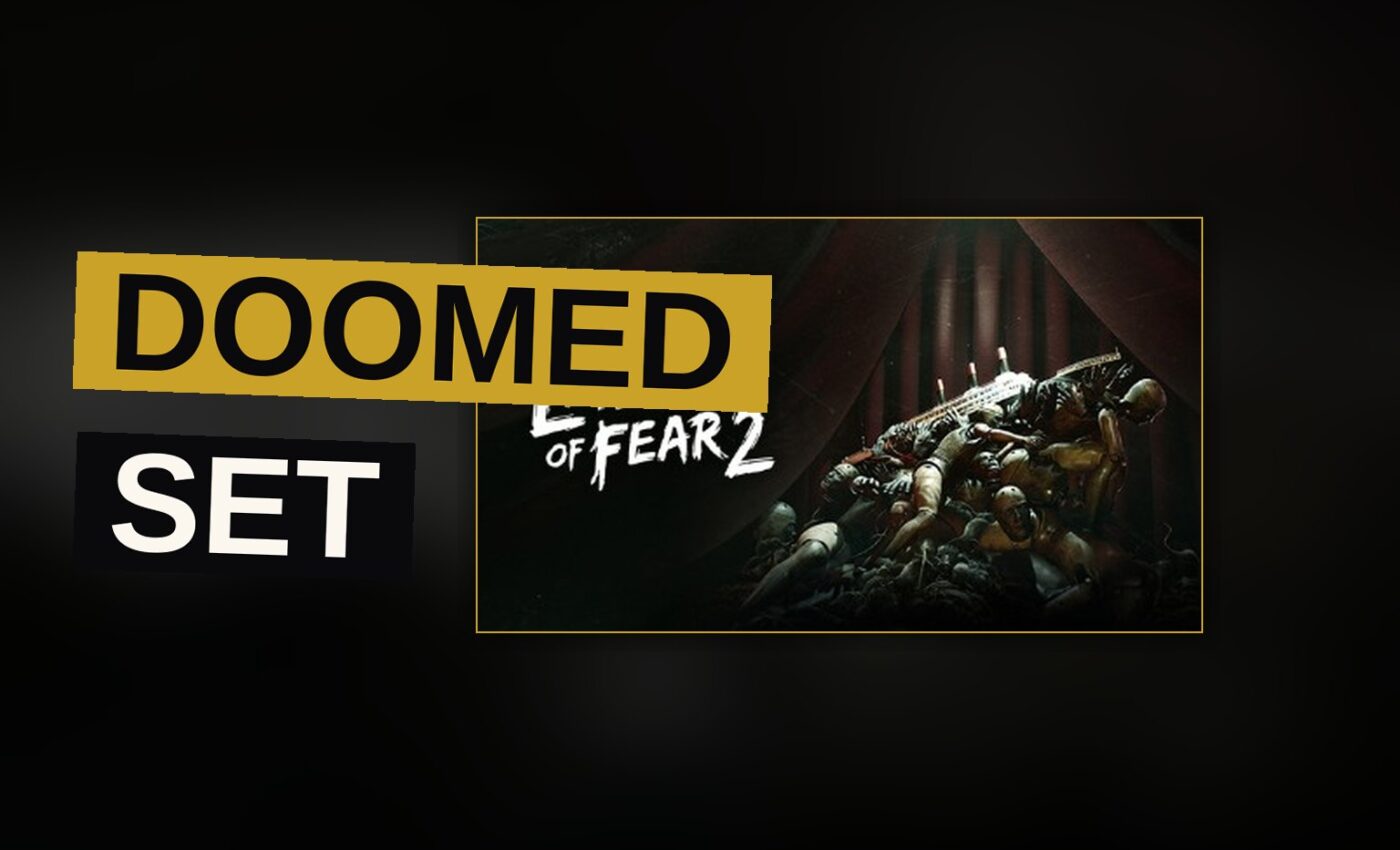
Layers of Fear 2 asks players to piece together a man’s fractured memory of a grand ocean liner and the terrible fate that befell it. It is a game about isolation, grief, and the way a mind warps itself around loss. The sequel builds on the psychological horror of its predecessor, but the result is a game that is often more confusing than chilling.
The premise is simple: you play a retired film director who has returned to the set of his final project, a doomed ocean liner. The ship is a living, shifting maze of corridors, rooms, and staircases that rearrange themselves as you move through them. The game’s central trick is that the world is not static. It bends, twists, and sometimes disappears entirely, forcing you to find your way back to the starting point again and again.
Trailer, via Gun.
The Ship As A Living Maze
The ocean liner is the star of Layers of Fear 2. It is a vast, ornate vessel that feels both luxurious and oppressive. The upper decks are filled with polished wood and chandeliers, while the lower levels are dark, cramped, and flooded. The ship’s layout changes constantly, and finding your way back to the starting point becomes a recurring task. This is where the game is at its best.
The puzzles are mostly about navigation rather than logic. You might find a key in one room that unlocks a door in another, but the real challenge is remembering where you put it. The game rewards patience and memory, which can be frustrating when the world shifts without warning. There are moments of genuine dread when you realize you have lost your bearings completely.
The Memory Fragments
The story is told through fragments of memory scattered throughout the ship. These are short, cinematic sequences that reveal the director’s past, his family, and the tragedy that drove him to return to this cursed set. The narrative is disjointed and elliptical, jumping between timelines without much context. You are expected to piece together what happened.
Some of the best scenes involve the director’s wife, who appears in various guises across the ship. Her presence is haunting, and her fragmented memories suggest a troubled marriage. These moments land with real emotional weight, even when the surrounding gameplay feels hollow.
The Sound Design
The audio design is where Layers of Fear 2 shines brightest. The ambient score swells and recedes, creating a sense of unease that the visuals alone cannot achieve. Footsteps echo in empty corridors, and distant whispers grow louder as you approach them. The sound design is consistently excellent, and it carries the game through its weaker stretches.
The lighting is also superb. The ship is lit with flickering candles, neon signs, and sudden bursts of light that reveal hidden rooms. The contrast between the opulence of the public spaces and the decay of the lower decks creates a striking visual tension. Unfortunately, the graphics are dated by today’s standards, and the frame rate stutters frequently on console versions.
The Pacing Problem
Where Layers of Fear 2 falters is in pacing. The game is slow to start, and the early hours involve a lot of wandering with little payoff. The puzzles are often arbitrary, requiring you to backtrack to a previous location without much explanation. This can feel like busywork rather than exploration.
The game also leans heavily on jump scares, which are effective in isolated moments but wear thin over time. The game includes a moment involving a vent that is unsettling, along with other jump scares that work well in brief stretches but lose their power quickly. The game’s reliance on cheap frights is a missed opportunity, since the setting and premise offer so much potential for genuine psychological terror.
Performance Across Platforms
Layers of Fear 2 launched on PS4, PC, Xbox One, and Switch. The performance varies widely across these platforms. The console versions suffer from frame rate drops, especially during the more complex puzzle sequences. The PC version runs smoother but still shows its age. The Switch version is the weakest, with significant graphical compromises and a noticeable slowdown during movement.
The load times are long, particularly on console, which breaks the immersion the game is trying to build. The game’s difficulty spikes inconsistently, with some sections feeling almost impossible while others breeze by without much thought.
The Final Hours
The game’s ending attempts to tie everything together, but the loose threads of the story mean the conclusion feels unsatisfying. The director’s motivations are left largely unexplored, and the fate of the ship remains ambiguous. This ambiguity could have been a strength, but it reads more as a lack of direction.
There is a sense that the developers were more interested in the visual ideas than in the narrative coherence. The result is a game that is visually striking but narratively thin.
Key Facts Box
- Title: Layers of Fear 2
- Platforms: PS4, PC, Xbox One, Switch
- Release: 2019
- Developer: Bloober Team
- Publisher: Bloober Studio
- Score: 6.4/10
Layers of Fear 2 is a flawed but ambitious game. Its strengths—sound design, atmosphere, and visual ambition—are undeniable, but its weaknesses—pacing, narrative coherence, and technical performance—drag it down. It is a game worth experiencing for its best moments, but not one that holds together as a cohesive whole.
The ocean liner remains a memorable space, and the director’s memories are occasionally moving. But the journey to get there is often tedious, and the destination is disappointingly vague. For a game about memory and loss, it struggles to remember what matters.