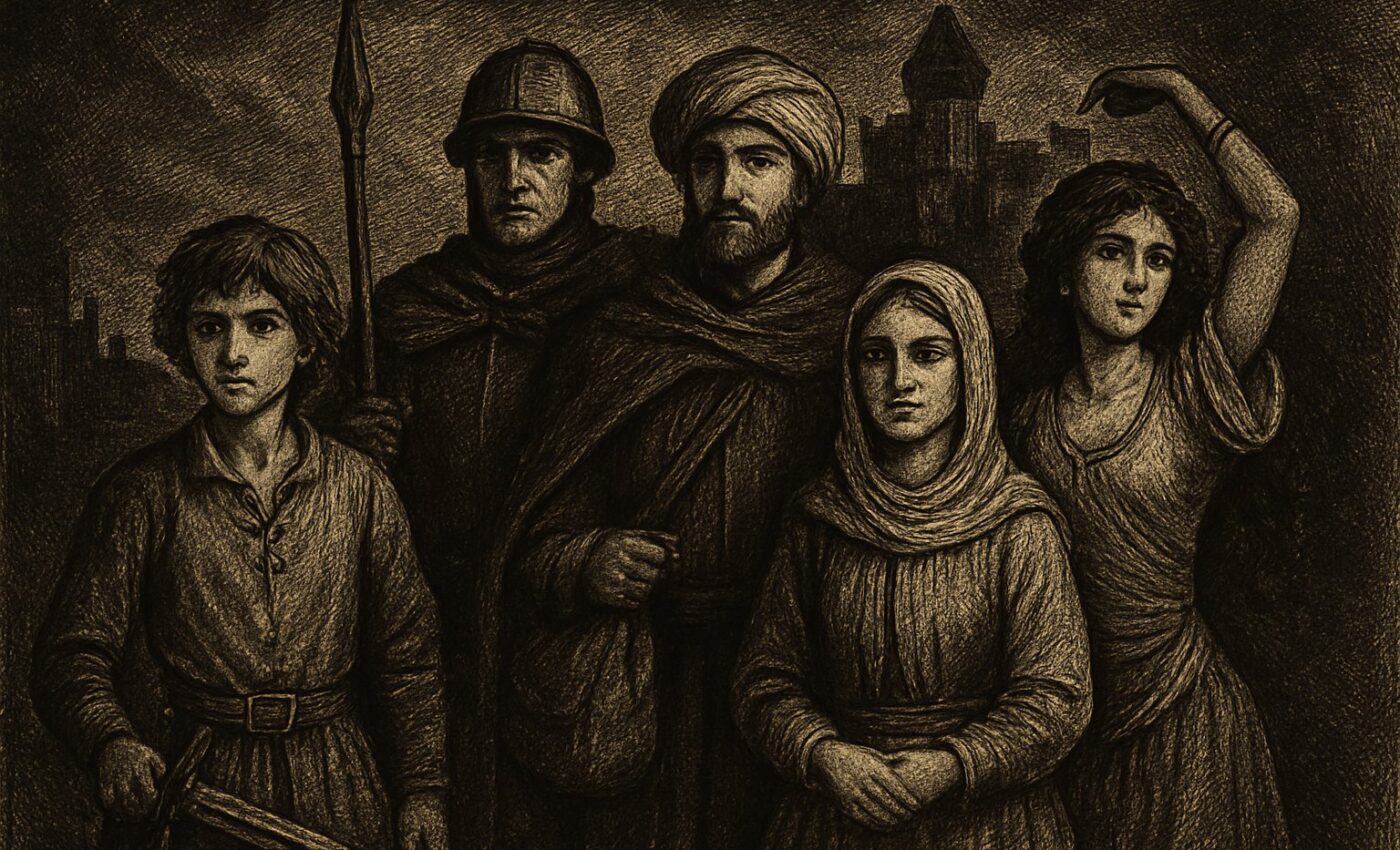
Dragon Warrior IV brings a story told in five parts to the NES, and that plan is the biggest change the series had made up to that point. Each part follows a different hero before the story brings them together, a design that gives the game a different shape than most quest games on the console.
The Five Parts
The game splits its story into five parts. Four parts focus on separate characters, each with a private goal, before the fifth part joins the cast around a single quest led by the young hero who does not appear until the story’s close. This staggered plan means players learn new casts and new towns four times before the game settles on one party.
The pacing rewards patience. Early parts run short and complete on their own, while the final part opens the world up and asks players to manage a full group of heroes.
- Part One follows a soldier tied to a kingdom under threat.
- Part Two centers on a princess of a kingdom.
- Part Three follows a merchant working alone.
- Part Four follows two sisters, a dancer and her sibling, each with her own private goal.
- Part Five joins every character from the first four parts, led by the young hero, into one group for the final quest.
Battle and Systems
Battle in Dragon Warrior IV keeps the menu system the series built its name on. Commands are plain: attack, defend, use an item, or cast a spell. What sets this game apart is a choice that lets the computer handle battle decisions for allies during longer fights, freeing the player from managing every ally by hand.
That system is useful, but it is not perfect. Party members under the computer’s control sometimes waste turns on weak spells or attack the wrong foe, and players who want tight control over every character will find themselves switching back to direct commands often.
Look and Sound on NES Hardware
The game’s graphics stay within what the NES could handle at the time, but the sprite work is detailed for the platform, and town and dungeon design changes enough from part to part to keep travel from feeling the same. The music, carried by the series’ familiar tunes, changes mood as each new hero’s story begins.
Text carries much of the weight in a game built around five separate leads. Writing is plain rather than fancy, but it does the job of setting apart each character’s reasons without holding back the pace.
The Five Parts at a Glance
Below is a rough breakdown of how the parts are arranged, useful for players deciding how to approach the game in sittings.
| Part | Focus Character | Design |
|---|---|---|
| 1 | The soldier | Story tied to a kingdom |
| 2 | The princess | Story tied to a kingdom |
| 3 | The merchant | Story tied to trade |
| 4 | The two sisters | Private story |
| 5 | The full group, led by the young hero | Joined final quest |
This plan means the game asks for a different kind of patience than a single, steady story. Players invest in one character, then set them aside, then invest in another.
That can be frustrating for anyone hoping to stay with a single hero from start to finish.
Where the Game Lands
Dragon Warrior IV succeeds because it takes a plan already known on the NES and finds a new way to arrange it without leaving behind what made the series work. The battles built around menus, the towns and dungeons, and the item and spell systems are all familiar. What is new is the way the game holds back its own payoff, laying the cast across four separate stories before letting them join.
The computer’s battle choice is a good addition for a game with a large party, even when it once in a while makes an odd choice in a fight. The plan of five parts is the game’s clearest strength and also its clearest risk, since players who want a single story may find the early parts feel like setup rather than a full story on their own.
Dragon Warrior IV does not remake the quest game on the NES, but it builds on what the form could do with its plan, and it does so with enough skill in its design built around five parts to stand out among other games on the console. The final part, where every character from the earlier stories joins together under the young hero, is where the game’s design pays off, and it makes the earlier, smaller parts feel worth the wait once the ending arrives.
Dragon Warrior IV earns its place among the NES’s strongest quest games through its reach with story design, even where its systems show the limits of the hardware it was built for.