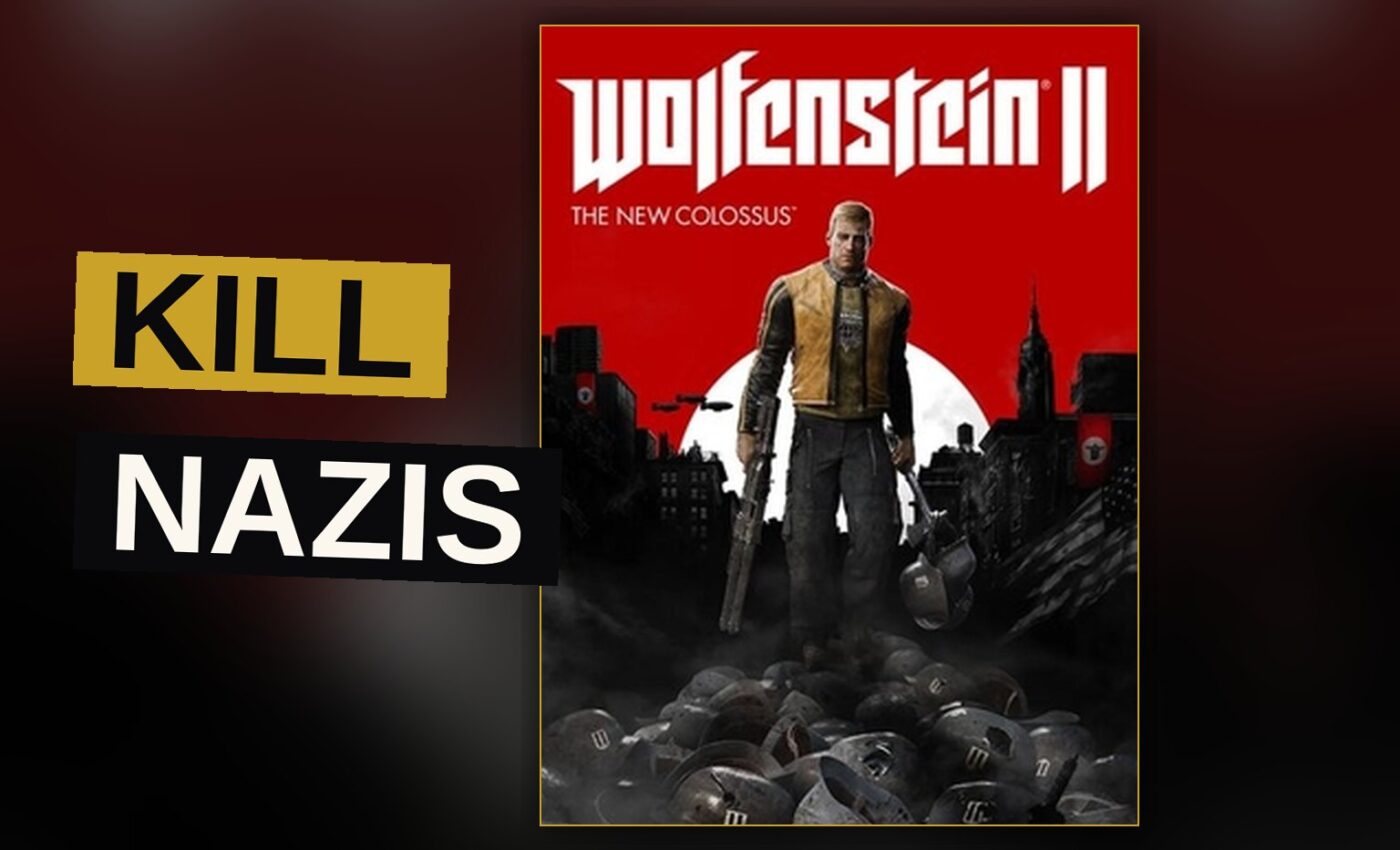
Wolfenstein II: The New Colossus opens with its hero in a wheelchair, paralyzed from the neck down. That is a bold choice for a first-person shooter, and it tells you everything you need to know about this game. MachineGames and Bethesda Softworks did not make a safe sequel. They made a loud, bloody, politically charged spectacle that refuses to play by the rules of the modern blockbuster.
The 2017 release picks up immediately after the events of the previous game, with BJ Blazkowicz broken in body but not in spirit. The opening sequence is a slow, claustrophobic crawl through a Nazi stronghold, and it establishes the stakes without firing a single shot. This is a story about a man who has to find a reason to keep fighting, even when his body has given up on him. It is a powerful hook, and the game never lets go of that tension.
Trailer, via Nintendo of America.
The Man Under the Helmet
BJ Blazkowicz is not a typical action hero. He is haunted by his past, his family, and the endless war he has been fighting since he was a teenager. The game spends significant time developing his character, and it is all the better for it. Brian Bloom delivers excellent voice work, giving BJ a weariness that feels earned after two games of nonstop violence.
The supporting cast is just as strong. Anya, BJ’s wife, is pregnant and fights alongside him, adding a layer of tension to every mission. Grace Walker, the leader of the resistance aboard the submarine that serves as your home base, is a fierce presence who does not trust BJ. The game is not afraid to let its characters be unlikable or conflicted, and that makes the quieter moments between missions feel just as important as the firefights.
The story takes you from a Nazi-occupied Manhattan to the bayous of Louisiana, and each location is rendered with a grim, exaggerated style that fits the tone. The game is not subtle about its politics. The Nazis are cartoonishly evil, and the game makes no effort to humanize them. That is a deliberate choice, and it works. This is a game about fighting fascism, and it plays out like a pulp revenge fantasy with a brain.
Pulling the Trigger
The core gameplay is a refinement of the formula that made the previous game so satisfying. You dual-wield weapons, you blow heads off with shotguns, and you feel every impact. The gunplay is heavy and visceral, and the game encourages you to be aggressive. Health is scarce, so you have to keep moving and keep killing to survive.
The stealth mechanics are also improved. You can sneak through levels, taking out enemies quietly, but the game is at its best when you are in the middle of a firefight. The enemies are varied, from standard troopers to armored soldiers and robotic dogs. Each one requires a different approach, and the game mixes up the encounters to keep you on your toes.
The level design is a highlight. The game is linear, but the levels are built with multiple paths and verticality in mind. You can approach most encounters from several angles, and the game encourages experimentation. The Manhattan level, in particular, is a standout, with its ruined streets and Nazi propaganda posters plastered on every wall. It is a world that feels lived in, even if that living is done under the heel of an occupying force.
Comparing the Two Campaigns
| Feature | Wolfenstein II: The New Colossus | Wolfenstein: The New Order |
|---|---|---|
| Setting | Nazi-occupied America | Nazi-occupied Europe |
| Protagonist | BJ Blazkowicz, older and injured | BJ Blazkowicz, younger and fit |
| Tone | More absurd and politically pointed | More somber and grounded |
| Combat | Faster, more aggressive | Slower, more methodical |
| Story Focus | Family and resistance | Survival and escape |
The table shows how the sequel pushes the series forward, taking the foundation and building on it with new mechanics and a more complex story.
Weapons and Upgrades
The weapons in the game are a joy to use. The standard assault rifle is reliable, and the shotgun is devastating at close range. The laser gun, which you can find early on, is a standout, capable of melting through armored enemies with ease. Each weapon can be upgraded using parts you find in the world, and these upgrades are meaningful. A silenced pistol becomes a viable stealth tool, and a fully upgraded shotgun can clear a room with a single blast.
The game also introduces a new mechanic: the ability to dual-wield any two weapons. It changes the flow of combat significantly. You can pair a shotgun with a submachine gun, or a laser with a pistol, and the combinations create a sense of freedom that is rare in linear shooters.
The health system is also worth noting. You have a health bar, but you can also collect armor and health packs. The game does not have a regenerative health system, which means you have to be careful. This makes the combat feel more tense and tactical. You have to push forward, take risks, and manage your resources.
Occupied America
The game’s world is one of its strongest elements. The Nazi occupation of America is depicted in all its grim detail. The streets are patrolled by soldiers, the buildings are covered in propaganda, and the civilians are cowed and afraid. The game does not shy away from the horrors of occupation, and it uses these moments to build atmosphere.
One level takes place in a Nazi prison camp, and it is one of the most harrowing levels in the game. The game does not let you forget what you are fighting against. It shows you the bodies, the gas chambers, and the cruelty. It is not gratuitous, but it is unflinching. This is a game that wants you to be angry, and it succeeds.
The game also uses its setting for humor, albeit of a dark variety. There are moments of absurdity that feel out of place but somehow work. A scene involving a Nazi officer and a dog is both hilarious and horrifying, and it shows off the game’s tonal control. It can make you laugh and then make you feel guilty for laughing.
Performance and Sound
The game runs well on most platforms, though it is not without its issues. The frame rate can dip during the more chaotic firefights, and there are occasional bugs that can pull you out of the experience. The loading times can also be long, which is frustrating when you are trying to get back into the action after a death. These are minor complaints, however, and they do not detract from the overall experience.
The sound design is excellent. The guns have a weight to them, and the explosions shake the room. The music, composed by Mick Gordon, is a mix of industrial metal and orchestral pieces, and it fits the tone perfectly. The voice acting is uniformly strong, and the writing is sharp throughout.
The game also supports a New Game Plus mode, which lets you carry over your upgrades and weapons into a second playthrough. This is a welcome addition, giving you a reason to go back with a full arsenal. The game is not particularly long, clocking in at around fifteen hours, but it is dense and well-paced.
Why the Violence Matters
The violence in the game is extreme, but it serves a purpose. This is not a game that glorifies violence for its own sake. It uses violence to make a point about the nature of fascism and the cost of resistance. It is a game about killing Nazis, and it wants you to feel good about it.
The game also has a strong message about family and legacy. BJ’s relationship with his father is a central part of the story, and it is handled with surprising depth. The game explores the idea of inherited trauma and the cycle of violence, and it does so without losing its sense of fun. It is a rare shooter that manages to be both thoughtful and entertaining.
The game is not for everyone. Its politics are explicit, and its violence is graphic. But for those who are willing to engage with it, it is a rewarding experience.
Wolfenstein II: The New Colossus is a triumph. It takes the established formula and pushes it forward, delivering a story that is both personal and political. The shooting is excellent, the world is compelling, and the characters are memorable. It is a game that knows what it is and does not apologize for it. It is a shame that it was not a bigger commercial success, because it deserves to be played.
The game ends with a promise of more to come, and that is a promise I am eager to see fulfilled. In a medium full of safe, corporate blockbusters, Wolfenstein II: The New Colossus stands out as something different. It is angry, it is loud, and it is unapologetic. That is a rare thing, and it should be celebrated.
Get the Notebook.
The day's best stories and every fresh verdict, in plain English, in your inbox by seven. One email a day, no more.