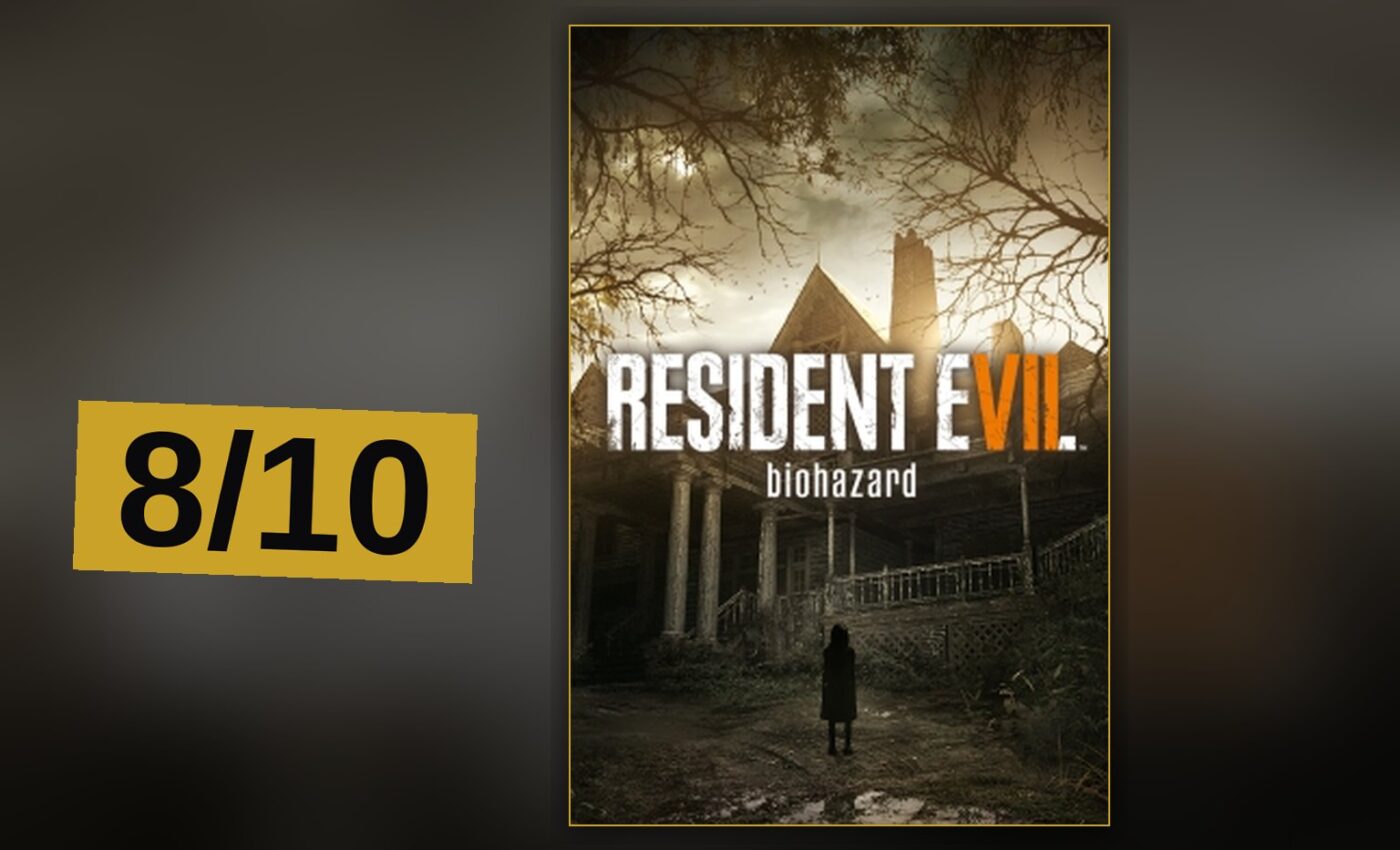
Resident Evil 7: Biohazard came out in January 2017 for PlayStation 4, Windows and Xbox One. It is the first main line Resident Evil game to use a first-person view. It puts you in control of Ethan Winters, a civilian searching for his wife in a derelict Louisiana plantation occupied by an infected family. After Resident Evil 5 and Resident Evil 6 pushed the series toward action, Capcom pulled it back to survival horror. The result is the strongest Resident Evil in years.
- Title: Resident Evil 7: Biohazard
- Developer/Publisher: Capcom (Capcom Development Division 1)
- Released: January 2017
- Platforms: PlayStation 4, Windows, Xbox One, Nintendo Switch, PlayStation 5, Xbox Series X/S, Nintendo Switch 2, iOS, iPadOS, macOS, Google Stadia, PlayStation VR
- Director: Koshi Nakanishi
- Engine: Capcom’s in-house RE Engine
- Score: 8.6/10
Trailer, via IGDBcom.
Ethan Winters and the Baker family
Ethan is a systems engineer. In 2017 he travels to Dulvey, Louisiana, after an email from his wife Mia, who has been missing for three years. He finds her imprisoned in the basement of a seemingly abandoned house. During their escape, Mia turns violent and attacks him, and he is forced to kill her. Then she comes back.
A woman named Zoe calls to offer help. A revived Mia cuts off Ethan’s left hand. Jack Baker, the family patriarch, subdues him and drags him to another house, where Zoe sews the hand back on. Ethan is held captive by Jack, his wife Marguerite, their son Lucas, and an elderly woman in a wheelchair.
Jack keeps coming back. He regenerates from wounds that should kill him. That is the engine of the game’s dread: not the first scare, but the certainty that what you put down will get up again.
A first-person view that earns its place
Resident Evil 7 is the first main line game in the series to use a first-person perspective, and the second game in the series to use one. The shift is not a gimmick. It narrows the frame, and the narrowing is the point. Ethan can rotate the camera freely, move in any direction, and alternate between walking and sprinting. He can guard to block attacks and reduce damage, and crouch to fit through confined spaces or use stealth.
The combat is deliberately weak. Firearms are less powerful than those in the action-oriented titles. Enemies are tougher, can sidestep and block, and will not stay down forever. Ethan is a civilian with little combat experience. He finds what he can: pocket knives, chainsaws, handguns, shotguns, a makeshift flamethrower. He can shoot from the hip or focus through a scope, and move while shooting. Damage shows as blood on the screen and on a codex on his wrist. Herbs and first aid solution heal him. He has eight inventory slots, plus four that connect.
That scarcity is the argument. Resident Evil 7 wants you to flee, not to clear the room.
Molded, serum and a booby-trapped barn
The Baker estate is occupied by humanoid fungal creatures called “Molded” that attack Ethan on sight. Zoe reveals she is the Bakers’ daughter, and that she, her family and Mia are all infected with the same ailment. A special serum can cure it.
Ethan goes to an old house for the serum ingredients and kills Marguerite. He sees visions of an unknown young girl. Lucas captures Zoe and Mia and forces Ethan through a booby-trapped barn to find them. Ethan outwits Lucas, who flees, and frees both women. Zoe makes two doses. Jack, now heavily mutated, attacks, and Ethan uses one dose to kill him permanently.
Then the game asks him to choose: cure Mia or cure Zoe. Choosing Zoe leaves Mia heartbroken, despite Ethan’s promise to send help. He and Zoe escape by boat, and Zoe reveals the Bakers were infected after Mia arrived. Two downloadable scenarios followed, Not a Hero and End of Zoe.
The RE Engine and what it changed
Resident Evil 7 is the first full-length game to use Capcom’s in-house RE Engine. Development was led by Koshi Nakanishi, who directed Resident Evil: Revelations. A year before the E3 2016 announcement, the team showed the game as a virtual reality demo called Kitchen. The team drew on The Texas Chain Saw Massacre (1974), The Evil Dead (1981) and Saw (2004), cut the game down to one location, and used first person to put players inside it. Sony’s PSVR headset supports a VR mode.
The single-location choice is the smartest decision here. One estate, one family, one problem. Resident Evil 5 and Resident Evil 6 kept widening the map. Resident Evil 7 closes it.
The verdict on Resident Evil 7
Resident Evil 7 is the best thing Capcom has done with this series since it stopped trusting its own monsters. The first-person view is not nostalgia for the early games. It is a tool for making a civilian feel like a civilian. The Bakers are the reason it works. Jack regenerating, Marguerite in the old house, Lucas and his barn — each one turns a room into a problem you cannot shoot your way out of.
The weaker parts are real. The Mia-or-Zoe choice lands as a binary the game has not built enough toward, and the back half leans harder on combat than the opening’s patient dread. The Molded are a thinner idea than the family they serve. But those are complaints about a game that got the hard thing right.
The hard thing is restraint. Resident Evil 7 scales back to one location, weakens the guns, and lets fear do the work. It is as much horror as survival, and it minimizes the shooting without losing the tension. Capcom built the RE Engine for this game, the first full-length title to use it, and the series has been building on this foundation ever since.
8.6/10.
Get the Notebook.
The day's best stories and every fresh verdict, in plain English, in your inbox by seven. One email a day, no more.