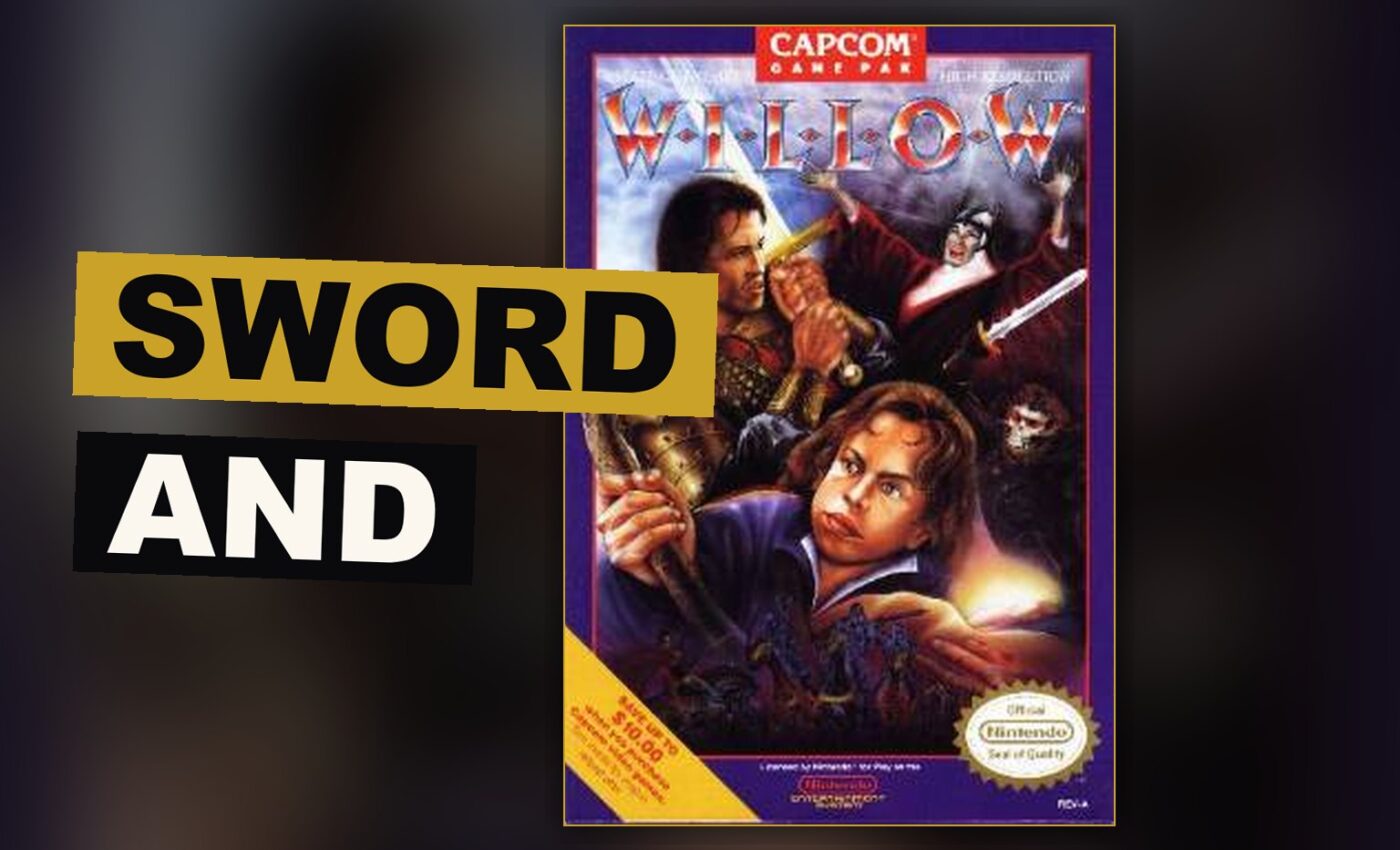
Capcom released two Willow games in 1989. Only one of them is worth your password sheet.
The arcade Willow is an unrelated side-scrolling platform game. The Nintendo Entertainment System Willow is something else entirely: a 2D action role-playing game, developed and published by Capcom, built in the vein of The Legend of Zelda. Same year, same license, two different games. The NES one is the keeper.
Willow Ufgood Walks Alone
You play as Willow Ufgood, who wages a battle against evil, wielding swords, shields, magic spells and items to defeat enemies. The arcade game put him on a scrolling stage. The NES game sends him out by himself.
That solitude is the smartest decision Capcom made here. Willow generally travels alone, only briefly meeting several other characters across the whole quest, which turns every village into an oasis and every stretch of wilderness into a long walk with your own sword.
Swords, Spells and a Password
The combat runs in real time, and it carries light role-playing systems on top. Willow gains experience and levels up from defeating enemies. There is no money system at all. All items are found — in the field, in the villages, or handed over by the people who live there.
Willow can enter homes and talk to the inhabitants of the villages. They give advice, magic and weapons. That loop — explore, talk, take what you are given, go fight — is the whole spine of the game.
One choice will split people. The game uses a password system instead of a save feature. Write the code down or lose your progress. In 1989 that was ordinary. Today it reads as a relic, and it is the single biggest friction point between this game and a modern player.
What the NES Version Gets Right
Capcom understood the assignment better than the license required. The NES game is a solo adventure with a leveling curve, and it holds that shape from the first screen to the last.
The item economy deserves credit. No shops, no gold, no grinding for coin — everything comes from exploration or conversation. It keeps the pace clean and forces you into the villages instead of past them.
- Real-time combat with experience and leveling
- Swords, shields, magic spells and items
- No money system — all items are found
- Villages with enterable homes and talkative inhabitants
- Password system instead of a save feature
- Single player only
Where Willow Stumbles
The password system is the obvious complaint, and it is not a small one. Losing a session to a mistyped code is a real cost.
The bigger issue is identity. Willow travels alone for nearly the whole game, meeting others only in passing. That is thematically right and mechanically thin. The world stays quiet when it could have been crowded, and the brief encounters only hint at a larger cast.
It also sits in Zelda’s shadow without escaping it. Capcom built a competent action role-playing game and stopped there.
The Verdict on Willow
This is a good licensed game, which in 1989 was close to a miracle. Capcom took a fantasy license and made a solo quest — alone, under-leveled, and short on help. The leveling works. The item loop works. The villages work.
What holds Willow back is ambition, not craft. It borrows Zelda’s frame and never quite fills it, and the password system dates it harder than the graphics do. Still, for a second Willow title in a single year, and one unrelated to the arcade game, it lands.
Key facts
- Title: Willow
- Year: 1989
- Developer: Capcom
- Publisher: Capcom
- Platform: Nintendo Entertainment System (NES)
- Genre: 2D action role-playing game
- Modes: Single player
- Save system: Password
- Published critical score: 7.2/10
Play it for the solo quest and the clean item design. Keep a pen nearby.
Get the Notebook.
The day's best stories and every fresh verdict, in plain English, in your inbox by seven. One email a day, no more.