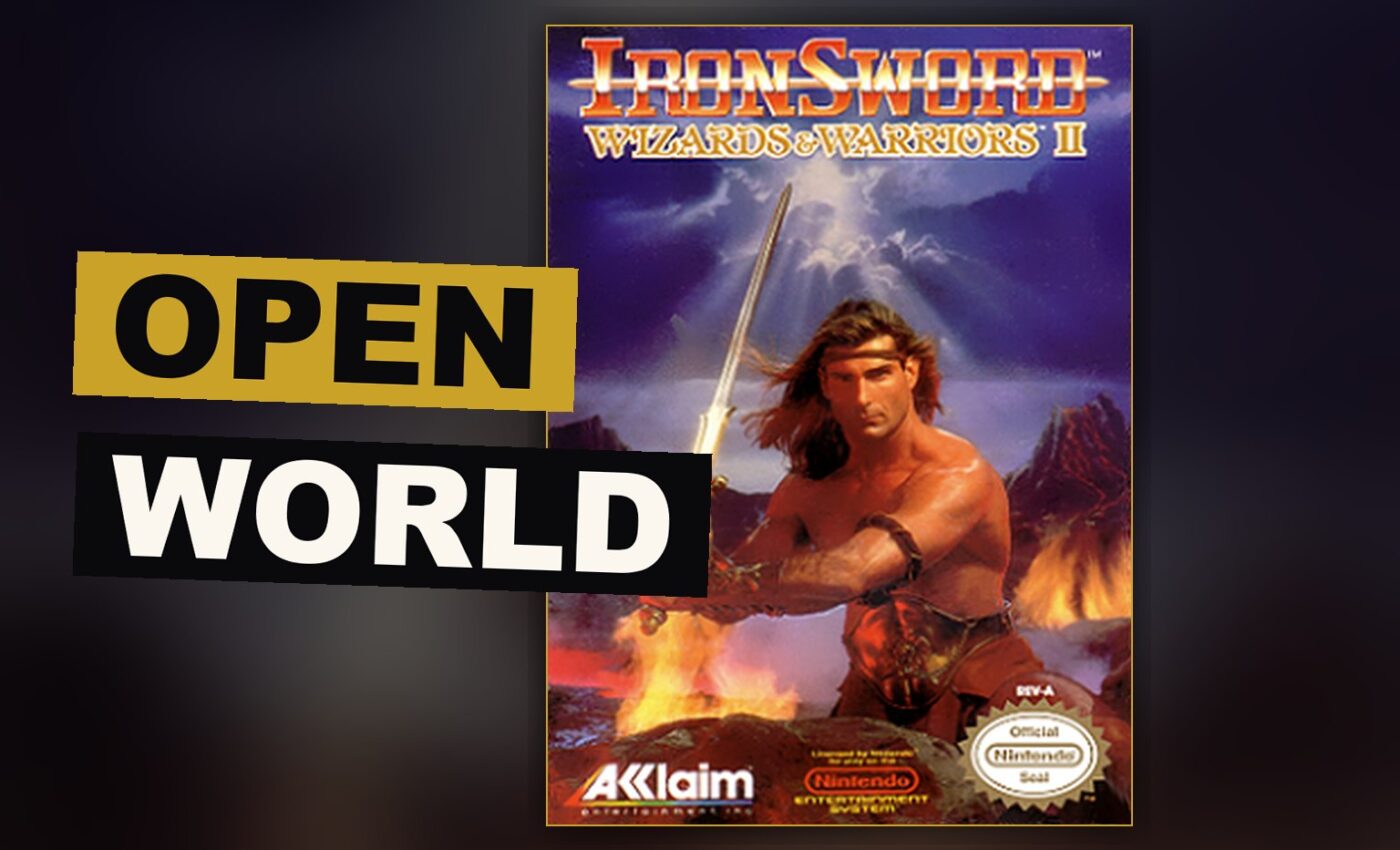
Ironsword: Wizards & Warriors II sends Kuros across four elemental domains to rebuild a legendary sword, and the errand between each boss is the weakest part of it. Zippo Games built a sequel bigger and better-looking than Rare’s 1987 original. It sold well. It earned its 6.5.
Four Domains, One Errand
The structure is rigid. Each domain — Earth, Wind, Fire, Water — splits into two parts. In the first, Kuros hunts down a golden artifact belonging to that domain’s Animal King and returns it. The path to part two opens. In part two, Kuros finds the magic spell that can actually hurt the boss, because without the spell the Elemental cannot be damaged at all. Kill the Elemental, take a piece of the IronSword, move on. Malkil waits at the top of IceFire Mountain.
That loop is the whole game, and you either accept it or you don’t. The spell requirement is the sharpest idea here: it forces exploration before every fight instead of letting players brute-force a boss with a life meter and patience. The artifact hunt is the weaker half. It is a key. It is always a key.
Kuros, Chicken, and a Broken Continue
Kuros moves left and right, crouches, jumps, swings his sword or casts a spell. His life meter drains from enemy hits, projectiles, and falls from too great a height. Chicken and brew refill it. Lose the meter, lose a life; lose every life, the game ends.
| Feature | How it works |
|---|---|
| First half of a domain | Find the Animal King’s golden artifact and return it |
| Second half of a domain | Find the magic spell, then kill the Elemental |
| Reward | One piece of the IronSword |
| Continue | Available up to two times — but not as intended |
That last row is the problem. The continue feature is supposed to switch off after the player finishes the earth domain. A bug disables it the moment Kuros sets foot in the domain instead. Players lose their safety net early, and the game never tells them.
What Holds Up
The size, the graphics, the sound, the bosses — this is where Ironsword earns its keep. The Elementals are detailed, distinct fights, and the domains give the hardware room to stretch. The criticism that stuck was a lack of originality, and it is fair. This is a sequel that refines a formula rather than finding a new one.
Key facts:
– Released: December 1989 (North America); 27 March 1991 (Europe)
– Developer: Zippo Games; Publisher: Acclaim Entertainment
– Platform: Nintendo Entertainment System
– Sales: 500,000 copies in North America; 50,000 in Europe
– Modes: Single player
– Score: 6.5/10
The commercial story matters more than the review scores did. Rare liked what Zippo made here, contracted the studio for Solar Jetman: Hunt for the Golden Warpship and Wizards & Warriors III: Kuros: Visions of Power, and eventually folded it in as Rare Manchester. A 6.5 game that launched a studio’s path into Rare is a stranger and more useful legacy than a great one would have been.
Play it for the bosses and the scale, not for the errands between them. The IronSword is worth assembling. Getting there is the chore. 6.5 of 10.
Get the Notebook.
The day's best stories and every fresh verdict, in plain English, in your inbox by seven. One email a day, no more.