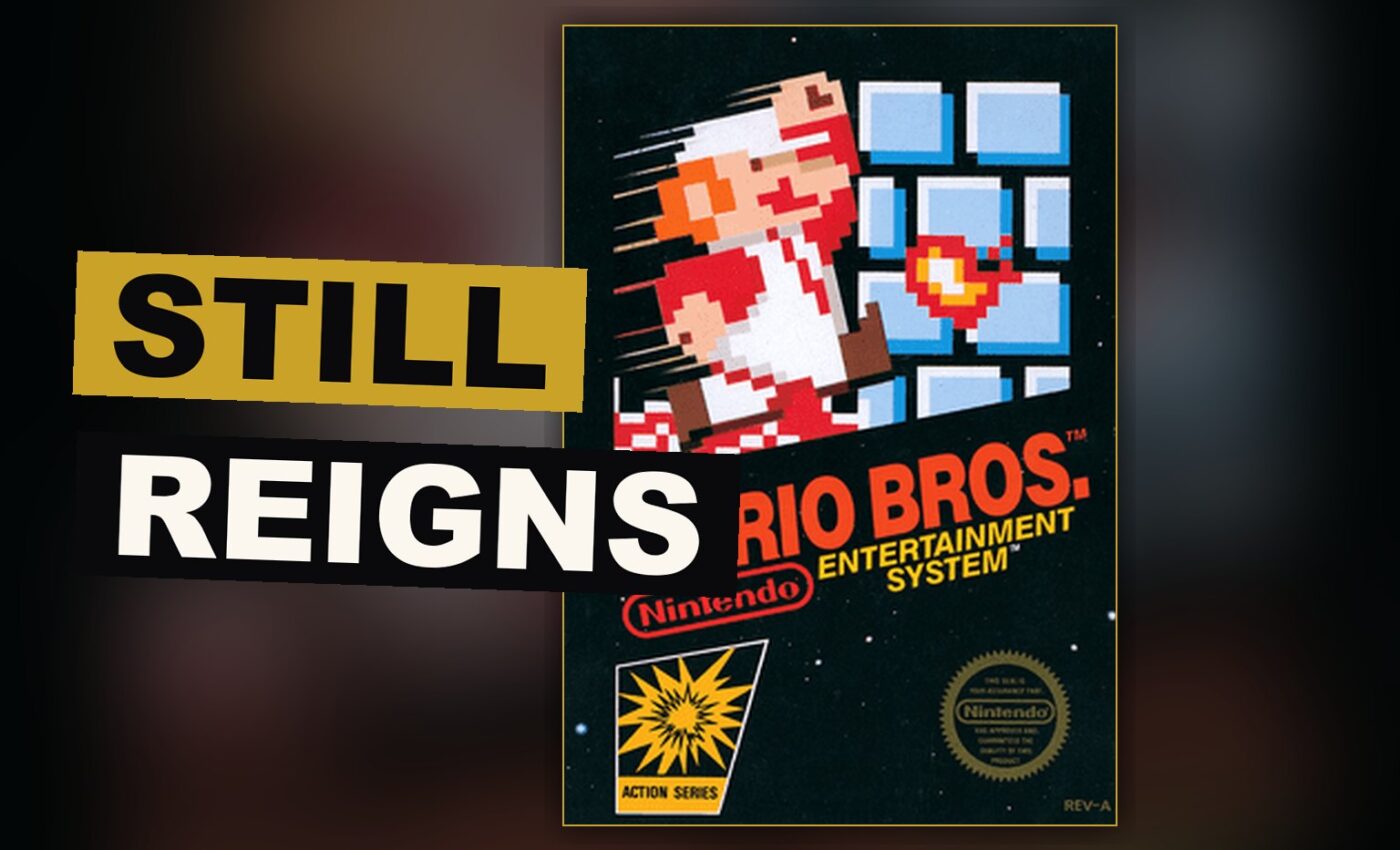
Super Mario Bros. moves fast and asks little of the player up front, then keeps raising the bar until the final castle. The NES cartridge sends a hero through eight worlds to save a princess, and it does that job with almost no wasted motion.
The Controls
Mario runs, springs, and grows, and each action feels exact. A tap of the button gives a small spring; holding it sends Mario further. Motion carries weight here — stop short at the edge of a sudden fall and the game will punish the delay.
World Design
Each world introduces a new idea and does not stay too long past its welcome. Bricks, passages, and bricks not easily seen reward curiosity, and players who want to run straight through can still do so.
Some standout elements:
- Special passages that let skilled players pass over entire worlds
- Fire flowers and power items that change how a level plays out
- Castles where Bowser waits, each ending in a battle with him
- Coins and reward items placed within blind springs
Difficulty and Pace
The game never explains itself. Death sends Mario back, sometimes a long way back, and that cost teaches the level faster than any tutorial could. Later worlds pack hazards into tighter spaces, and careful timing matters more with every stage.
That said, the difficulty stays fair. Every death in Super Mario Bros. traces back to a mistake the player can name.
Sound and Presentation
The music, simple as it is, matches the pace of the levels. Few notes repeat without reason, and the main theme has outlived the hardware it was written for. The game’s look is plain — bricks, passages, and a few enemy figures — but each element reads clearly, which matters more than fine detail on a screen this size.
Super Mario Bros. holds up because nothing in it fights the player. The rules are simple, the level design is not, and the distance between those two things is where the game lives. Few titles from this time still play this well without an asterisk attached. It remains a clear, confident piece of design.