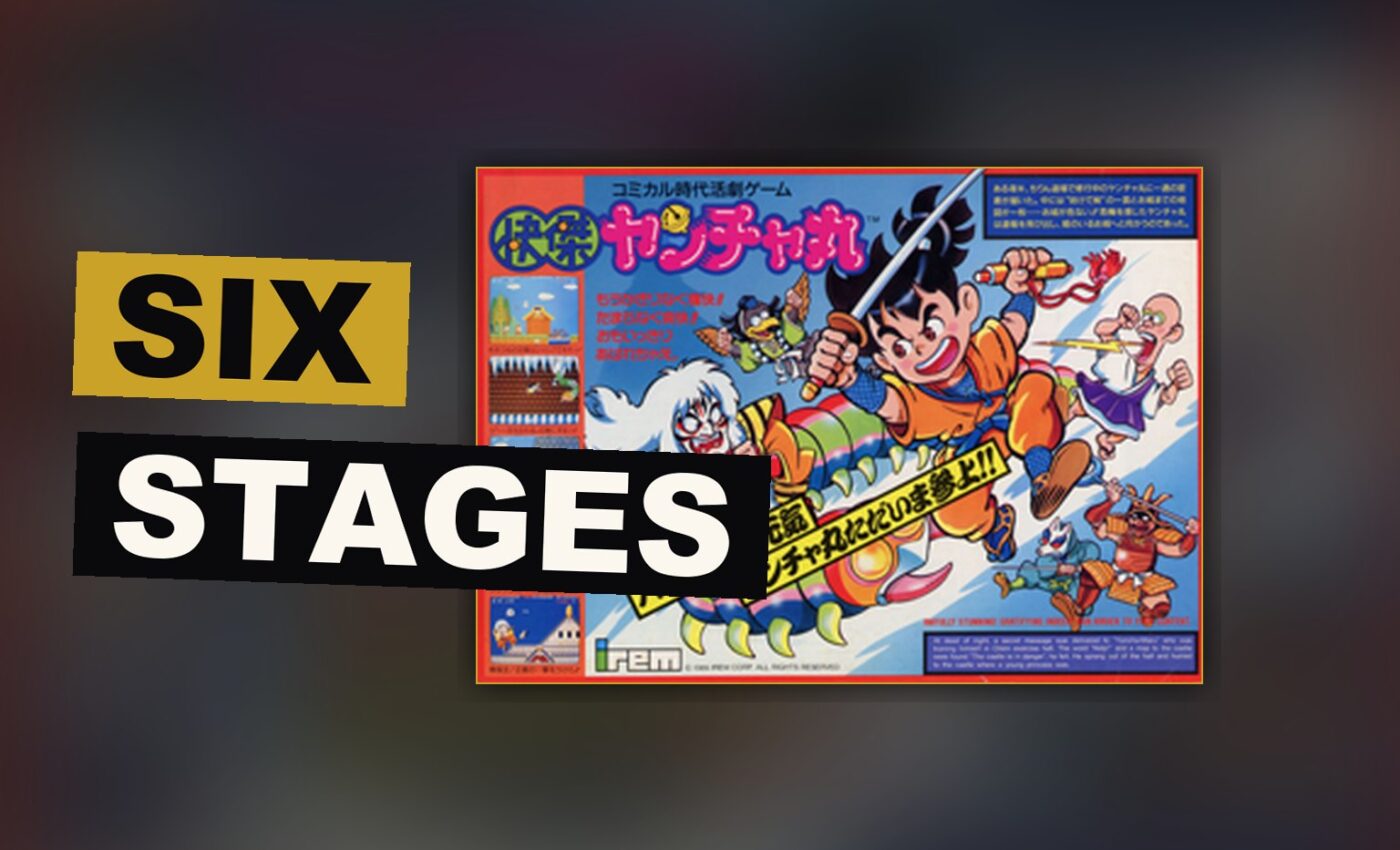
Kid Niki: Radical Ninja sends a fast, smiling hero across six stages of enemies and floating platforms, armed with a spinning sword and a bounding style built for trouble. The NES title asks for quick hands and quicker patience. It mostly earns both.
The Sword and the Bound
The core of Kid Niki: Radical Ninja is its sword. It sweeps out in a wide arc, clearing enemies in front and above at once, which makes the early stages feel generous. Bounding is where the game turns difficult. The hero carries forward past the point where a player expects to stop, and platforms placed over drops punish that forward drift again and again.
Once a player learns the timing, the bounding starts to feel less like a fight against the controls and more like a rhythm to master. That change takes real repetition.
Six Stages, Rising Difficulty
The game is short on paper. Six stages stand between the player and the end, but each one adds new enemy arrangements on top of old platforming demands. Later stages throw several enemy types at once, often placed right at the edge of a bound, so a single badly timed spring can mean losing a life to an enemy and a drop in the same moment.
Checkpoints are few. Losing all lives on a late stage means starting further back than the moment of death, a design choice common to NES games of the period but one that still stings here.
Sound and Look
Character sprites are clear and easy to read against busy scenery, and enemy types are distinct enough that a player can react to what’s on screen rather than guess. The soundtrack is cheerful, repeating short themes that suit the pace of the action without asking to be remembered afterward. Nothing here pushes the NES hardware, but nothing embarrasses it either.
Where It Falls Short
The bounding physics remain the game’s biggest trouble, and not always in a way that rewards skill. Some platform arrangement asks for a firmness of hand the controls don’t deliver, and a few deaths come down to a hitbox rather than a misjudged arrangement. That friction is the difference between a game that’s hard and a game that’s occasionally unjust.
Enemy variety is strong early but thins out by the final stages, where the challenge rests more on repetition than on fresh ideas.
Schedule of a Full Playthrough
Below is a rough breakdown of a full run through Kid Niki: Radical Ninja, stage by stage, for players learning the game’s rhythm.
| Stage | Focus | Time |
|---|---|---|
| 1 | Introduction to enemies and bound timing | 5–7 minutes |
| 2 | First heavy platform stages | 6–8 minutes |
| 3 | Mixed enemy groups | 7–9 minutes |
| 4 | Tighter platforming, fewer checkpoints | 8–10 minutes |
| 5 | Thick enemy arrangement | 8–10 minutes |
| 6 | Final stage and boss fight | 6–8 minutes |
Kid Niki: Radical Ninja is a game of highs and lows that balance each other out. The sword makes fighting satisfying, the platforming makes progress a battle, and the six stages ask for more patience than their length suggests. It’s a game worth playing, with reservations attached.