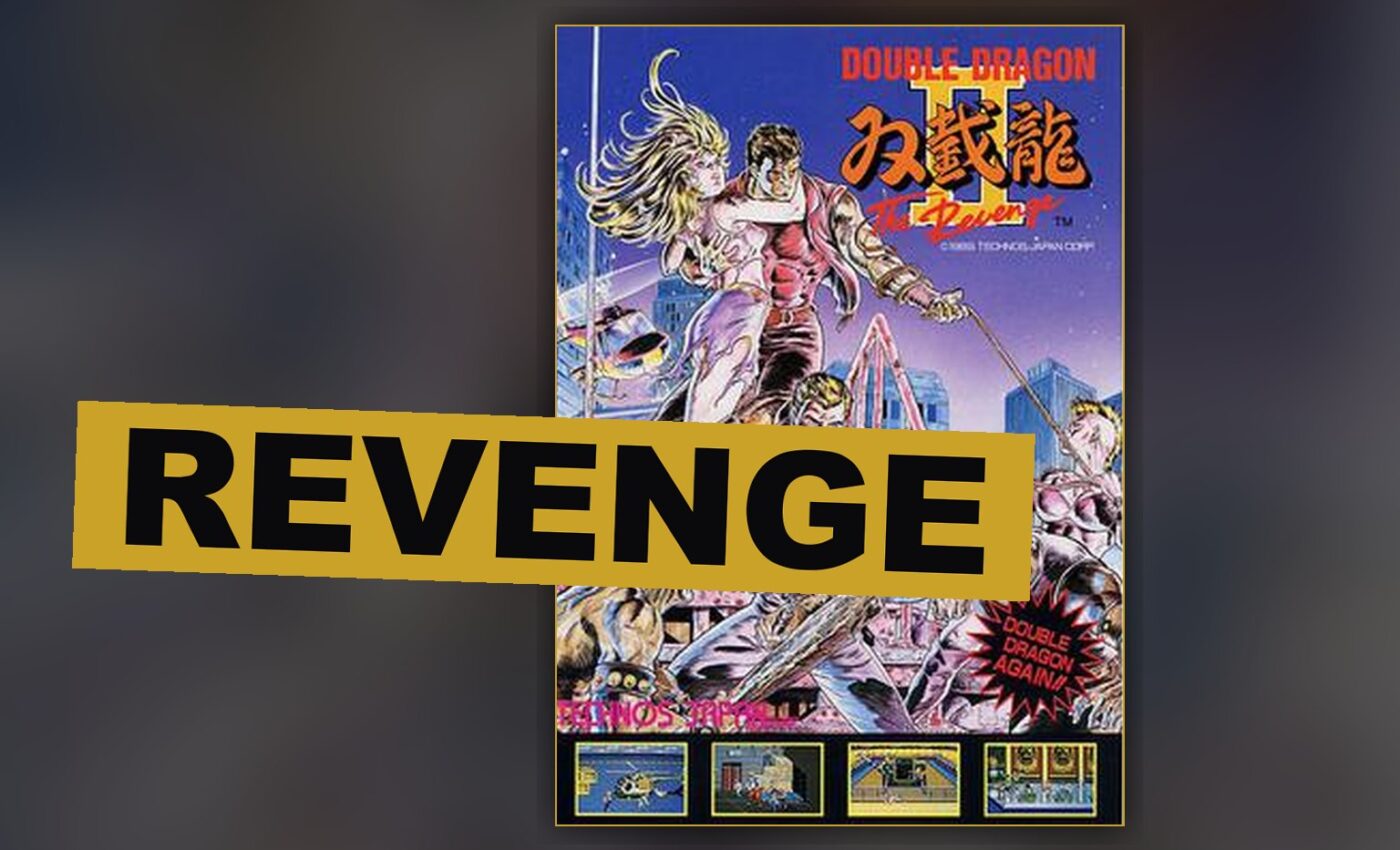
Double Dragon II: The Revenge asks players to fight and throw their way through a story of loss and revenge on the NES. The sequel to the original arcade hit trades some of its earlier game’s charm for a darker story and a quicker pace. The result is a game that feels bold but rough in places.
The Story
The story opens with the death of Billy Lee’s love, at the hands of the Shadow Boss and his gang. Billy Lee sets out to make the Shadow Boss pay. That single act sets the tone for the rest of the game, which trades the arcade original’s simple fighting for a grimmer, more urgent mission.
The game keeps the shared fighting mode that made the first Double Dragon a hit in arcades. Players can team up as Billy Lee and a second fighter to move through the game’s stages together, trading strikes and kicks against waves of enemies. That shared mode remains one of the game’s strongest features.
Fighting and Feel
The fighting system has been changed from the original, with new moves and a wider number of attacks. Players can now perform a spinning kick, a hurricane kick and other linked attacks that add depth to the fighting. The controls, though, can feel awkward at times, and the contact detection is not steady, which causes annoyance during close fights.
Enemies come in larger numbers than before, and the difficulty rises clearly as the game moves along. Some players will find this a fair test. Others may feel the difficulty owes more to repeated waves than to skill.
Here is how the game’s key elements measure up against one another:
| Element | Strength | Weakness |
|---|---|---|
| Shared play | Joint mode adds replay value | Some quiet patches with both fighters on screen |
| Fighting system | New moves add variety | Awkward controls, rough hit detection |
| Look | Detailed scenery, smoother animation | Some repeated enemy sprites |
| Sound | Strong, fitting for the action | Repeated tracks over longer sessions |
| Story | Darker, more personal reason for the fight | Thin story delivery, told mostly through text |
Double Dragon II: The Revenge marks a step forward from its earlier game in its look. The scenery is more detailed, and the character sprites show more frames of motion, giving the fights a smoother look. The music, made for the NES hardware, adds force to the action, though some tracks repeat often enough to grow dull over a long play session.
Length and Pace
The game moves at a quicker pace than the original, with shorter levels that keep the action moving. This works in the game’s favor for the most part, though it means players spend less time looking through each stage and more time simply fighting through it. The final fight with the Shadow Boss gives the revenge story a fitting close, even if the steps before it feel rough.
Double Dragon II: The Revenge does not change the fighting-game formula, but it improves on several parts of it. The added moves and shared mode help set it apart from the original, even as some of the same technical issues remain.
Double Dragon II: The Revenge holds up as a solid, at times frustrating title in the NES fighting-game library. Its story of revenge gives the action a harder edge than the original game had, and the larger fighting system offers more ways to work through its gang of enemies. The awkward controls and repeated music keep it from reaching greatness, but the joint fighting mode remains a strong reason to come back.