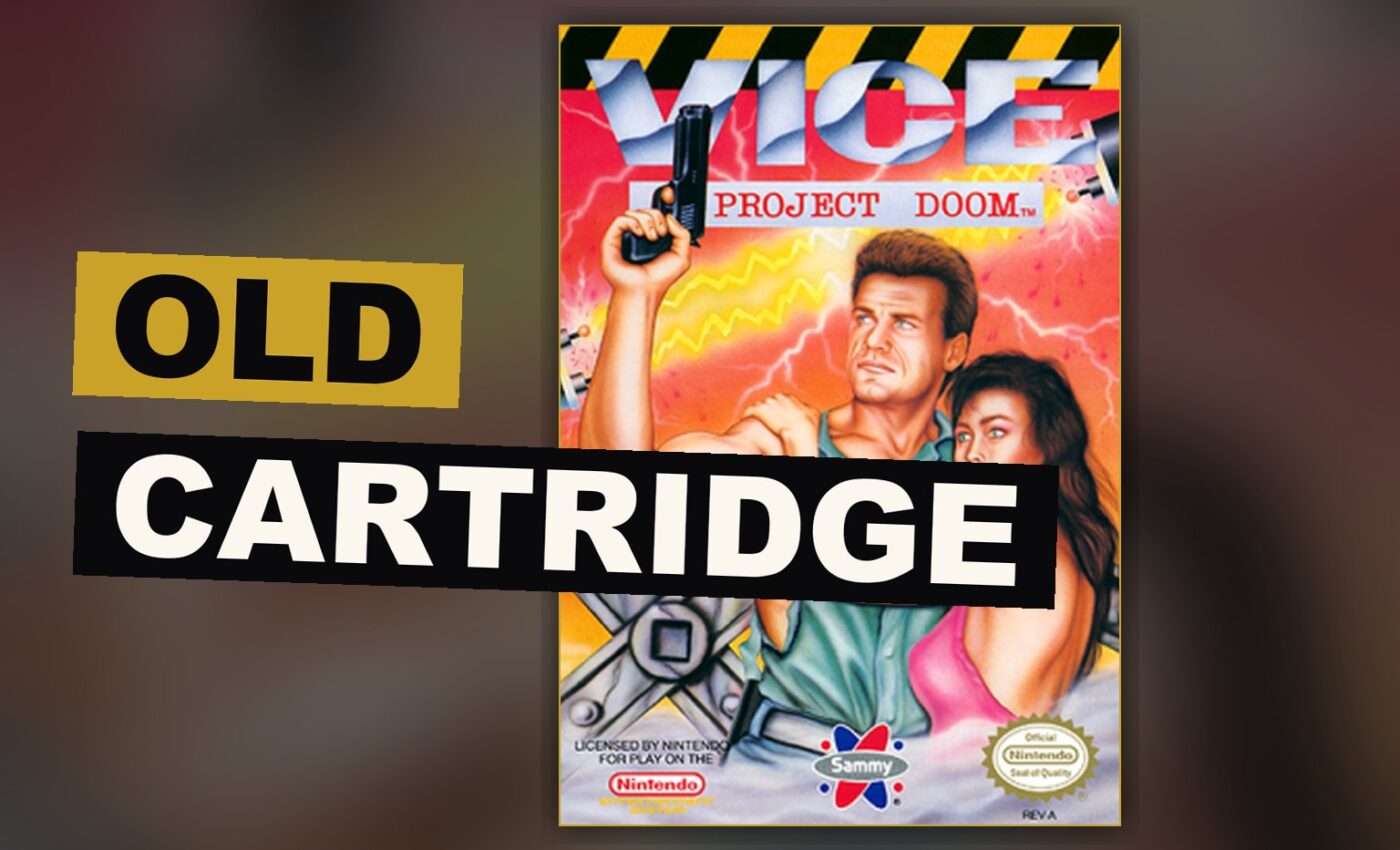
Vice: Project Doom packs three different kinds of play upon a single NES cartridge, and most of it works. The game moves between action stages, shooting stages and driving stages, all tied together by a story about a secret agent named Hart fighting a criminal group. That mix is the whole idea, and it mostly succeeds.
The Story Hook
The story borrows heavily from old horror and detective tales. Agent Hart works alone to bring down a criminal group that deals in a dangerous poison. It is not a deep tale, but it gives each stage a reason to look and feel different. Short scenes between stages carry the story forward quickly, which matches the constant change in how the game plays.
Control And Attacks
The action stages are where the game feels strongest. Hart can use a long instrument for close attacks and a gun for far ones, and switching between them quickly gives the fighting some depth. Enemies appear in hard spots, though, and a few stages depend on hits that feel unjust to a player seeing them for the first time. The driving stages, by contrast, feel like an added extra, with looser control and less at stake.
Changes In Style
Not every kind of stage lands with the same force. Here is how the three main styles compare against each other.
| Mode | Strength | Weakness |
|---|---|---|
| Action stages | Tight control, many kinds of enemies | Hard changes in difficulty |
| Shooting stages | Strong pace, strong final fights | Little freedom to move |
| Driving stages | Breaks up the pace | Loose, drifting control |
The shooting stages stand out as some of the strongest parts of the game. They call for quick timing and reward a steady hand, and the final fights in these parts are worth remembering.
Look And Sound
The pictures in Vice: Project Doom hold up well for the NES. Character figures are detailed for the hardware, and the monster designs turn toward horror images that fit the tone of the story. The music matches that mood with dark songs that stay close to the action instead of sinking into the wall.
A full playthrough moves between these styles at a steady pace, based on how the stages follow one another through the course of the game.
| Part | Style | Rough Position |
|---|---|---|
| Opening part | Action | Early game |
| Middle part | Shooting and driving | Middle point |
| Closing part | Action and shooting | Late game |
Difficulty And Length
The game is short by today’s standards but hard enough that it does not feel small in practice. Deaths from chance pile up fast, especially in stages where enemies appear with little warning. That level of challenge will frustrate some players and please others who want an old kind of difficulty.
It does not go on too long.
The mix of styles keeps Vice: Project Doom from feeling like one long grind, even when single stages fall short. Its reach goes beyond what it can always deliver, especially in the driving stages, but the shooting and action stages carry the weight. For NES players willing to push through some hard spots, the game still stands as a bold cartridge from its time.