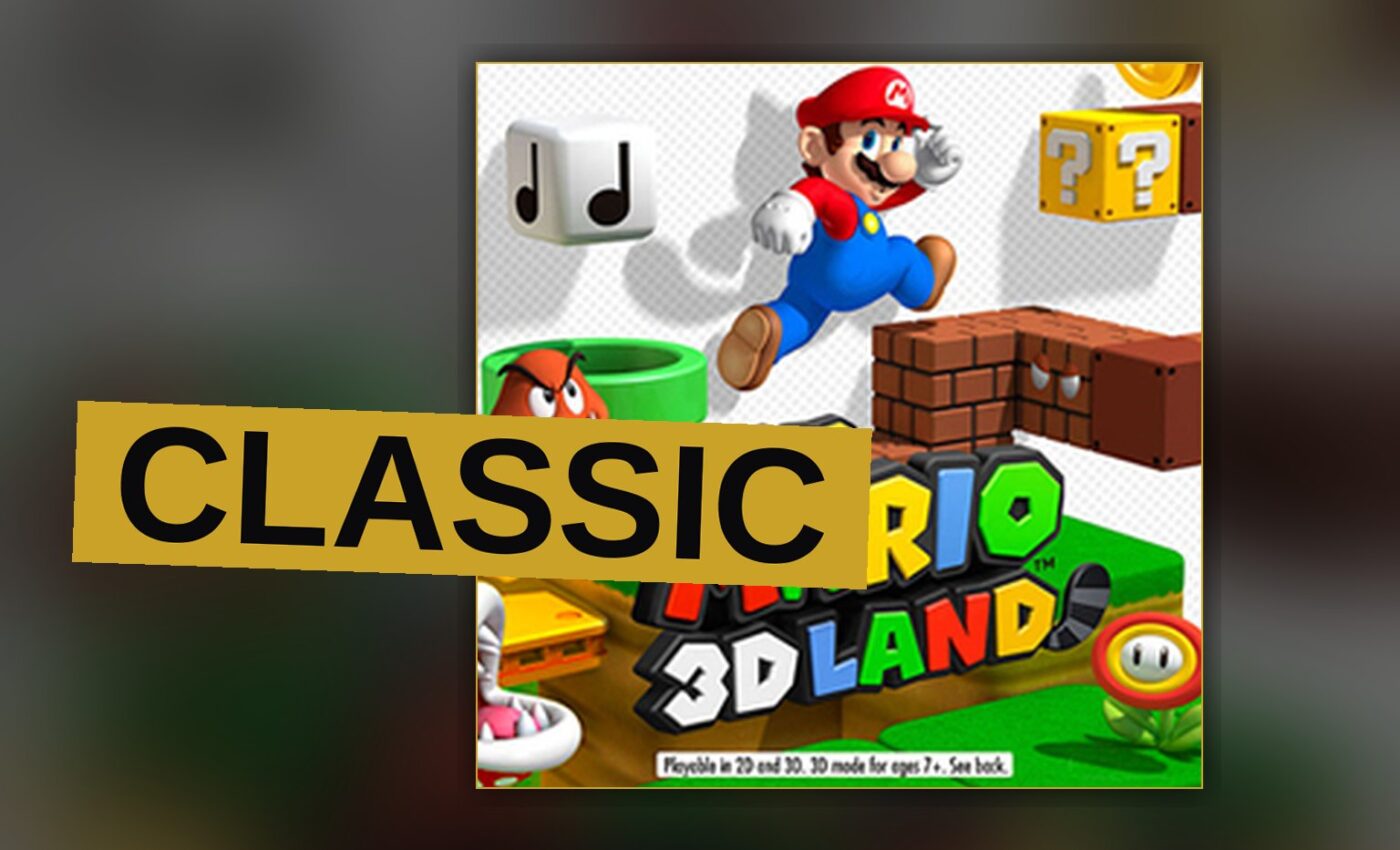
Super Mario 3D Land is the game that finally made the 3DS feel essential. Released in 2011, it took the plumber’s classic side-scrolling formula and bent it into a series of compact, clever dioramas designed to pop off the screen. The result is a handheld masterpiece that still holds up, and it earns a 9.0 out of 10.
Trailer, via Nintendo of America.
Depth Becomes the Core Mechanic
The pitch is simple. Mario runs, jumps, and stomps through eight worlds, each split into eight stages. But the twist is the 3D itself. Nintendo built the levels around the system’s stereoscopic screen, with platforms that hover over gaps, coins that dangle in mid-air, and pipes that curve toward the camera. The effect is not a gimmick. It is the game’s skeleton.
Every stage asks you to judge depth in a way the old 2D games never did. A row of floating blocks might look aligned from a distance, but a step to the side reveals a hidden path. The 3D slider is not optional here; it is the intended way to play. Turn it off, and the game still works, but the magic fades. Turn it on, and the world snaps into focus.
The game borrows the flagpole from Super Mario Bros. and the tail from Super Mario Bros. 3. Mario can spin his tail to hover, slow his fall, and whack enemies. That tail is the key to many of the game’s best puzzles. It gives you a second chance on a missed jump, but it also opens routes that a plain jump cannot reach.
Short Stages, Hidden Medals
The levels are short. Most run under two minutes when you know the path. That brevity is a strength. The game never wears out its welcome, and it invites replay immediately. Each level hides three Star Medals, and those medals are the real objective. Collecting them unlocks access to individual bonus stages along the way.
Early levels ease you in. They teach the tail, the 3D depth, and the basic enemy patterns. Then the game shifts. Around World 4, the difficulty climbs sharply. Platforms shrink, enemies multiply, and the camera starts to toy with you. The game’s best levels are the ones that bend the rules. One stage has you chase a shadowy doppelganger through a maze of mirrors. Another flips the world upside down, so you walk on ceilings. A third shrinks you to the size of a mouse, and the familiar bricks become towering walls. These ideas are not new to the series, but they are packed tighter here than in any prior Mario.
The final worlds, 7 and 8, are a gauntlet. They demand precision, memory, and a willingness to die repeatedly. The game is generous with lives, and checkpoints are placed frequently enough that failure never feels punishing. The jumps, however, are not forgiving.
Special Worlds Raise the Stakes
Beating the final boss is not the end. Super Mario 3D Land unlocks a second set of worlds, labeled Special Worlds 1 through 8. These are not simple remixes. They are harder versions of the original stages, with new enemy placements and tighter time limits. The Star Medals return, and they unlock even more stages.
The post-game is where the game earns its reputation. The first eight worlds are a warm-up. The Special Worlds are the real test. They are for the dedicated, and they reward patience with a final, secret world. Completing them feels earned. The game never asks you to grind or farm; it just asks you to get better.
Bright Graphics, Tight Controls
The graphics are colorful and crisp. The 3DS screen is small, but the game makes every pixel count. Mario’s animations are smooth, and the enemy designs are charming. The music is cheerful, with a main theme that sticks in your head. It is not the orchestral sweep of Super Mario Galaxy, but it fits the handheld format.
The controls are tight. The circle pad moves Mario, the A button jumps, and the tail spin is a simple press of the same button in mid-air. The game never fights you. The camera is fixed in most stages, which is a relief. It means you never wrestle with the view while making a precise jump. The few moments where the camera does move are scripted, and they always work.
The 3D effect is the star. It is not a cheap pop-out trick. It creates a sense of space that makes the platforming clearer. A gap that looks flat on a 2D screen becomes a real chasm in 3D. The game is the best argument for why the 3DS had a slider at all.
A Blueprint for Handheld Mario
Super Mario 3D Land did not just sell well. It defined the 3DS era. It proved that a Mario game could work on a handheld without feeling like a compromise. It also set the template for Super Mario 3D World on the Wii U, which expanded the formula with multiplayer and a cat suit. Without this game, that one might not exist.
The game’s influence is visible in later Nintendo titles. The idea of short, dense levels with hidden collectibles became a standard in the company’s portable output. The tail mechanic returned in later games. The balance of accessibility and challenge is a lesson Nintendo has applied to every Mario since.
It is not a perfect game. The first few worlds are almost too easy, and the game’s pacing can feel uneven. Some players will find the 3D effect fatiguing after long sessions. The boss fights are mostly re-skins of the same Bowser fight, with a different arena each time. None of these flaws sink the experience. They are minor scratches on a polished gem.
Final Score and Comparison
Super Mario 3D Land is a game that respects your time and your skill. It is short enough to finish in a weekend, but deep enough to keep you playing for months. It is a game you can pick up for five minutes and feel satisfied, or sink an hour into chasing every medal. It is the rare title that works for a child and a veteran alike.
The game’s greatest trick is making you feel smart. Every hidden path, every clever jump, every Star Medal tucked behind a wall feels like a reward for paying attention. The game never lectures you. It just places a puzzle in front of you and trusts you to solve it.
If you own a 3DS and do not own this game, you are missing the system’s best reason to exist.
| Game | Release Year | Platform | Key Feature |
|---|---|---|---|
| Super Mario 3D Land | 2011 | Nintendo 3DS | 3D depth-based platforming |
| Super Mario Galaxy | 2007 | Wii | Full 3D exploration, gravity mechanics |
The comparison is unfair to Super Mario 3D Land, but it is useful. Galaxy is a grand, orchestral adventure. Super Mario 3D Land is a tight, focused puzzle box. Both are great. They are just great in different ways.
Super Mario 3D Land is the game the 3DS needed at launch, and it remains the game the 3DS deserves. It is a masterclass in level design, a showcase for the hardware, and a pure joy to play. It does not reinvent the wheel. It makes the wheel spin perfectly.
Get the Notebook.
The day's best stories and every fresh verdict, in plain English, in your inbox by seven. One email a day, no more.