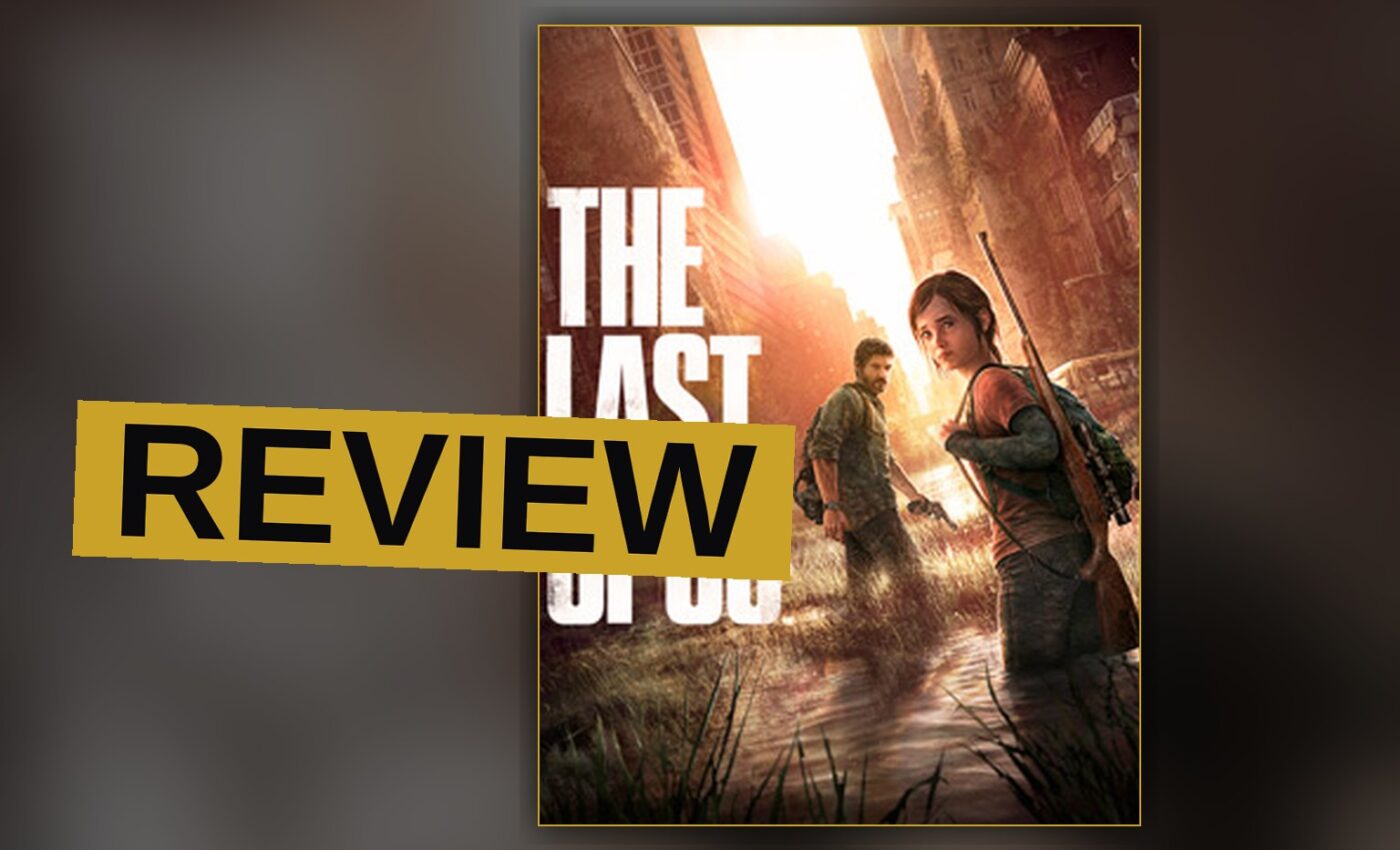
The Last of Us opens with a lie that takes twenty hours to catch up with you. Joel, a Texas contractor, and his daughter Sarah are fleeing their burning neighborhood when a soldier orders them to stop. Joel hesitates. The soldier shoots. Sarah dies in his arms, and the screen goes black. That opening scene is not a prologue. It is the whole game in miniature: a moment of hesitation, a bullet, and a life erased. The year is 2013, and the infection that did it has already swept the country. What remains is the aftermath.
Trailer, via PlayStation.
Outbreak Day and the Quarantine Zone
The game is set twenty years after the outbreak. The infection, a mutated strain of cordyceps fungus, turns its hosts into aggressive, twitching creatures drawn by sound. The world has not ended so much as rotted. The Last of Us, developed by Naughty Dog and released for PS3, spends its first hours in the Boston Quarantine Zone, a military-run city where citizens are rationed, searched, and executed for suspected infection.
Joel, now a smuggler in his late forties, takes a job from a resistance group called the Fireflies. The cargo is Ellie, a fourteen-year-old girl who was bitten three weeks earlier and did not turn. The Fireflies believe her immunity is the key to a vaccine. Joel’s job is to get her out of the city and across the country to their lab. He does not want the job. He takes it because he needs the payment.
The early game is a tutorial in survival. You scavenge for supplies, craft shivs and medkits, and sneak past infected who cannot see you but can hear a misplaced step. The combat is brutal and close. A gunshot draws every infected in the block. A brick thrown against a wall buys you three seconds. The game does not reward heroics. It rewards patience, and it punishes noise.
Ellie and the Bond That Forms
The heart of The Last of Us is not the fungus or the military. It is the relationship between Joel and Ellie. Ellie is not a damsel and not a sidekick. She talks too much, jokes badly, and reads a pun-filled joke book she found in a convenience store. She also kills. When Joel is pinned down, she stabs a man in the neck with a knife she found. She does it without hesitation, and then she goes quiet.
The game’s writing, by Neil Druckmann, earns that bond slowly. Joel does not warm to Ellie. He tells her she is not his daughter and that she is just cargo. She tells him she lost everyone she loved and that she is scared of being alone. The performances, by Troy Baker as Joel and Ashley Johnson as Ellie, carry the weight. Their conversations in the quiet moments — in an abandoned house, in a hotel lobby, in a car they push down a hill — are the real plot.
The game’s best sequence is the giraffe scene. After a harrowing escape through a flooded hotel basement, Joel and Ellie emerge into a sunlit city street. A giraffe stands in a courtyard, eating leaves from a tree. Ellie stares at it, and for a minute the game drops its tension. She says it is stupid that she is happy. Joel says it is not stupid. The moment does not fix anything. But it shows what the world could have been, and it makes the ending hurt more.
Hunters, Clickers, and the Cost of Survival
The infected come in stages:
- Runners, fast and blind.
- Stalkers, who hide in shadows.
- Clickers, whose heads have split open into fungal plates. They navigate by echolocation, and the game teaches you to listen for their clicks.
- Bloaters, the last stage, a walking mass of fungus that tears off its own armor to throw at you.
The infected are not the worst enemies. The worst are the hunters, groups of survivors who ambush travelers for their supplies. In Pittsburgh, Joel and Ellie are cornered by hunters who have taken over the city. The game makes them human. You find their notes, their family photos, their ration lists. They are not monsters. They are people who decided that other people were the resource.
The game’s moral line is thin. Joel kills dozens of hunters, and the game does not flinch. It shows the blood, the choking, the way a body drops. It also shows that Joel is good at this because he has been doing it for twenty years. He is not a hero. He is a survivor, and the game never lets you forget the difference.
Salt Lake City and the Fireflies
The plot drives toward the Fireflies’ lab in Salt Lake City. Along the way, Joel and Ellie meet Joel’s brother Tommy, who has built a small community with a hydroelectric dam. Ellie runs off and nearly dies. Joel finds her after she kills a man with a machete, and he holds her while she shakes. That is the moment he stops calling her cargo.
The game’s climax is a hospital. The Fireflies have found Joel and Ellie, and the doctors have a plan. They will extract the cordyceps from Ellie’s brain to grow a vaccine. The procedure will kill her. Joel does not ask Ellie. He does not tell her. He shoots his way through the hospital, kills the surgeon, and carries Ellie out unconscious.
The last scene is a lie. Ellie wakes in a car, and Joel tells her the Fireflies stopped looking for a cure. She asks him to swear it. He swears. The game ends with her saying, “Okay.” The player knows the truth. Ellie does not. The game does not tell you whether Joel was right.
Why the Score Holds
The Last of Us was released on June 14, 2013, for PS3. It was praised for its writing, its performances, and its atmosphere. The published critical score is 9.2 out of 10, and that score is fair. The game is not perfect. Its combat can feel repetitive, and the AI companions sometimes walk into fire. But the whole is greater than the parts.
The game’s strength is restraint. It does not explain the infection with a cutscene. It does not justify Joel’s actions. It does not give Ellie a speech about hope. It trusts the player to sit with the discomfort. That is rare in a blockbuster, and it is why the game still holds up.
Remaster, Sequel, and Legacy
The Last of Us was remastered for PS4 in 2014, and a sequel, The Last of Us Part II, was released in 2020. The original remains the tighter story. The sequel is bigger and more ambitious, but it lacks the original’s focus. The original is a road movie with a body count. It is about two people who have nothing left and find something in each other, even if that something is a lie.
The game’s music, by Gustavo Santaolalla, is spare and acoustic. The main theme is a single guitar line that sounds like a question. It plays over the menu, over the giraffe scene, and over the credits. It does not resolve.
Craft, Detail, and Gameplay
The game’s craft is in its details. The way Joel’s watch, a gift from Sarah, is always visible on his wrist. The way Ellie’s jokes land flat because she is trying too hard. The way the world is overgrown, with grass pushing through asphalt and vines wrapping around billboards. The way the game lets you read a note from a dead child and then move on.
The gameplay is third-person action with stealth and crafting. You find scissors and tape to make shivs. You find alcohol and rags to make molotovs. You find pills and gears to upgrade Joel’s health and weapons. The systems are simple, but they feed the tension. Every bullet counts. Every brick matters.
The game also has a multiplayer mode, Factions, which is a separate survival mode. It is fine, but it is not the draw. The draw is the campaign, and the campaign is a masterclass in pacing. The game alternates between quiet exploration and sudden violence. It lets you breathe, and then it takes the breath away.
The Final Comparison
The Last of Us is often compared to other survival games of its era. It shares DNA with the Resident Evil series and the Uncharted series, also from Naughty Dog. But it is slower and more grounded than either.
| Game | Focus | Combat Style | Emotional Weight |
|---|---|---|---|
| The Last of Us | Character drama and survival | Stealth-first, limited ammo | Central to the plot |
| Uncharted 3 | Action-adventure and set pieces | Run-and-gun, abundant ammo | Light, with comic relief |
| Resident Evil 6 | Horror and action | Mixed, with a focus on zombies | Minimal, plot is thin |
The table shows the difference. Uncharted is a summer blockbuster. Resident Evil is a horror ride. The Last of Us is a tragedy.
The Verdict
The Last of Us is a game that respects its characters and its player. It does not talk down to either. It asks hard questions and does not answer them. It is violent, sad, and beautiful. It is the best game Naughty Dog has made, and it is one of the best games of its generation.
The score is 9.2 out of 10. That is the published critical score, and it is the right one. The game earns it with its writing, its performances, and its willingness to sit in the dark. It is not a fun game. It is a true one.
Get the Notebook.
The day's best stories and every fresh verdict, in plain English, in your inbox by seven. One email a day, no more.