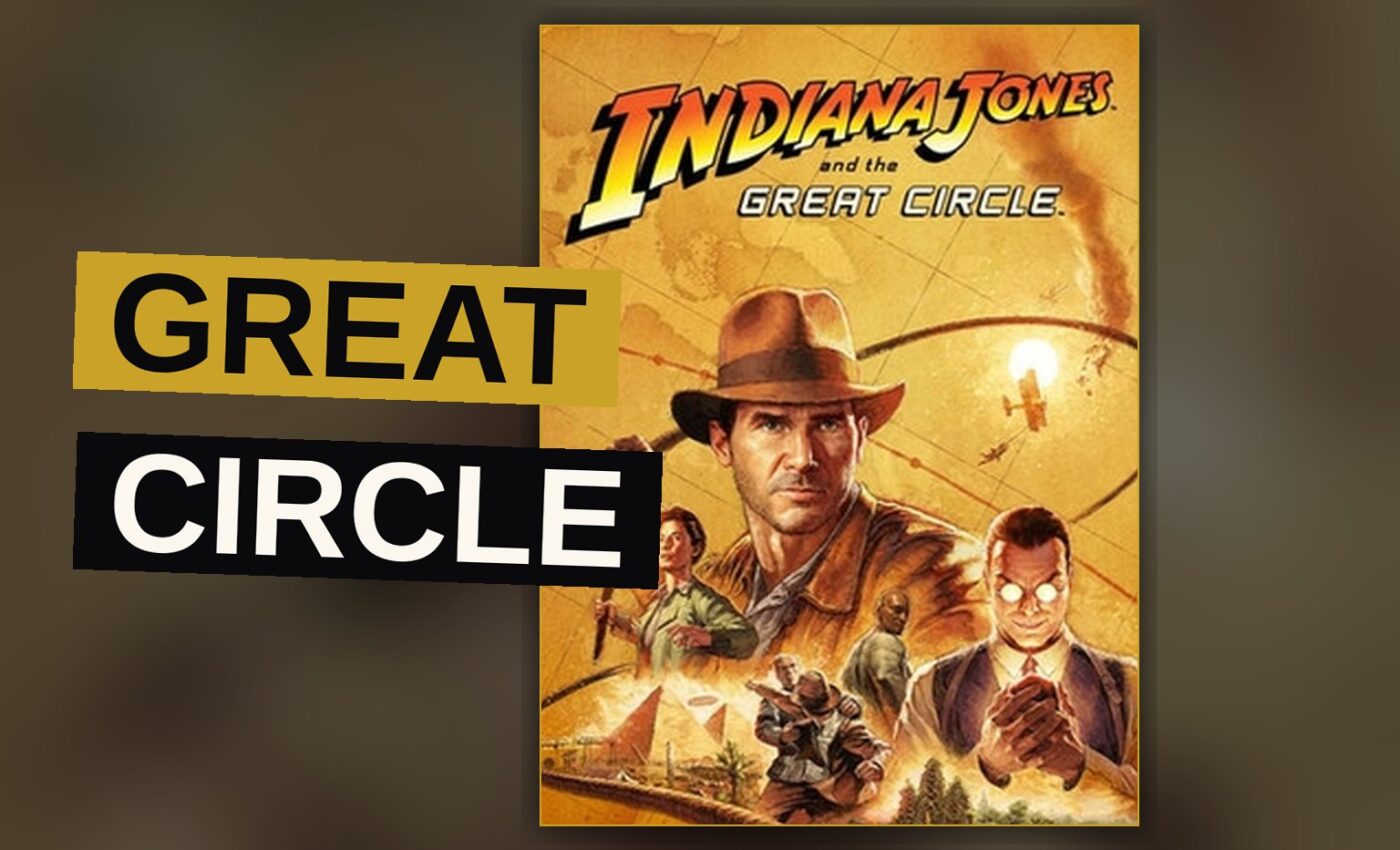
Indiana Jones and the Great Circle puts you behind the archaeologist’s own eyes, and it rarely wastes the view. MachineGames built a first-person adventure set in 1937, between Raiders of the Lost Ark and The Last Crusade, and published it through Bethesda Softworks. It is out on Xbox Series X|S, PlayStation 5, PC, and Nintendo Switch 2. The result is the studio’s best work since it took over Wolfenstein.
Trailer, via Bethesda Softworks.
The Vatican Is the Whole Pitch
Vatican City is the first hub, and the developers have called it the most complicated level in the game — the place where they tested every design choice. It shows. The city under Mussolini and the Blackshirts is dense, vertical, and full of alternate routes to any objective. MachineGames decided early it could not be a one-to-one recreation, and that freedom is what makes it work.
A Circle of Sacred Sites
The plot sends Jones after the Great Circle, a ring of sacred religious sites that form a perfect circle on a map. A giant named Locus steals a cat mummy from Marshall College. The trail runs through Gizeh, the Himalayas, and Sukhothai. Reporter Ginetta “Gina” Lombardi joins him, hunting her missing sister Laura. Emmerich Voss, a Nazi occultist, is the man to stop.
Stealth, Puzzles, and Adventure Books
The game is an action-adventure with role-playing and puzzle bones, built single-player. The systems stack cleanly:
- Adventure Books give permanent boosts, unlocked with Adventure Points
- Points come from photographing objects, opening safes, and collecting relics and field notes
- A lighter opens dark areas; a rebreather allows underwater diving
- Combat and puzzle difficulty adjust separately
Photographing a puzzle repeatedly hands you extra hints. Stealth is always an option. Metro Exodus shaped the structure, and the team’s own Wolfenstein II experiments with revisitable levels shaped the hubs.
The Whip Still Swings Third-Person
The camera leaves first person for cutscenes and for contextual moves — swinging on the whip over a gap, climbing pipes and walls. That split sounds fussy. It is not. It keeps the big stunts readable without giving up the intimacy of the eye-level view.
Where the Circle Holds
Todd Howard conceived the story and executive produced it. Development ran more than five years, and the team drew on Indiana Jones and the Fate of Atlantis. The game is adventure-first, and that priority is the right one. It is not a shooter wearing a fedora.
What Actually Matters
The hubs are the argument. Linear, story-sensitive stretches carry the plot; the wide sandbox levels carry the game’s longevity. Side quests tie back to the main narrative instead of floating free, and collectibles feed the perk economy rather than sitting in a menu. That loop is why the Circle holds up over a long run.
The Score
Indiana Jones and the Great Circle is a faithful, patient adventure that trusts exploration over spectacle. The stealth is thin in places, and the split perspective will not suit everyone. Neither flaw sinks it. This is the rare licensed game that understands its own source.
Get the Notebook.
The day's best stories and every fresh verdict, in plain English, in your inbox by seven. One email a day, no more.