
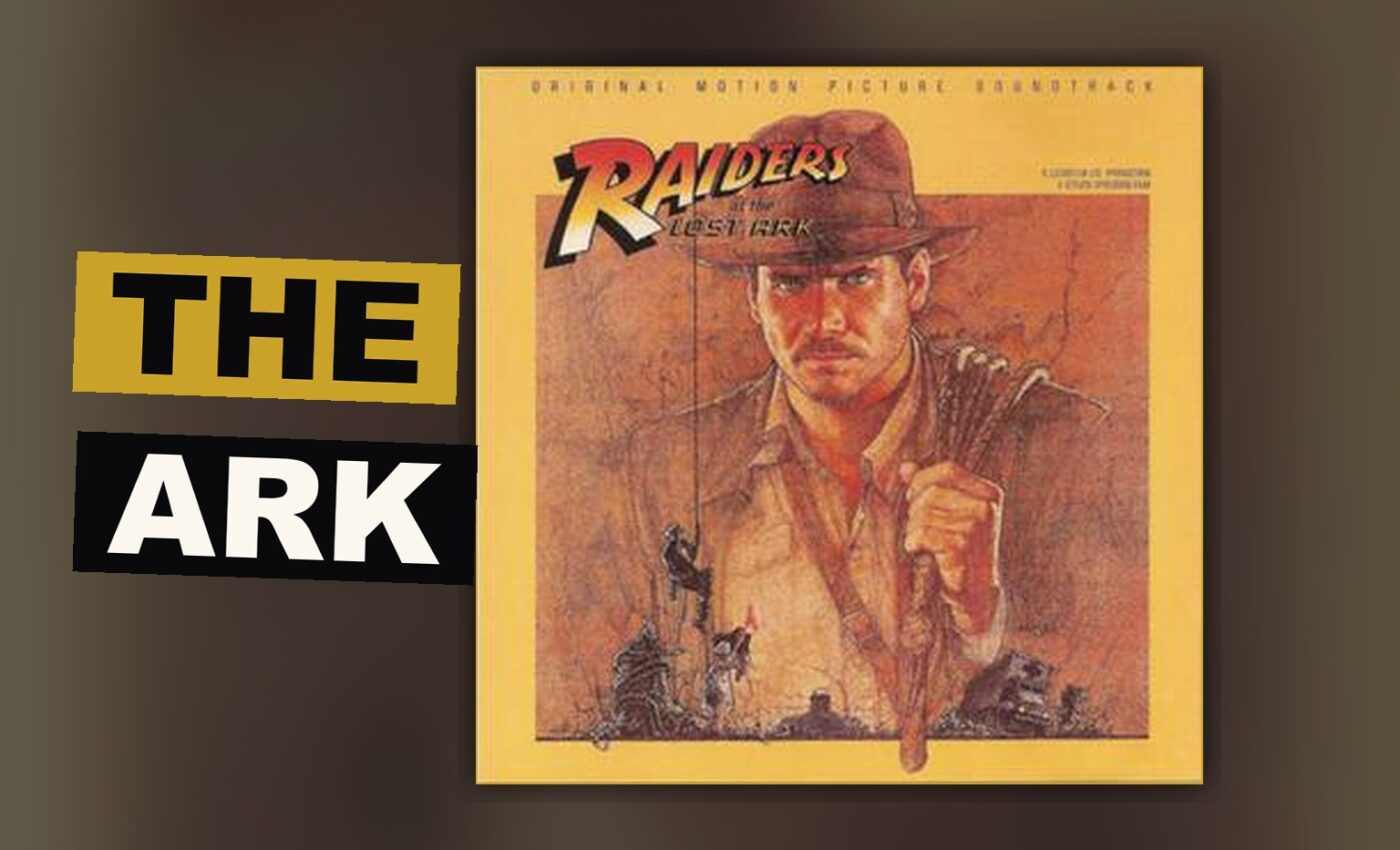
Raiders of the Lost Ark arrived in 1981 as a promise: “The return of the great adventure.” Steven Spielberg directed it. George Lucas, Philip Kaufman and Lawrence Kasdan wrote it. Harrison Ford plays Dr. Indiana Jones, a tweed-suited professor who happens to be a celebrated archaeologist, and who the government hires to find the Ark of the Covenant. That premise puts him against the entire Nazi regime. The film runs 115 minutes. It is an adventure picture and an action picture, and it is very good at being both.
Harrison Ford and the Tweed Suit
The joke of Indiana Jones is that the professor and the grave robber are the same man. Ford plays both without strain. In the classroom he is dry and bored. In the field he is a brawler who improvises. The film never asks which one is real, because the answer is that neither is a mask.
Karen Allen plays Marion Ravenwood, and she is the best thing in the picture. She drinks a man under the table in her first scene and she does not spend the rest of the film waiting to be rescued. When Jones needs her, she is already fighting. The romance works because she gives as good as she gets.
Paul Freeman plays Dr. René Belloq, the archaeologist working for the other side. He is not a cartoon. He is Jones with better manners and worse morals, and the film knows it. John Rhys-Davies plays Sallah, the digger who gets Jones into the site. Ronald Lacey plays Major Arnold Toht, a Nazi in a black coat and spectacles who is memorable for one prop and one gesture. Denholm Elliott plays Dr. Marcus Brody, the museum man who sends Jones out. Alfred Molina shows up early as Satipo, a guide who does not last long.
The Ark, the Nazis and the Set Pieces
The plot is a chase. The government wants the Ark of the Covenant. The Nazis want it too, and they have more men. Jones goes from a temple to a bar to a dig site to a desert airfield, and the film never stops moving.
The set pieces are the reason the film holds up. There is a truck chase. There is a fight around a flying wing. There is a scene where a man’s face meets a propeller, and the film does not flinch. Spielberg stages all of it with clean geography. You always know where the truck is, where the cliff is, and how much time is left.
The supernatural stays off screen until it has to arrive. The Ark is a box for most of the runtime. That restraint is the smartest choice in the script.
John Williams and the London Symphony Orchestra
John Williams composed and conducted the score, and the London Symphony Orchestra performed it. Herbert W. Spencer and Al Woodbury wrote the orchestrations. Columbia Records released the soundtrack in June 1981.
The music does a lot of the work the film needs. The march is the character. When Jones appears, you know it before you see him. The quieter passages carry the desert and the dig, and they keep the film from turning into a wall of noise.
The score was nominated for an Academy Award for Best Original Score. It lost to Vangelis’ score for Chariots of Fire. That is a defensible loss and a real one. It was also one of the first scores recorded at Abbey Road Studios after Anvil Studios shut down in 1980, which is a small production note that says something about how the film was made: fast, on a schedule, with the best people available.
What Holds and What Does Not
Ranked by what actually matters in Raiders of the Lost Ark:
- The truck chase. The best sequence in the film, and the one every later action movie borrowed from.
- Marion Ravenwood. The character who keeps the film from being a boys’ club with a whip.
- The Williams march. It does more for the character than any line of dialogue.
- Belloq. A villain who is interesting without being sympathetic.
- The opening temple. Great, but it is a prologue, and the film is better once it leaves.
The weak spots are real. The Nazi villains are mostly uniforms, and Toht is a prop more than a person. The film has almost no interest in what the Ark means to anyone who is not holding a gun or a shovel. The middle section drags slightly before the truck chase resets the clock.
None of that sinks it. Raiders of the Lost Ark is a machine built to entertain, and it does that for 115 minutes without a wasted scene. It is not a deep film. It is not trying to be. It is the rare blockbuster that respects the audience’s time and its own rules.
Get the Notebook.
The day's best stories and every fresh verdict, in plain English, in your inbox by seven. One email a day, no more.


