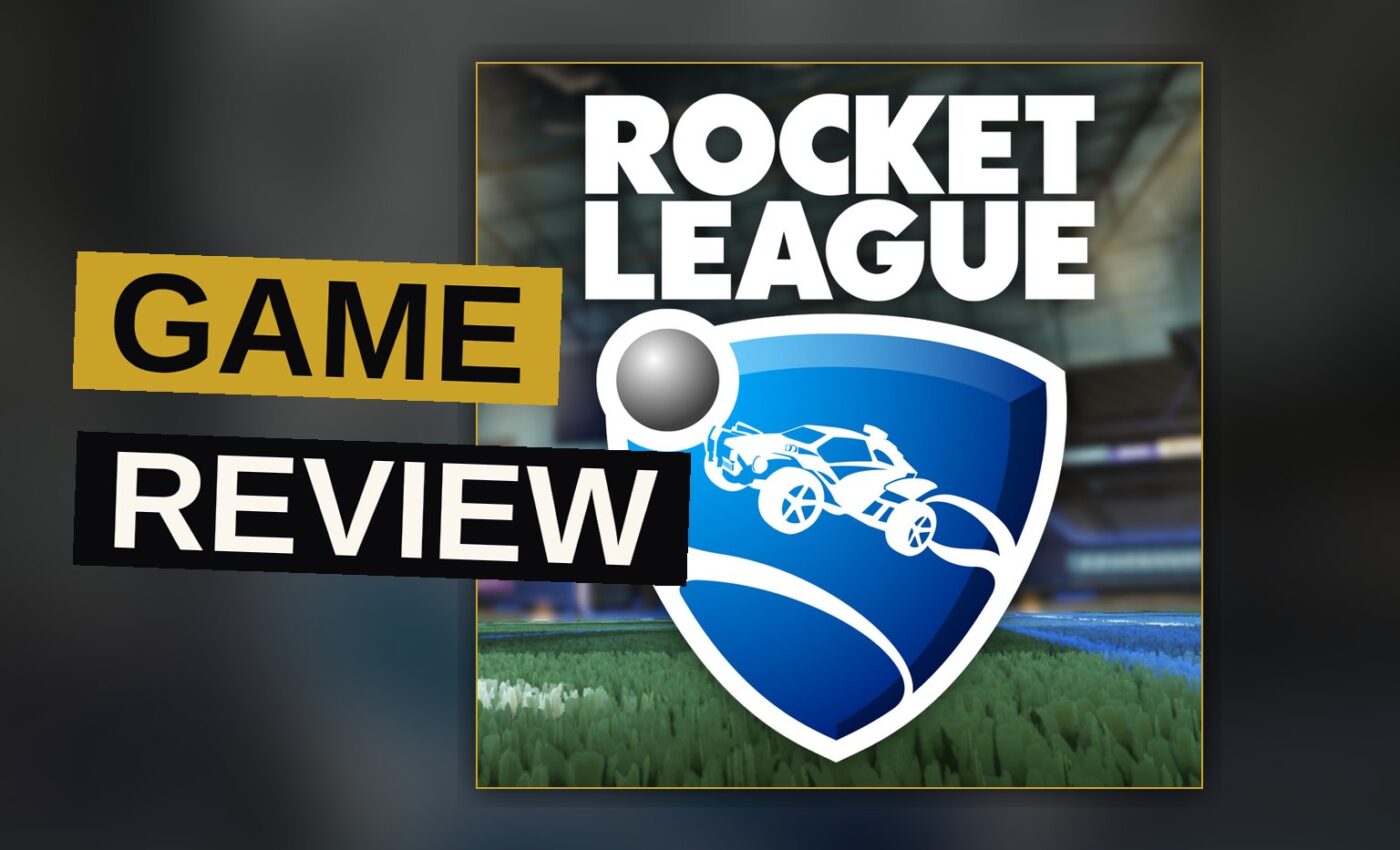
Rocket League is a game about hitting a ball with a car, and it has spent a decade refusing to be anything more complicated than that. Psyonix released it in July 2015 on PlayStation 4 and Windows, and the pitch has not moved since: two teams, rocket-powered vehicles, one oversized ball, five minutes on the clock. What has changed is everything around it — the platforms, the business model, the modes bolted on afterward. The core never needed the help.
Trailer, via Rocket League.
A Supersonic Acrobatic Sequel That Fixed the First Draft
Rocket League is a sequel to 2008’s Supersonic Acrobatic Rocket-Powered Battle-Cars, a game with a title longer than its shelf life. Psyonix began formal development of Rocket League around 2013, refining the gameplay to address criticism and fan input from that predecessor. The studio also knew it had failed to market Battle-Cars, so it engaged in social media and promotions this time. That is the whole origin story, and it is worth stating plainly: this is not a game that arrived fully formed from nowhere. It is a second attempt by a studio that learned from a first one.
The result keeps the predecessor’s structure. Players control a rocket-powered car and hit a ball much larger than the cars toward the opponent’s goal, in a way that resembles indoor soccer, with elements reminiscent of a demolition derby. The cars can hop, which lets them hit the ball in mid-air. That single verb — hop — is the entire skill ceiling. Everything else is timing.
Matches usually run five minutes, with sudden death overtime if the score is tied at that point. Sides run from one-on-one up to four-on-four. There is casual play and there is ranked, and ranked is where the game actually lives.
The Hard Numbers Behind the Pitch
- Release: July 2015, PlayStation 4 and Windows
- Developer and publisher: Psyonix
- Platforms: Xbox Series X|S, PlayStation 4, PlayStation 5, Xbox One, Nintendo Switch, PC (Windows), Mac, Linux
- Genre: Racing, sport, indie
- Modes: Single player, multiplayer, co-operative, split screen
- Perspective: Third person
- Match length: Usually five minutes, plus sudden-death overtime
- Team size: One-on-one up to four-on-four
- Published critical score: 8.9/10, the critic aggregate across 17 outlets
Ranked Playlists and the 2024 Boost Readout
Rocket League is built as a games-as-a-service product, which means it has been revised in public for years. Later updates let players modify core rules and added modes based on ice hockey, gridiron football and basketball. It has been free-to-play since 2020, when Epic Games acquired the studio.
The competitive spine is the ranked playlist, where players climb or fall through tiered ranks within game seasons. Win and the rank goes up. Lose and it goes down. That is a simple loop, and it is the reason the game outlasted most of its 2015 peers.
Updates in 2024 added two small quality-of-life features: players can now see how much boost their teammates have left, and how much time remained on the clock when specific comments were made in chat. The second one is a quiet admission that the chat is a problem. The first one is a genuine fix. Boost is the resource that decides every contested ball, and not knowing your teammate’s tank has always been the difference between a clean challenge and a double commit.
Mutators, Sno, and 500 Trillion Combinations
The mutators update arrived a few months after launch, letting players change gravity, ball size, ball speed and bounciness. For the 2015 holiday season, another update swapped mutator matches for an ice hockey-inspired mode. The game now ships with hockey and basketball-inspired Extra Modes alongside the standard soccer setup, plus a fully-featured offline Season Mode where the player competes against computer-controlled opponents.
Custom Training came in December 2016. Players can build sequences, specify the ball’s path, set the presence and skill of opponents, and share the result with others on the same platform. That last clause matters — sharing was platform-bound, not global. It is the kind of limitation that a live-service game eventually has to answer for, and Rocket League has spent years answering for it in pieces.
Then there is the customization. Psyonix advertises more than 500 trillion possible cosmetic combinations. That number is doing marketing work, not design work. Nobody has ever needed it.
Rocket League Against the Game It Replaced
| Rocket League (2015) | Supersonic Acrobatic Rocket-Powered Battle-Cars (2008) | |
|---|---|---|
| Developer and publisher | Psyonix | Psyonix |
| Core gameplay | Largely the same: rocket-powered cars hit an oversized ball | Rocket-powered cars hit an oversized ball |
| Marketing approach | Social media and promotions | None recognized by the studio |
| Development start | Around 2013, refining from fan input and criticism | Not given |
| Online support status | Live, free-to-play since 2020 | Superseded |
The comparison is not flattering to the older game, and it is not meant to be. Psyonix has said outright that it lacked marketing for Battle-Cars. Rocket League is what happens when the same idea gets a second budget and a plan.
Cross-Platform Play and the Mac and Linux Cutoff
Rocket League supports single-player and multiplayer, locally and online, including cross-platform play between all versions. That is the feature that turned a niche car-soccer game into a standing appointment. Ports for Xbox One and Nintendo Switch arrived after the initial release. Physical retail versions for PlayStation 4 and Xbox One were distributed starting in 2016 by 505 Games and later by Warner Bros. Interactive Entertainment.
Mac and Linux versions shipped in 2016, and online support for both was dropped in 2020. That is the sharpest edge in the whole history. Cross-platform play is the game’s best feature, and it was still not enough to keep two platforms alive once the economics turned. Anyone who bought in on macOS or Linux got a working game and a dead lobby.
The Verdict on Rocket League
An 8.9 out of 10 is the right number, and it is the number the aggregate gives. Rocket League earns it on the strength of one mechanic that has never been improved upon because it never needed to be. The hop, the ball, the five-minute clock, the overtime. Psyonix refined Battle-Cars into something that reads instantly and takes years to master, and then had the discipline not to bury it.
The weaknesses are real and they are structural. The customization count is noise. The chat remains a problem serious enough that a 2024 update exists to timestamp it. Custom Training sharing was locked to a single platform. Mac and Linux players were cut off in 2020 with no path back. And the games-as-a-service model means the version a player boots today is not the version that shipped in July 2015 — for better and worse, mostly better.
What matters most is that the core has not drifted. Hockey, basketball, gridiron football, mutators, gravity toggles — all of it sits on top of the same five minutes. Rocket League is a 2015 game that still plays like a 2015 game, and in a decade of live-service churn, that is the rarest thing about it.
Get the Notebook.
The day's best stories and every fresh verdict, in plain English, in your inbox by seven. One email a day, no more.