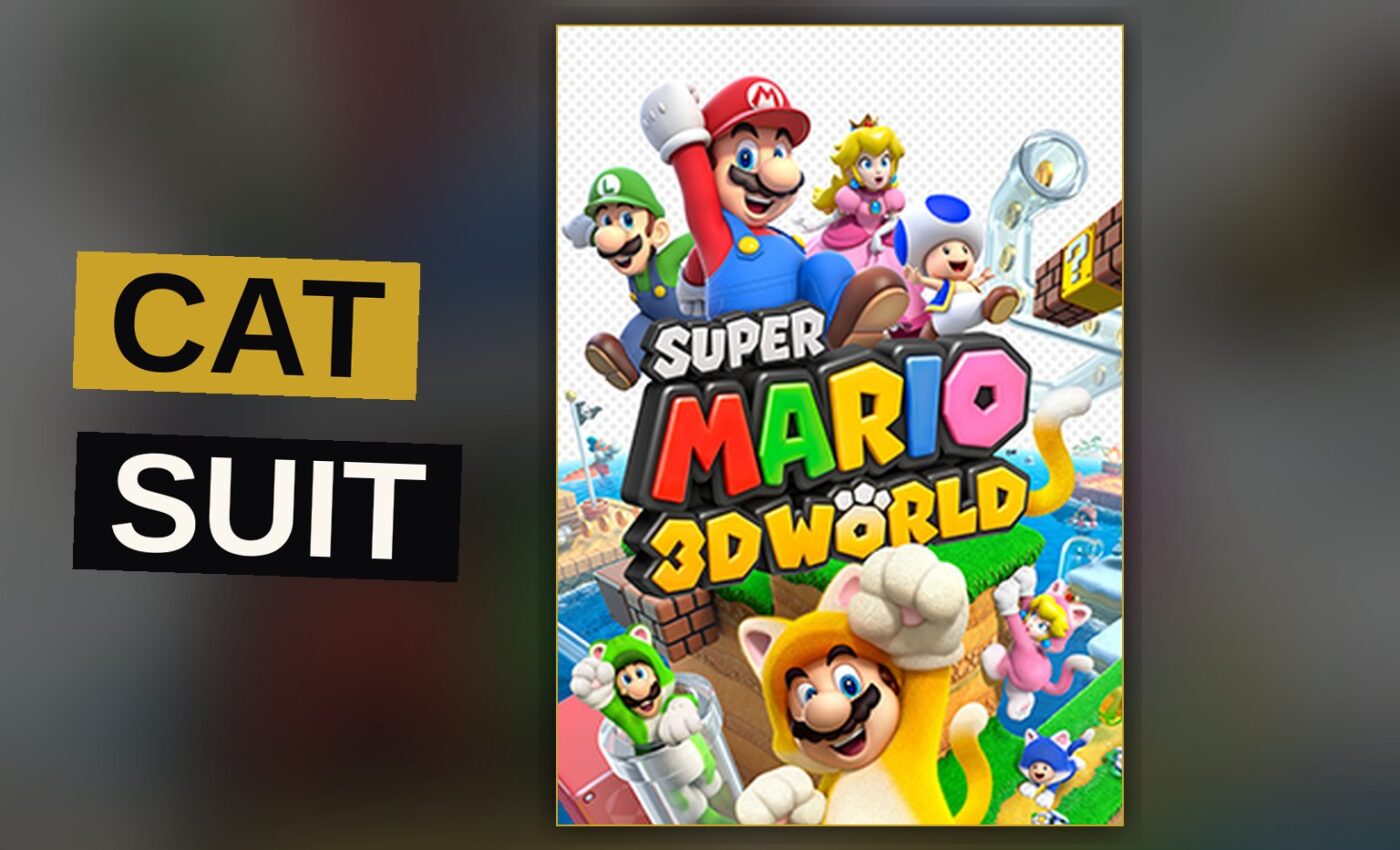
Super Mario 3D World arrived on the Wii U in 2013 as the sixth original 3D platformer in the Super Mario series and the direct sequel to Super Mario 3D Land on the Nintendo 3DS. Nintendo developed and published it. It carries a 9.4/10 critic aggregate across 14 outlets, and that number holds up.
Trailer, via Nintendo UK.
Four Players, One Goal Pole
The pitch is simple and the execution is not. Super Mario 3D World takes the free-roaming feel of the series’ 3D games and bolts it to the mechanics of the 2D side-scrollers: a timer, a linear-designed level, and a Goal Pole waiting at the end.
The headline addition is simultaneous multiplayer. It is not the first Mario game to offer it, but it is the first 3D Mario title to put up to four players on the same level at once, cooperating toward the same goal and sharing a pool of lives. Players can also pick each other up, carry each other, and throw each other. That last part matters more than it sounds.
Five Characters, Five Playstyles
Before a level begins, the player picks from a roster of five. Each one controls differently, and the differences are real rather than cosmetic.
| Character | Strength | Weakness |
|---|---|---|
| Mario | Balanced running speed and jump height | No standout edge |
| Luigi | Jumps higher, falls slower | Slightly lower traction |
| Peach | Jumps and briefly floats through the air | Runs slowly |
| Toad | Runs the fastest | Cannot jump as high, falls faster |
| Rosalina | Spin attack from the Super Mario Galaxy games | Slowest running speed |
Rosalina is unlockable. The rest are available from the start. Choosing a character is not a difficulty setting — it is a commitment to a feel, and the game is better for forcing that choice.
The Super Bell and the Cat Theme
The trademark power-up here is the Super Bell, which turns the player into a cat. That form enables a scratch attack, wall climbing, and a midair leap. The cat idea runs through the whole game, not just the suit.
Nintendo also built in Wii U-specific tricks. Players tap blocks on the GamePad’s touch screen and blow into the microphone to reveal hidden items or blow away enemies. These are the kind of features that age badly when the hardware dies. They are also, in 2013, genuinely novel.
Levels are reached through a world map with hidden areas holding extra items and coins. Each level contains three collectable Green Stars, and some levels are gated behind them. Each main level also hides a Stamp, which players used in handwritten posts to the now defunct Miiverse. Additional Green Stars turn up in Captain Toad, Mystery House, and Challenge levels.
Sprixies, Meowser, and a Tilted Pipe
The story opens with Mario, Luigi, Peach, and Toad watching fireworks near Peach’s Castle. They find a tilted glass pipe. Mario and Luigi fix it, and a green fairy-like Sprixie princess emerges to explain that Bowser has kidnapped and trapped six other Sprixie princesses in jars. Bowser then arrives, captures her, and escapes through the pipe. The four follow.
They land in the Sprixie Kingdom and set out to rescue the Sprixies one world at a time. After the final rescue, Bowser recaptures all seven and retreats to his amusement park fortress, where he uses the Super Bell to become Meowser. The group climbs the tallest tower and beats him.
It is thin. It is also exactly enough.
What the Camera Gets Wrong
The game was acclaimed for its level design, presentation, replay value, and soundtrack. The recurring criticism landed on the camera in multiplayer, which reviewers called unreliable. That criticism is fair. Four players on a shared screen, with a camera that cannot satisfy all of them, produces the game’s worst moments.
Everything else is close to faultless. The character roster gives a four-player session actual texture, because a Toad player and a Peach player are solving different problems in the same room. The Green Star gating gives completionists a reason to return. The Stamp hunt ties the game to a social feature that no longer exists, which is a loss, but the levels stand without it.
The Wii U version sold 5.89 million units. The Nintendo Switch re-release, Super Mario 3D World + Bowser’s Fury, arrived in February 2021 and sold 13.47 million. Combined, 19.36 million as of March 2024. The game became the second best-selling title on the Wii U, a console that never found its audience, and one of the best-selling games on the Switch, a console that found everyone.
That split tells the real story. Super Mario 3D World was never the problem. The Wii U was. A spinoff, Captain Toad: Treasure Tracker, followed in November 2014, built from the Captain Toad levels tucked inside this one — proof that even the side content here was strong enough to carry its own release. The camera complaint is real, and it is the only thing standing between this game and a higher number. Everything else is Nintendo at its most confident.
9.4 of 10.
Get the Notebook.
The day's best stories and every fresh verdict, in plain English, in your inbox by seven. One email a day, no more.