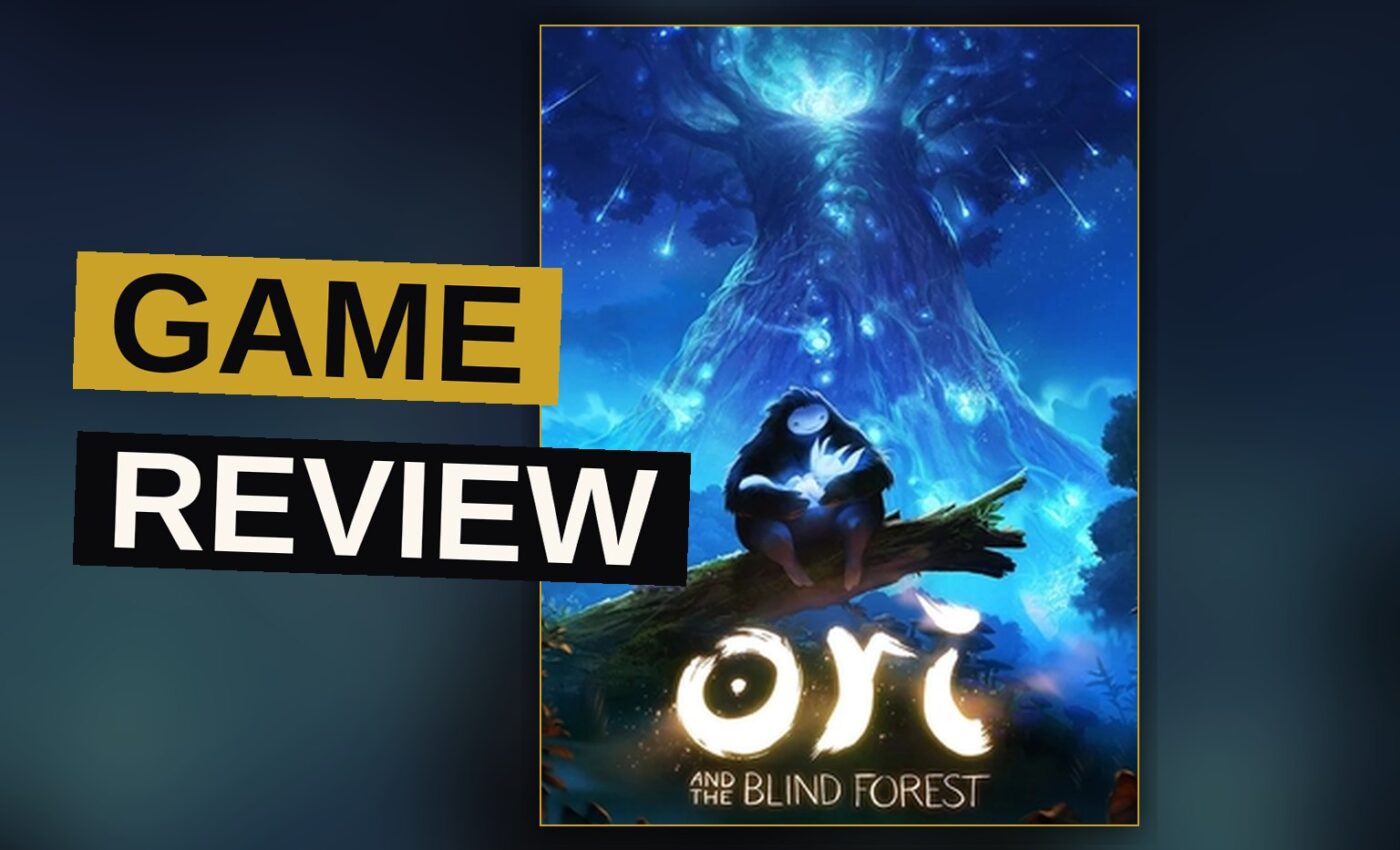
Moon Studios built Ori and the Blind Forest around a small white spirit and a dying wood, and it worked. The Metroidvania platformer launched for Windows and Xbox One in March 2015, then reached Nintendo Switch in September 2019. It drew critical acclaim for its art, its score and its story, and it was named as a title that represented art in video games.
Trailer, via XBOX.
Nibel, Naru, and the Fall From the Spirit Tree
The forest of Nibel is dying. A storm sets the collapse in motion, and Ori, a guardian spirit, falls from the Spirit Tree as a newborn. A creature named Naru adopts and raises Ori as her own.
Then a cataclysm withers the forest. Naru dies of starvation. Newly orphaned, Ori explores alone, collapses near the Spirit Tree, and is revived by it. That is the setup, and it is bleak in a way few platformers attempt.
Ori and the Blind Forest explores a deeply emotional story about love and sacrifice, and the hope that exists in us all.
Sein, Gumo, and Kuro
Ori meets Sein, a small orb described as the light and eyes of the Spirit Tree. Sein guides Ori to recover the light of three elements holding Nibel in balance: Waters, Winds and Warmth.
Two other beings matter. Gumo is the last survivor of the spider-like Gumon clan, wiped out by the cataclysm, and his home supports the Wind element. He steals the key to the Water element, then returns it after Ori saves him from a rockslide.
Kuro is a giant, shadowy owl, hostile toward Ori. Her nest holds one egg. The game explains her wrath: when Ori was lost, the Spirit Tree released a flash of light to search, and the light burned and killed Kuro’s recently hatched offspring while she was away from her nest looking for food.
Soul Links and the Cost of Saving
The mechanics carry real weight. Players jump, climb and solve puzzles as Ori, while Sein fires Spirit Flames to fight enemies or break obstacles. New abilities open previously closed areas, the standard Metroidvania loop.
The save system is the boldest choice. Players create “Soul Links” anywhere, but only with energy cells, and the supply is deliberately thin. Saving is a decision, not a reflex.
Upgrades run through three ability trees, learned in sequence. Ability points come from killing enemies, destroying plants, and finding spirit light containers or ability cells.
| Element | Role in Nibel | Who guards or supports it |
|---|---|---|
| Waters | One of three balancing elements | Gumo initially holds the key |
| Winds | One of three balancing elements | Gumo’s home supports it |
| Warmth | One of three balancing elements | Ori and Sein must restore it |
Hand-Painted Art and a Full Orchestra
Moon Studios is a collective without a set location. Microsoft acquired the distribution rights a year after the beginning of development. The story drew on The Lion King and The Iron Giant; the gameplay drew on Rayman and Metroid.
The craft shows. Hand-painted artwork, meticulously animated character performance, and a fully orchestrated score. Moon Studios co-founder Gennadiy Korol said the game was profitable within a few weeks of launch. An expansion, the Definitive Edition, arrived in March 2016, and a sequel, Ori and the Will of the Wisps, was announced.
What Holds and What Slips
The Soul Link system is the part worth arguing about. Limited saves build tension, but they also punish players who explore carelessly, and the punishment is repetition rather than difficulty. It is a design choice that respects the player’s time less than the rest of the game does.
The combat is thinner than the movement. Sein’s Spirit Flames do the job, yet the enemies rarely demand the precision that the platforming rewards. The game is at its best when Ori is moving and at its weakest when Ori is fighting.
Gumo’s Treasure and the Payoff
None of that undoes the whole. Ori and the Blind Forest earns its reputation on atmosphere and control, and it earns the emotional beat at its center because the story is told plainly. Gumo revives Naru using his clan treasure, which stores light from the Spirit Tree, and takes her to Ori. That is a payoff built on setup, not sentiment.
The 2015 release still reads as a statement of intent. Moon Studios made a platformer that treats grief as a starting point rather than a set piece, and the Definitive Edition and the announced sequel confirm the studio meant it.
It holds an 8.8/10 from IGDB’s critic aggregate, across 14 outlets.
Get the Notebook.
The day's best stories and every fresh verdict, in plain English, in your inbox by seven. One email a day, no more.