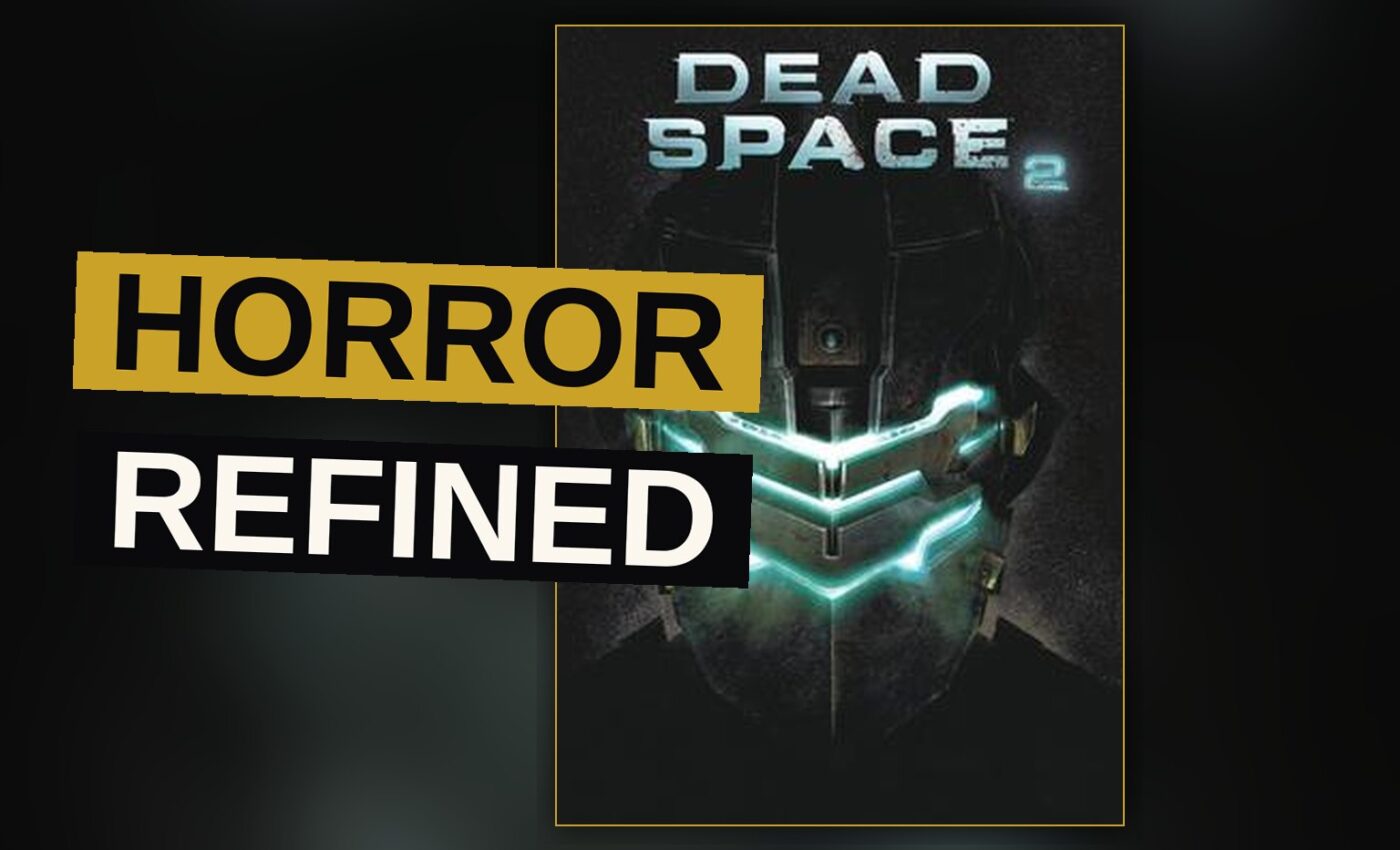
Dead Space 2 Review: A Sequel That Makes Isaac’s Mind the Second Monster
Dead Space 2 strands Isaac Clarke on a space station built from the wreckage of Titan, and then it does something rarer than any scare: it makes his mind the second monster.
Visceral Games and Electronic Arts shipped the survival horror sequel in January 2011 for PlayStation 3, Windows and Xbox 360. It is the second mainline Dead Space, and it moves the series off the mining ship USG Ishimura and onto the Sprawl.
The Sprawl, Built on Titan
The Sprawl is a civilian station raised by the Earth Government in the remains of Saturn’s moon Titan, cracked apart in a planet-mining operation. Humanity had already survived near-extinction from resource depletion, and the station is what that survival looks like up close.
Dead Space 2 takes place in 2511, three years after the first game. Isaac wakes from a coma, confused and disoriented, and watches the panic take the station from the first minute. A new Necromorph outbreak is worse than the last one, with more advanced forms of the corpse-reanimating organism.
The Aegis VII incident has been covered up. New Marker experiments have begun on the Sprawl anyway.
Isaac Clarke and the Marker in His Head
Isaac is a Concordance Extraction Corporation engineer who survived the Ishimura by destroying the Marker and the Necromorphs. Dead Space 2 keeps the cost. He suffers Marker-induced dementia and violent hallucinations, and he is tormented by visions of Nicole Brennan, his girlfriend who died on the Ishimura.
The supporting cast does real work. Ellie Langford is a CEC heavy machinery pilot. Nolan Stross is a fellow patient, driven insane by exposure to the Aegis VII Marker. Daina Le Guin guides Isaac early, then reveals herself as a Unitologist sent to capture him. Director Hans Tiedeman runs the Sprawl and initiates a project to build a second Marker in an attempt to control its power.
Four Difficulties and a Fifth That Bites
Gameplay runs from a third-person view through level-based missions. Isaac solves puzzles, finds resources and fights Necromorphs. He breaks crates with a melee attack or a stomp. Kinesis moves objects and turns Necromorph limbs into makeshift projectiles. Stasis slows a target’s movement for a limited time.
Saving happens manually at crafting stations and automatically at checkpoints. Information stays in the world: health and energy on the back of the RIG suit, ammunition on the weapons themselves, and an inventory screen that does not pause the game. Zero-G sections use jet packs with a boost function.
Four difficulty levels are unlocked from the start: Casual, Normal, Survivalist and Zealot. Hard Core unlocks after the first playthrough and allows three saves across the whole campaign, restarting from the last one with each death.
| Mode | What it adds | Who it is for |
|---|---|---|
| Single player | The full Isaac Clarke campaign | Anyone here for the story |
| Multiplayer | Sprawl security forces against Necromorph teams | Players who want the fiction contested |
| Co-operative | Shared play | Players who want company in the dark |
Faster, Louder, Still Survival Horror
Pre-production began in 2008, right after the original Dead Space shipped. The team adjusted the gameplay on player feedback and its own experience, then made it faster-paced with more overt action. Multiplayer came in as a separate mode after fan feedback and requests from Electronic Arts.
That push toward speed is the right call. Isaac’s dementia gives the action a reason to feel unsteady, and the nursery-rhyme motifs threading through his visions tie the horror to something childish rather than something grand.
The Station’s Turn
Le Guin’s reveal lands because the game spends its first act letting you trust her. An EarthGov ambush kills her and her henchmen, and Isaac escapes into an alliance he did not plan.
A Sequel That Knows What It Is
Dead Space 2 is the rare sequel that improves by narrowing. The Sprawl is a better stage than the Ishimura because people live there, and the outbreak has witnesses, evacuees and suicides instead of only corpses. The Marker is not just a monster factory here. It is a psychological weapon, and Isaac is carrying a copy of it in his skull.
Tiedeman gives the plot a human antagonist who is not simply evil. He wants to control the Marker’s power, and the game lets that ambition look almost reasonable before his project collapses into the outbreak it was meant to master.
The multiplayer is the weakest part. It is competent, and the security-forces-versus-Necromorphs setup fits the fiction, but the campaign is where the craft sits. Hard Core is a stunt difficulty rather than a design statement, and three saves across a full run is a dare, not a mode.
What holds up is the diegetic interface. Health on the suit, ammo on the gun, no pause for the inventory. It keeps the player inside Isaac’s fear instead of outside it, and few games in the genre have matched it since.
Dead Space 2 earns its reputation. The action is faster, and the horror is more personal.
Get the Notebook.
The day's best stories and every fresh verdict, in plain English, in your inbox by seven. One email a day, no more.