Alan Wake II is not a sequel that plays it safe. Remedy Entertainment’s 2023 release drags a missing novelist out of a lake and drops a second protagonist into the woods beside him. It is the studio’s first run at survival horror, and it lands.
The game ships on Xbox Series X|S, PC, and PlayStation 5. It is a single-player, third-person shooter and adventure built around two lead characters, two realities, and one horror story that wants them both dead. IGDB’s critic aggregate, drawn from five outlets, sits at 9.3/10. That number is earned.
Trailer, via PlayStation.
A Writer Trapped in the Dark Place
Alan Wake went missing in 2010. The source material is exact on this: he was a bestselling writer based in New York City, on vacation in the Pacific Northwest with his wife, Alice Wake, when he met a force of supernatural darkness. That force brought his writing to life — a horror story made real.
He fought it. He banished it back to where it came from: a nightmarish dark place hidden under a caldera lake outside the small town of Bright Falls. He wrote an ending, and that ending freed Alice from the darkness under the lake. It also trapped him there.
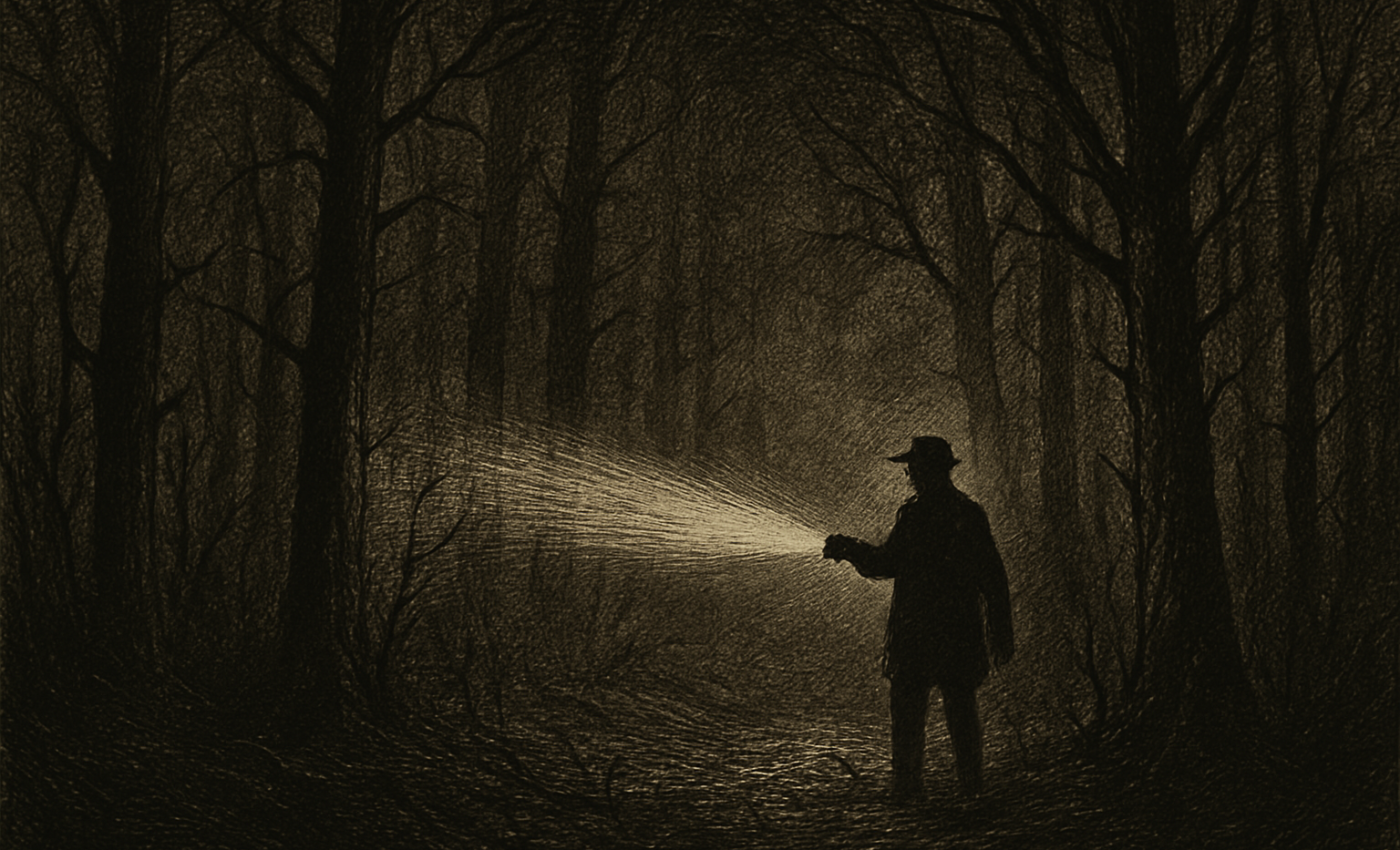
Thirteen years later, he is still inside. The Dark Place is not a cell. It is a workshop. His nightmares, his fears, and his stories manifest as reality around him. He has spent 13 years fighting to stay sane and write a story that would change reality enough to let him escape.
So far, he has failed.
That word — failed — is where the game lives. Remedy does not open on a hero. It opens on a man who has been losing for over a decade and knows it.
Saga Anderson Arrives in Bright Falls
Saga Anderson is the second half of the game and the better half to start with. She is an FBI agent with a reputation for solving impossible cases, and she comes to Bright Falls in the Pacific Northwest to investigate a string of ritualistic murders.
The case does not stay a case. Anderson finds pages of a horror story that start coming true around her. Those pages point at Alan Wake, the writer who vanished in the area more than a decade earlier.
This is the structural bet Alan Wake II makes. Two hero characters, two realities, one horror story. The game hands the player a procedural and a nightmare and asks them to hold both at once.
Ritualistic murders in a small town. A writer trapped in a nightmare. An FBI agent looking for answers. Two realities. Two hero characters. One horror story that wants them dead.
Two Realities, One Story
The dual structure is the whole point, and it is where a lesser game would fall apart. Remedy keeps the two threads distinct in tone and then braids them. Anderson’s investigation is the spine. Wake’s imprisonment is the engine.
What matters is that neither half is filler. The murders give the horror a body count and a clock. The Dark Place gives it a reason. A writer whose stories become real is a premise that can excuse anything, and Remedy mostly resists the temptation to use it as one.
The setting does real work too. Bright Falls is small-town Pacific Northwest, and the game treats the community as a place with a history rather than a backdrop. The caldera lake sits under it all, holding the dark place Wake wrote his way into and could not write his way out of.
Survival Horror, Not Action Horror
This is Remedy’s first foray into survival horror, and the shift shows in the pacing. The game is a shooter and an adventure, but it is built to make the player feel outnumbered rather than empowered.
That is the correct read on the genre. Survival horror only works when the player is short on something — time, ammunition, answers. Alan Wake II is short on all three, and its two protagonists are short on them in different ways. Anderson is short on time. Wake is short on everything, including a reliable grip on what is real.
The third-person perspective keeps both characters at a slight distance, which suits a story about people who cannot fully see the thing hunting them.
Why the Two-Hander Holds
Plenty of games promise two protagonists and deliver one game and a half. Alan Wake II does not. Anderson’s half carries the mystery. Wake’s half carries the dread. Neither one is a tutorial for the other.
The 13-year gap is the smartest piece of design in the game. It gives Wake a failure he has to live inside rather than a backstory he has to explain. He is not returning. He is still stuck. The game never lets the player forget that the man they are controlling has already tried this and lost.
Anderson, by contrast, is competent and does not know what she is walking into. That contrast is the engine of the whole thing. One character is drowning in a story he wrote. The other is reading pages of it and watching them come true.
The Score: 9.3/10
Alan Wake II is the rare sequel that understands its own premise better than its predecessor did. Remedy takes a writer who vanished and refuses to bring him back cleanly. It takes an FBI agent and drops her into his manuscript. It does not explain the Dark Place so much as make the player live in it.
The aggregate score of 9.3/10 from five outlets is not a fluke. This is a game with a clear thesis — that a horror story is a machine for trapping people — and the discipline to follow it through two separate campaigns without letting either one carry the other.
The weak point, if there is one, is that the dual structure asks a lot of the player. Keeping two realities straight is work, and the game does not soften that work. That is a choice, not a flaw, and it is the right one.
What matters here is not the murders, and not the lake. It is the 13 years. A man who has failed for 13 years and keeps writing is a better horror protagonist than a man who has just arrived. Remedy knows this. That is why Alan Wake II works.
Key facts
- Title: Alan Wake II
- Year: 2023
- Developer: Remedy Entertainment
- Publisher: Epic Games Publishing
- Platforms: Xbox Series X|S, PC (Microsoft Windows), PlayStation 5
- Genres: Shooter, Adventure
- Themes: Action, Horror, Thriller, Survival, Mystery
- Modes: Single player
- Perspective: Third person
- Critic aggregate: 9.3/10 (IGDB, 5 outlets)
Get the Notebook.
The day's best stories and every fresh verdict, in plain English, in your inbox by seven. One email a day, no more.