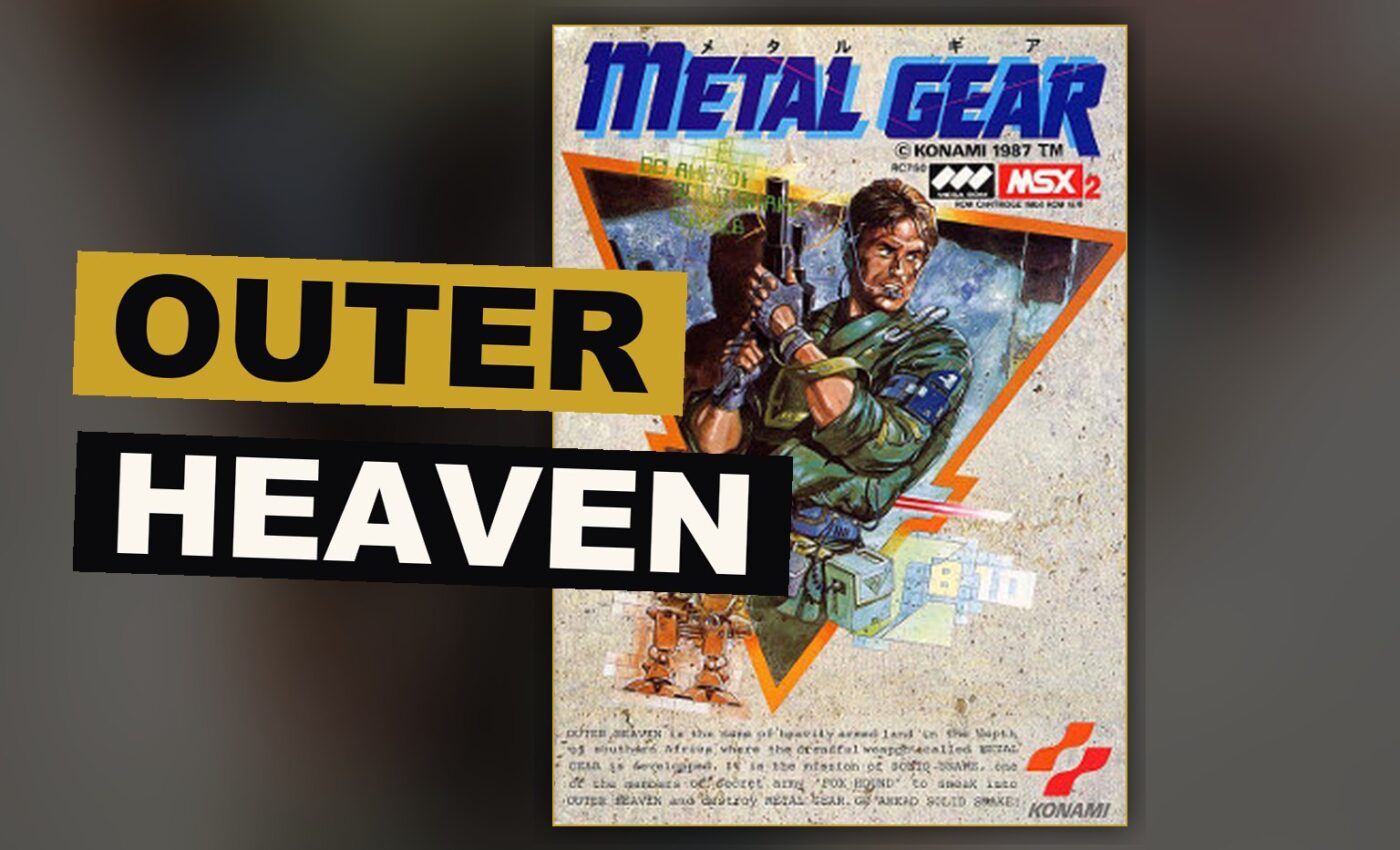
Metal Gear is a game about not fighting. That was the radical idea Hideo Kojima brought to his first directorial credit in 1987, and it still reads clearly on the Nintendo Entertainment System version most American players actually owned. You control Solid Snake, a rookie operative of the special forces unit FOXHOUND, sent alone into the fortified state of Outer Heaven to destroy a bipedal walking tank that can launch nuclear missiles from anywhere in the world. You start with nothing. You end with a base full of guards who would rather you had never come.
Outer Heaven and the Intrude N313 Mission
The setup is lean. The West learns that a weapon of mass destruction is being built inside Outer Heaven, a fortress founded by a “legendary mercenary” 200 km north of Galzburg, South Africa. FOXHOUND sends top agent Gray Fox in first. Contact is lost, and his last transmission is one word: “Metal Gear…”. Commander Big Boss then sends his newest recruit, Solid Snake, in an operation codenamed “Intrude N313.”
That mission structure holds up. Snake is unarmed at the start and must scavenge everything, from a handgun and rocket launcher to ammunition caches, rations that refill the life gauge, and a gas mask. The base is the real antagonist.
Alert Mode Is the Whole Game
Metal Gear plays from a flip-screen overhead perspective, two-dimensional and bird’s-eye. Guards follow set patrol patterns and see in a straight line, in four directions total. If one spots you, an exclamation mark appears over their head and the game enters Alert Mode. Guards run at you and fire.
There is a smart distinction here that later stealth games borrowed without credit. Get seen by a guard and only the enemies on your current screen attack; move to an adjacent screen and you are clear. Get caught by a camera, a sensor, or an unsuppressed gunshot, and two exclamation marks appear and reinforcements arrive from off-screen. The punishment fits the mistake.
The Resistance, the Prisoners, and the Bosses
The radio is where Metal Gear builds its world. Big Boss feeds you objectives and item info. A local resistance backs you up: Schneider, a former architect who knows the fortress layout and the key items; Diane, a former punk vocalist who reports on enemy forces from home; and Jennifer, who joined Outer Heaven’s medical staff to find her missing brother and helps once Snake reaches a high enough rank.
The prisoners matter too. Grey Fox, captured on the earlier mission. Dr. Pettrovich, a robotic engineer forced to work for Outer Heaven. His daughter Elen, kidnapped to coerce him into building Metal Gear. The bosses run the genre checklist in rough order of escalation:
- Shoot Gunner, a former Spetsnaz agent specializing in the riot gun.
- Machinegun Kid, a former SAS operative armed with a machine gun.
- Fire Trooper, a former GSG 9 operative who uses a flamethrower.
- Coward Duck, a boomerang-throwing terrorist who shields himself with hostages.
- Arnold, two TX-11 class androids designed by Dr. Pettrovich.
| Version | Developer | Level design | Final boss |
|---|---|---|---|
| MSX2 (1987) | Konami, directed by Hideo Kojima | Original layout | Original |
| NES/Famicom | Konami, without Kojima | Drastically altered | Alternative |
What the NES Version Costs You
This is the version that sold 1 million units in the United States. It is also the version Kojima did not make. Konami developed the Famicom and NES port without his involvement, and the changes are not cosmetic. Level layouts are drastically altered. Enemy placement shifts. There is an alternative final boss.
The MSX2 original drew positive reception, with praise aimed at the gameplay and graphics. The Famicom and NES version got mixed reviews, and now you can see why. The core loop survives the translation intact, but the level design that made the original’s tension work is the thing that got rewritten. The port also turned up later inside the Metal Gear Solid: The Twin Snakes – Special Disc, alongside other extras.
The Verdict on Metal Gear
What still matters here is the evasion. Kojima reworked Metal Gear away from the then-dominant shoot ’em up genre toward something closer to Pac-Man, and that instinct is the reason a 1987 game about avoiding contact became a series. The NES version is the weaker of the two 1987 releases, and the altered layouts are the reason, not the hardware.
Play it for the alert system, the radio cast, and the boss roster. Play the MSX2 original if you want the version Kojima actually built.
Get the Notebook.
The day's best stories and every fresh verdict, in plain English, in your inbox by seven. One email a day, no more.