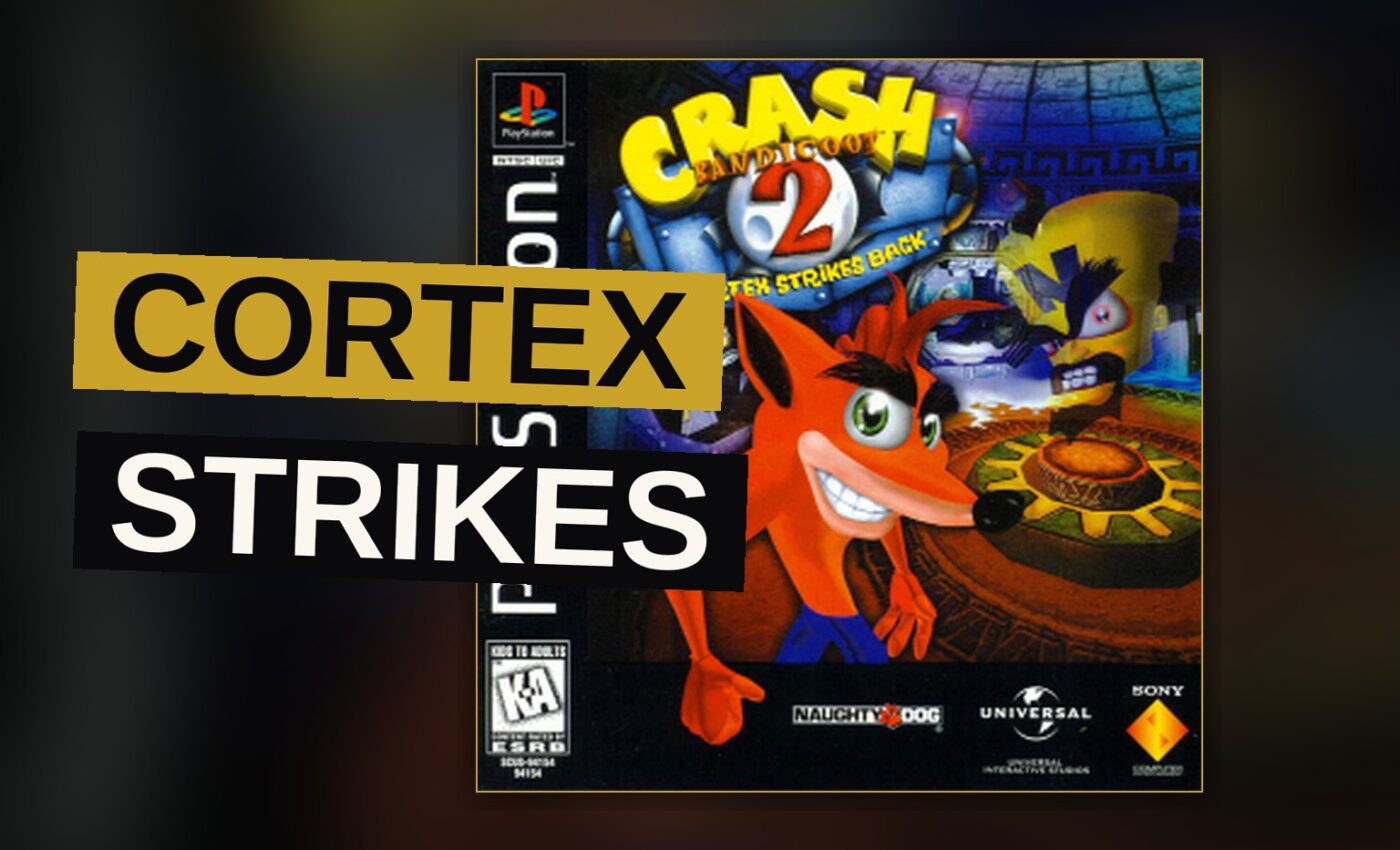
Crash Bandicoot 2: Cortex Strikes Back takes the formula that made the first game a hit and pushes it further. The levels are bigger, the enemies are faster, and the boss fights demand more precision. It is a sequel that respects what worked before while adding enough new ideas to justify its own existence.
The Setup
Cortex Strikes Back picks up where the first game left off. Crash, the small orange bandicoot, is still trying to stop Dr. Neo Cortex from taking over the world. This time, the villain has a new plan: he wants to build a giant robot to crush everything in his path. Crash has to move through a series of islands, each with its own hazards and secrets, to stop him.
The story is thin by design. It is a game about running, jumping, and collecting tokens, and the plot exists mostly to give the levels some shape. That is fine. The game does not pretend to be anything other than a platformer, and it does not need a deep story to be entertaining.
New Moves and Controls
The biggest change is the addition of a jet pack. Crash can now fly short distances across open spaces, which opens up entirely new ways to approach each level. Combined with the spring that returns from the first game, Crash moves through the air in ways he could not before.
The controls hold up well. The jet pack responds quickly, and the spring feels natural once you get used to it. The camera stays steady during movement, which matters in levels where the screen fills with enemies from every side.
Level Design
The levels are the heart of Cortex Strikes Back. They are larger than those in the first game, and they use the new moves to create puzzles that feel fresh. Here are a few examples of what stands out:
- Time Twister — a level that changes its layout depending on how fast you move through it, forcing you to learn the timing of the changes.
- Dune Rabbits — a desert level that rewards careful navigation through rolling sand dunes and hidden passages.
- Big Race Uptiona — a racing level that tests your reflexes against a group of other racers, adding a layer of competition to an otherwise simple run.
Each island has its own theme and hazards. One island is covered in water and ice, another in fire and lava, and another in a jungle full of plants. The variety keeps the game from feeling repetitive, even after hours spent on it.
Tokens and Secrets
Collecting tokens remains central to the game. Each level hides extra tokens that require you to look closely at the scenery, and finding them all often means going back through parts of the level you already cleared. There are also secret rooms scattered throughout the game, containing extra items and extra tokens.
The search for tokens gives the game a sense of depth beyond simply reaching the end. It rewards players who want to explore fully and punishes those who rush through without paying attention. That balance keeps the difficulty fair for most players.
Boss Fights
The boss fights are where Cortex Strikes Back shows its teeth. Each boss uses the terrain and hazards around it to make the fight feel unique. Some bosses force you to dodge attacks while moving through narrow passages, while others require precise timing to land hits.
The final boss, the giant robot, is a standout. It is a large, imposing enemy that requires you to use every move you have learned throughout the game. The fight is difficult but fair, and beating it feels earned rather than cheap.
Sound and Look
The music is energetic and fits the tone of the game. It shifts between tracks that are fast and driving and ones that are calmer and more atmospheric. The sound effects are sharp, and the jet pack sound in particular adds to the sense of speed when you are flying.
The graphics are bright and detailed for their time. The character models are expressive, and the environments are varied enough to keep the eye interested. The frame rate holds steady during most of the action, though busy scenes can slow down slightly.
Difficulty and Replay Value
Cortex Strikes Back is harder than the first game, but it does not punish players unfairly. The difficulty comes from the level design itself, which requires careful timing and quick reactions. Players who rush through will likely lose lives, but those who take their time and study the layout will find the game more forgiving.
The game has a replay value that comes from the token hunt. Once you have beaten a level, there is always more to see and collect. The challenge mode, which asks you to complete levels with limited lives, adds another layer for players who want to test themselves further.
Where It Falls Short
Not everything works perfectly. Some levels rely too heavily on the jet pack, making the spring feel less useful. The camera can occasionally get lost in tight spots, especially during boss fights. And the difficulty spikes in a few places, particularly in levels that require precise platforming.
These issues are minor compared to what the game gets right. They do not break the experience, but they are noticeable enough that they stand out after repeated playthroughs.
Final Word
Crash Bandicoot 2: Cortex Strikes Back succeeds because it builds on what made the first game enjoyable while adding enough new content to feel like a proper sequel. The jet pack and the spring give Crash more ways to move, the levels are larger and more varied, and the boss fights are memorable. The token hunt gives the game a reason to return, and the difficulty stays fair even when it gets tough.
It is not perfect, but it is very good. The few flaws are outweighed by the strengths, and the game remains a strong entry in the platformer genre.
Cortex Strikes Back earns an 8.5 out of 10.